Get AI Briefings, Transcripts & Alerts on Local & National Government Meetings — Forever.
PUC hearing probes Cascade New Vision rate increase amid conflicting financials and consultant reports
Loading...
Summary
At a Colorado Public Utilities Commission evidentiary hearing, lawyers and staff challenged Cascade New Vision LLC's request for a one‑time residential rate increase, citing inconsistent profit‑and‑loss statements, unaudited accountant restatements, and differing consultant estimates of needed investment.
An evidentiary hearing before the Colorado Public Utilities Commission examined Cascade New Vision LLC’s request for simplified regulatory treatment and a one‑time residential rate increase that Cascade’s filings describe as roughly 27 percent.
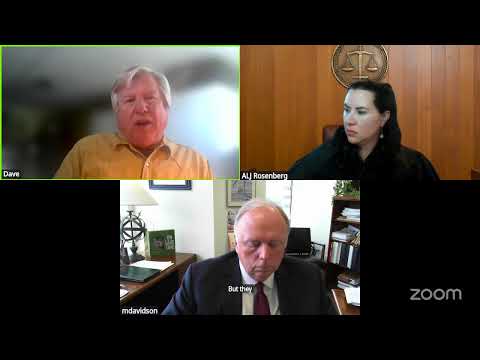
The Administrative Law Judge, Kelly Rosenberg, opened the proceeding and set tight deadlines for the parties’ closing statements. Counsel for the Cascade Village Condominium Association, Mark Detske, pressed Cascade’s principal witness, Charles Lindsay McAlpine, on multiple inconsistencies in the utility’s financial filings and on the consultants the company relied on. McAlpine testified under oath and acknowledged the commission may need additional documentary reconciliation.
Why the dispute matters: intervenors and staff said outside consultants and Cascade’s own accounting restatement do not independently verify underlying numbers. Counsel pointed to a memo from LBJ accountants attached to Cascade’s rebuttal (CLM 10) in which the accountants explicitly state they “have not audited or reviewed the accompanying financial statements and, accordingly, do not express any opinion or any form of assurance on them.” Detske argued the memo shows the restatement did not verify the source data; Cascade responded that LBJ restated the statements to GAAP and that WrightWater Engineers used those restated numbers in its rate projections.
Financial discrepancies and evidence presented: the association used demonstrative tables to compare multiple profit‑and‑loss statements (annual reports, application attachments and the LBJ restatement) and highlighted differing totals for income, rent, current liabilities and ‘‘projects in process.’’ McAlpine acknowledged some documents were draft versions or restatements and said the company’s bookkeeper and outside accountants were reconciling the numbers. Detske noted a clerical/math error in the rebuttal that reduced the listed ‘‘projects in process’’ from the rebuttal’s printed total to about $249,000.
Related‑party lending and lease arrangements: the association introduced a series of promissory notes showing rolling loans to the utility from entities tied to Cascade management (the demonstratives list CitySculpt/ICO‑labeled advances). The documents in the record include multiple notes dated from 12/31/2021 through 12/31/2024 (and others), generally at 8 percent interest (one note reflected higher interest). Counsel compiled those running balances and, adding two later loans (a Conway Trust loan of $150,000 and an Alpine Bank facility of about $500,000), produced a total indebtedness estimate of roughly $2.39 million for the regulated water/sewer entity. McAlpine agreed the demonstratives show the numbers as presented but said bookkeeper reconciliation was needed and that some paydowns might have occurred when newer, lower‑interest financing arrived.
Land lease and potential conflicts: the association also introduced a land lease for Tract F (the wastewater treatment site) showing an annual base rent of $180,000 per year, escalating annually. McAlpine confirmed the lease exists but said the utility has not had the resources to make full payments and that some accounting entries may reflect accruals rather than cash disbursements. Counsel underscored that the lease, loans from entities under common management, and the operator/manager relationships raise transparency and cost‑allocation questions the commission should weigh.
Operational and environmental drivers: Cascade’s operations witness, Dave Marsa, described the physical system — two primary wells, a permitted backup well and a fourth drilled but not yet connected — and recent repairs (manhole work, line replacement after freeze). He said the wastewater plant is operating well below its design discharge capacity (roughly 20 percent of permitted design flow) but that new, more stringent permit effluent limits (nutrients, metals and forthcoming PFAS constraints) have created compliance obligations. McAlpine and company consultants told the record they are evaluating whether to upgrade the lagoon plant (a capital‑intensive option) or pursue other long‑term alternatives (including potential connection to a neighboring system). McAlpine said RightWater’s engineering work and other planning have produced very large cost estimates — in testimony he cited figures in the multi‑tens of millions depending on the solution — and that the company is exploring financing, grants and special‑district options.
What the commission now has on the record: admitted exhibits include multiple versions of Cascade’s financials, a restatement memo from LBJ accountants (CLM 10), WrightWater Engineers analyses, promissory notes and purchase/closing documents for affiliated entities. Parties agreed to reconcile exhibit numbering and to make corrected demonstratives available in the joint hearing folder. The ALJ set deadlines and reiterated that parties may move additional materials into the evidentiary record at appropriate times.
Next steps: The hearing continued through several witnesses and was recessed for scheduling; parties agreed to reconvene the next day to continue testimony and cross‑examination. The record contains material the commission may use to evaluate (a) whether the proposed rate increase is justified based on verified financials and (b) whether associated loans and affiliate transactions should affect how costs are treated in retail rates. The judge directed parties to provide clarifying materials and said she would expect concise statements of position following the hearing.