Get Full Government Meeting Transcripts, Videos, & Alerts Forever!
Get email alerts on the Municipal Budget topic
No spam. Unsubscribe anytime.
Chino Valley staff projects narrow surplus, flags PFAS cleanup cost and a personnel freeze decision
Summary
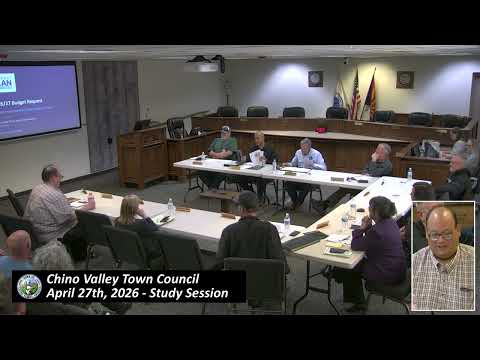
Finance staff presented updated revenue projections and a draft FY 26-27 budget that shows a small general fund surplus (~$62,000) but a planned draw on fund balance of roughly $3 million; council debated a soft vs hard freeze on three positions and discussed potential WIFA loan exposure if Brightstar PFAS remediation costs rise to $10 million.
Town finance staff walked the council through updated revenue and expenditure estimates for the FY 26-27 draft budget, saying ongoing revenues for 25/26 are estimated at about $24.07 million and that the town's draft budget at present shows a small general fund surplus of roughly $62,000 but an overall planned draw on fund balance of about $3 million that would leave an estimated ending balance near $10 million.
Staff emphasized several one-time and contingent items that materially change the draft: (1) the Brightstar PFAS remediation project, previously presented as a $5 million compliance project that ADQ would fully fund, now may require the town to account for a larger share if outside funding falls short; staff said WIFA financing could be structured as a 90/10 arrangement leaving the town responsible for approximately $500,000 of principal-equivalent exposure and roughly $35,000/year in debt service under one scenario. "We have to be compliant by 2029," staff said; council flagged the need for more detail on timing and amounts before committing to budget authority.
(2) Capital projects such as a new wastewater reclamation facility (WRF) have engineering and potential grant/loan structures that will affect multi-year capital planning.
Council also debated staffing: staff recommended a soft freeze (budgeted positions held vacant and filled only if revenue and operational need permit) rather than a hard freeze. Supporters of a hard freeze warned it forces discipline and savings; opponents said a hard freeze risks losing positions permanently and undercutting service delivery. Staff said either approach requires clear reporting to council and would return with specific operational impact analyses.
No formal budget adoption or votes occurred; staff will return with requested detail at the May 12 brief review and ahead of tentative adoption on May 26. Council members asked for clearer cost breakdowns, the specific fiscal impact of PFAS scenarios, and the staffing fill criteria under a soft-freeze approach.
The council adjourned the session without voting on any of the contested items.