Get Full Government Meeting Transcripts, Videos, & Alerts Forever!
Get email alerts on the Utilities topic
No spam. Unsubscribe anytime.
Ohio Consumers Council urges St. Marys to oppose Enbridge Gas Ohio rate request that would raise household bills about $10
Summary
Representatives of the Ohio Consumers Council told the council that Enbridge Gas Ohio has asked to increase delivery rates — raising the typical household bill by about $10 per month — and urged local officials to consider a drafted resolution opposing the request; staff explained regulatory timing and reasons the utility seeks higher revenue.
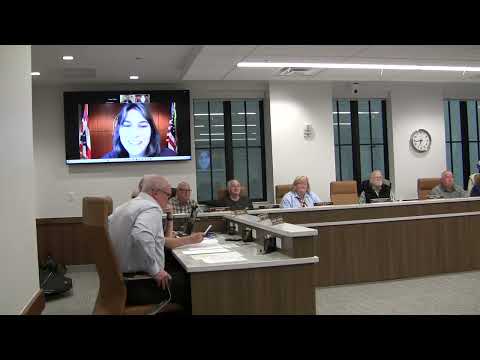
Representatives from the Ohio Consumers Council addressed the St. Marys City Council to explain a pending rate case in which Enbridge Gas Ohio has requested higher delivery rates.
Catherine Metz, identified herself as "a senior outreach and education specialist with the Ohio Consumers Council," and said the council represents residential utility consumers. Metz told the council that "Enbridge has requested to increase their delivery rates, by about $10 a month for the average household," and that the requested change would raise the fixed monthly charge — a change the consumer-advocate agency says disproportionately affects low-income households and older adults on fixed incomes.
Andrew Tinkham, a regulatory analyst with the Ohio Consumers Council, explained the regulatory timeline and the drivers of the request. He said a staff report from the Public Utilities Commission is scheduled to come out after July 17, followed by a 30‑day period for parties to file testimony or objections, and that the evidentiary hearing is scheduled for late September. He recommended the council act by mid-summer if it wished to file or press a local resolution in opposition.
Tinkham outlined several reasons the utility says it needs more revenue: capital investments, a large pension-related ADIT issue, higher insurance costs and a requested increase in return on equity. He stated the company is seeking to "increase their revenue by a 163,000,000" and to raise the utility's return-on-equity request to 10.3 percent; the Ohio Consumers Council emphasized concerns about raising fixed charges on bills.
The council read a draft emergency resolution (recorded as "Resolution 20 26 0 7") opposing Enbridge's request and the Ohio Consumers Council provided a consumer alert and a draft resolution for council consideration. Council members asked timing and procedural questions about readings and suspension of rules; staff said there is time to process the resolution under the normal three‑reading rule but that councils often act sooner if they wish to have local input on the regulatory record.
No final council vote on the opposing resolution was recorded at the meeting; staff told the council they would run the resolution through the normal readings and expected to follow up in about a month.
The Ohio Consumers Council's materials and the drafted resolution were provided to city staff for further action.