Get Full Government Meeting Transcripts, Videos, & Alerts Forever!
Get email alerts on the City Budget And Education topic
No spam. Unsubscribe anytime.
Richmond speakers urge council to fully fund Richmond Virtual Academy, press for housing and retirement fixes
Summary
Dozens of residents, parents and RVA staff urged Richmond City Council to close a $3.8 million funding gap for Richmond Virtual Academy, demanded the administration fund an $11.7 million Affordable Housing Trust Fund allocation required by ordinance, and called for a pause or review of the city's Flock Safety surveillance contract.
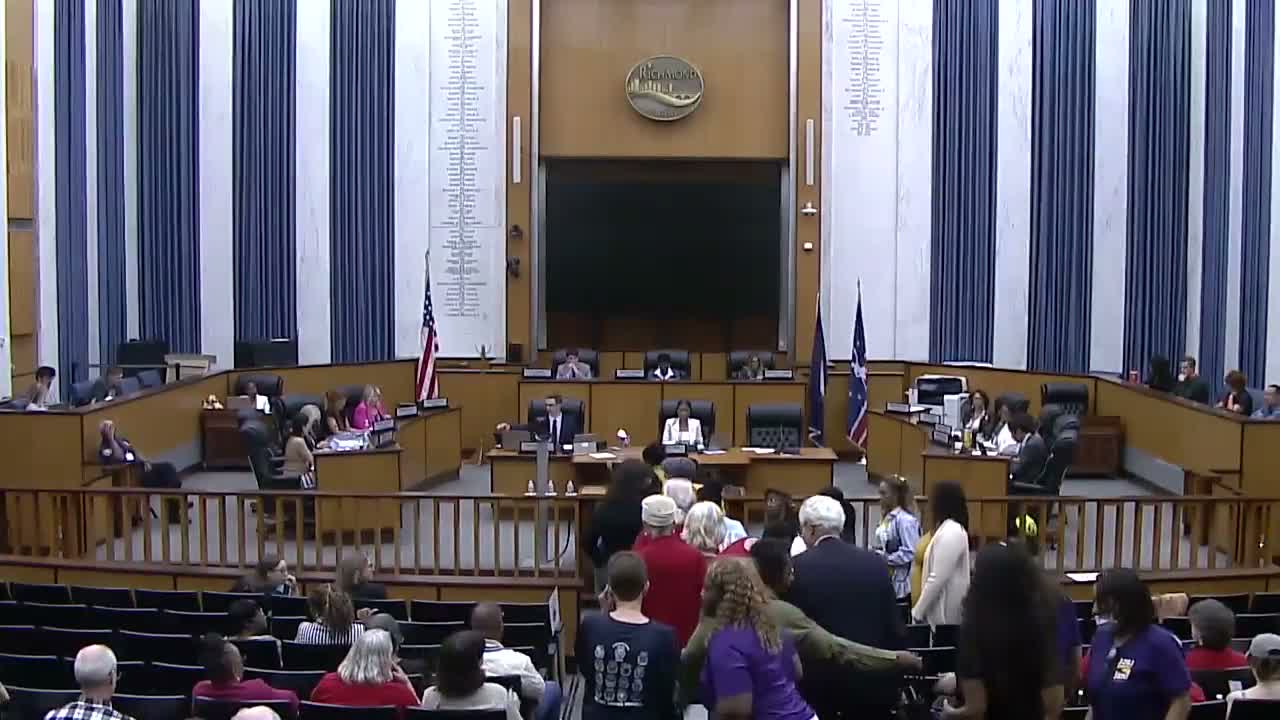
Dozens of Richmond residents and school advocates told the City Council on April 13 that the mayor's proposed budget risks disrupting services for vulnerable students and leaves legally mandated housing funding out of the draft.
"The cycle of uncertainty must end," said Dr. Cindy Robinson, principal of Richmond Virtual Academy, urging the council to "close the gap" in school funding and to fully fund Richmond Public Schools and RVA. Robinson said the proposed $257 million allocation still leaves about $3.8 million unmet and warned that the shortfall would particularly harm students with long-term medical or social-emotional needs.
Other speakers described student outcomes and program efficiencies they say justify preserving RVA. "The per pupil cost at RVA is half that of in-person learning," said Jacqueline Johnson Wilson, an RVA parent, adding that moving students back into in-person placements could create tens of thousands in transition costs for special education and transportation.
Advocates asked council to pair restoration of RVA funding with stronger fiscal oversight. Adam Rose, an RVA supporter, backed an independent audit of Richmond Public Schools and said the audit could clarify an unexplained $31 million shortfall identified by the superintendent.
Housing advocates pressed a separate but related demand: several speakers from the Affordable Housing Trust Fund oversight community said the mayor's draft budget failed to include the ordinance-mandated transfer of 2.5% of prior-year real-estate tax revenue (about $11.7 million) to the trust fund. "This omission plays into a pattern of pushing the Affordable Housing Trust Fund and the people it serves to the margins," said Nancy Konkle, a risk board member. Speakers urged councilmembers Gibson and Robertson's amendment language that would place the $11.7 million into the trust fund for fiscal year 2027 compliance.
Public-comment speakers also pressed the council on surveillance spending. A series of residents called for pausing or removing the proposed increase in funding for the city's contract with Flock Safety, a private vendor providing license-plate-reading cameras. "These cameras are insecure," Aurora Britt told the council, citing reporting she said shows employees had improperly accessed camera feeds; she asked council to end the contract.
Other residents and advocates recommended reallocating surveillance funds to housing, schools, and community services they said would prevent violence and improve public safety. William Allman, a retired accountant, warned that unresolved data-security problems with contracted camera systems could expose the city to costly litigation similar to cases elsewhere and urged further due diligence.
Speakers representing labor and retirees also backed several amendments: union representatives lauded a proposed wage increase for contracted janitorial workers, while retirees and current employees urged a modest cost-of-living adjustment (COLA) for city retirees after years without an increase.
Council President Newbill closed the budget public hearing after extensive comment and the council voted to continue ordinances tied to the budget (items 10 through 18) to the Monday, April 27 meeting for further deliberation and votes.
Why it matters: The public hearing showed strong, cross-issue coalition pressure on council to prioritize education, housing, and worker pay over additional surveillance funding. Council members signaled they would pursue amendments and additional review before finalizing the budget.
What comes next: Council continued the budget-related ordinances to April 27, when members are expected to consider amendments and formal votes. Several speakers requested a timeline change or direct outreach; council staff said they would follow up with individuals who provided names for casework or recertification issues.