Get Full Government Meeting Transcripts, Videos, & Alerts Forever!
Get email alerts on the Public Safety Police topic
No spam. Unsubscribe anytime.
Police staffing shortfall and technology costs discussed as department boosts civilian roles
Summary
Chief Rick Edwards told council RPD is authorized for 750 sworn officers but currently has 604 on staff; he described a civilianization strategy, active recruitment and a technology contract that would add license‑plate readers and audio detection under the Flock contract, while Vision Zero speed‑camera revenues were detailed as a growing surplus.
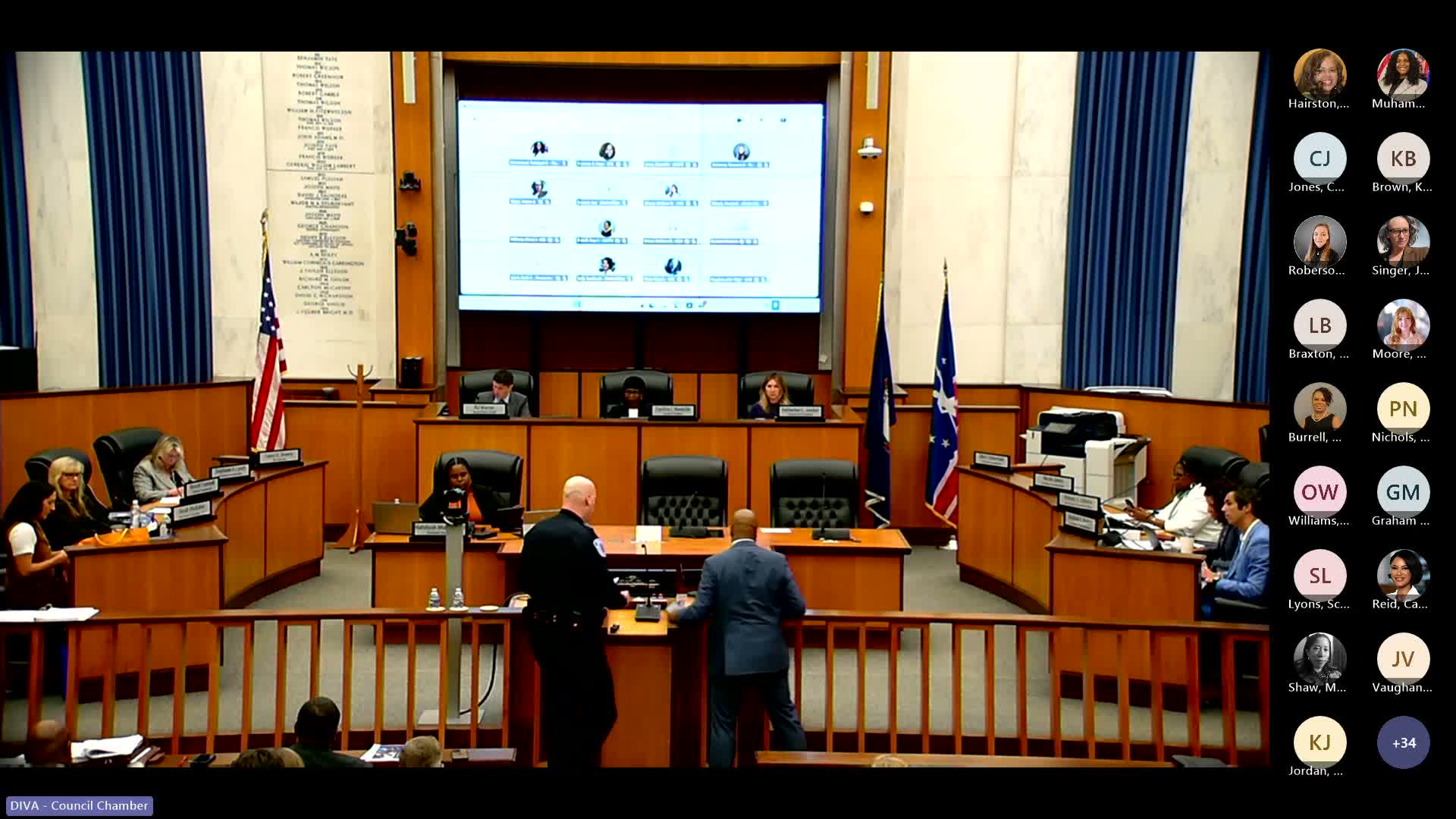
Council members pressed police leadership for detail on staffing and technology spending during the FY27 operations work session.
Chief Rick Edwards said the Richmond Police Department is authorized for 750 sworn positions, is funded for 650 and currently has about 604 sworn officers. He described a department review that seeks to civilianize certain roles (forensic technicians, crime analysis, disciplinary review) and to reallocate sworn duties where appropriate; he said the department currently has 28 recruits in training and that applications are up about 20 percent after expanded recruiting advertising.
On technology, Chief Edwards distinguished the vendor (Flock), the license‑plate reader technology and related gunshot/gunshot‑detection contracts. He estimated the LPR contract for the coming fiscal year at $371,250 and Raven audio detection at $167,200 — roughly $538,000 combined.
Councilwoman Gibson also pressed staff for the budgeted revenues and projected expenditures for Vision Zero (speed camera) programs. Chief Edwards reported FY26 year‑to‑date Vision Zero revenue of $4,145,330 and current expenditures of about $1,586,003, yielding a net surplus of approximately $2.5 million as of Feb. 28; he projected FY26 year‑end revenue near $5.4 million with estimated expenditures a bit over $2 million and said surplus funds support the Vision Zero program. He added that FY27 projections for red‑light cameras had not yet been prepared.
Councilmembers requested that staff provide the detailed line items and projections to show how technology contracts and program revenues are budgeted and where any surplus is recorded in the city’s accounts.
No policy changes or procurement approvals were made at the session; council asked for follow‑up documents to allow closer review before any formal decisions.