Get Full Government Meeting Transcripts, Videos, & Alerts Forever!
Get email alerts on the Pedestrian Safety topic
No spam. Unsubscribe anytime.
Residents and advocates press Richmond council for immediate pedestrian-safety actions after recent deaths
Summary
Multiple speakers, including BikeWalk RVA and family members of victims, urged immediate city action on pedestrian safety — recommending lower speed limits, pedestrian-only signal phases and targeted alerts — and criticized infrastructure and equity gaps.
At Richmond City Council’s meeting, several residents and transportation advocates urged immediate action to address multiple recent pedestrian deaths and longer-term trends the speakers described as worsening since the city adopted Vision Zero.
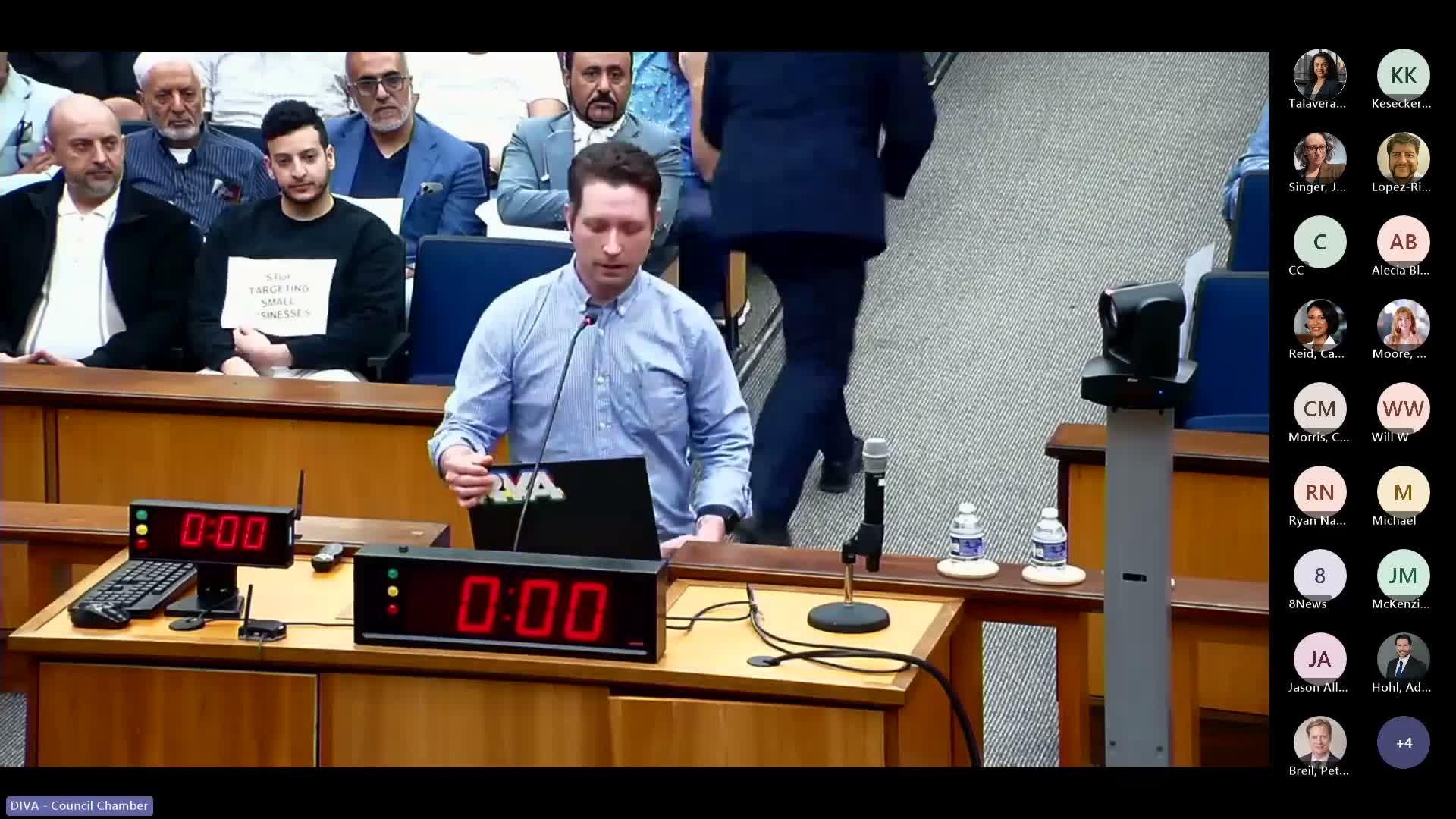
Brantley Tindall, director of BikeWalk RVA at Sports Backers, said Richmond’s pedestrian-fatality rate over three years is the worst in the state and described specific local fatalities to argue the problem is an infrastructure failure rather than the result of pedestrian behavior. "We need to consider whether crosswalks are enough," Tindall said, and recommended lowering speed limits, daylighting intersections, and instituting pedestrian-only signal phases.
Fatima Kamara, a 1st District resident, said she personally had multiple close calls this year and urged the city to deploy Richmond Ready alerts and electronic message boards at dangerous intersections while pursuing infrastructure fixes. She framed camera enforcement as a temporary measure and said high-crash corridors are disproportionately located in historically redlined neighborhoods.
Cathy Burrell of the 9th District gave a personal, emotional account of her daughter’s death on Nov. 29 in a crosswalk and told the council she believes criminal or administrative consequences are insufficient under current law: "It's not an accident. It's a crime," she said, calling on legislators to consider changes that would hold drivers accountable.
Speakers urged the council and administration to pursue a combination of short-term countermeasures (alerts and signage) and longer-term changes (speed-limit reductions and redesigned intersections). The council offered condolences and pointed speakers to staff legislative liaison Tarnika Edmonds for follow-up and referrals to appropriate departments.