Get Full Government Meeting Transcripts, Videos, & Alerts Forever!
Get email alerts on the Rps Budget topic
No spam. Unsubscribe anytime.
RPS superintendent presents FY27 budget that restores raises, protects student supports while keeping some central-office cuts
Summary
Superintendent Jason Kamras told Richmond’s Organizational Development Committee his FY27 proposal covers collective‑bargaining commitments with a 2% raise for bargaining units, funds mental‑health and summer‑school supports, shifts health‑insurance cost sharing, and relies on state and city funding assumptions that include $7 million in one‑time state dollars and a projected $9 million city increase.
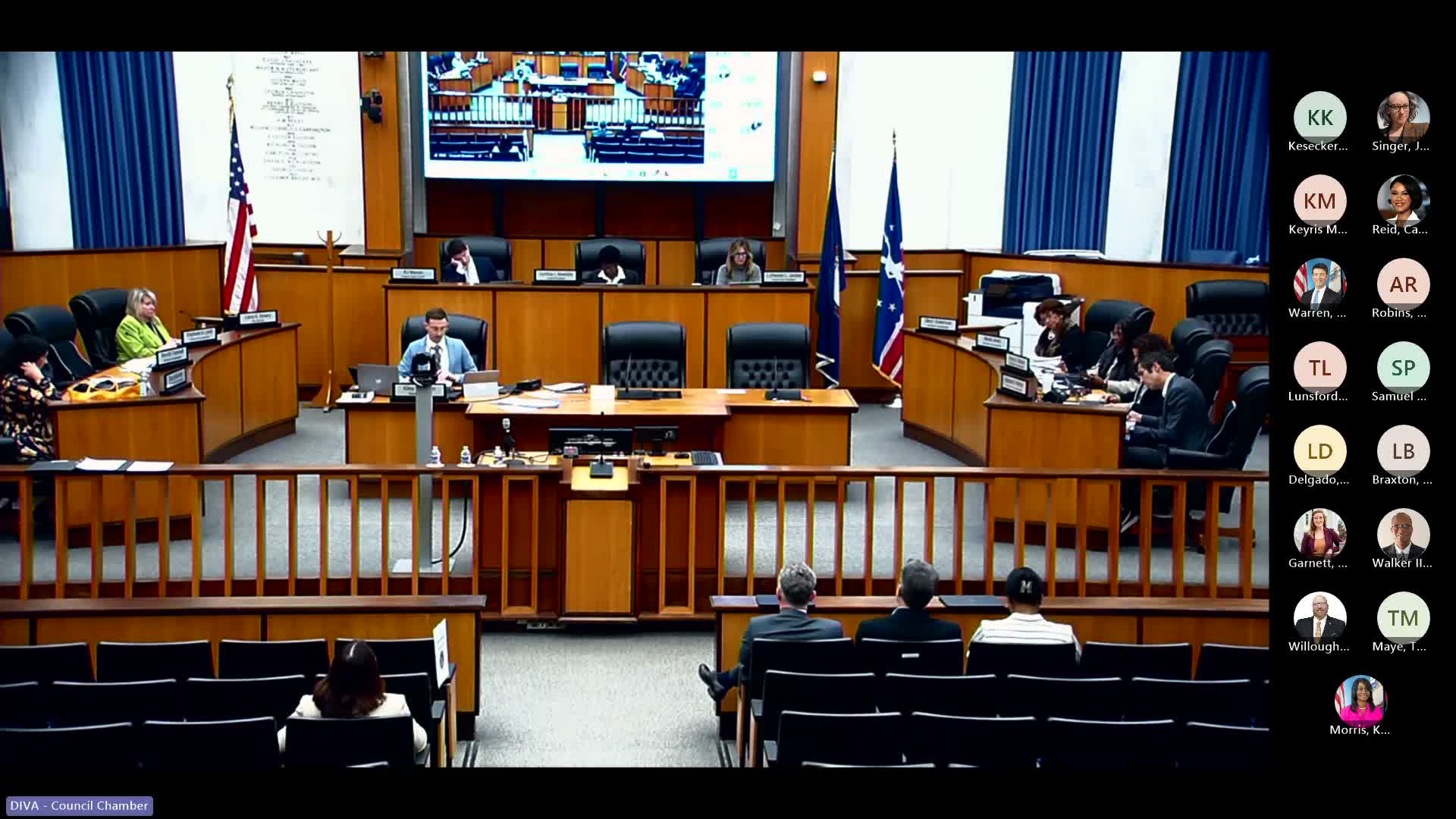
Superintendent Jason Kamras told the Organizational Development Standing Committee that Richmond Public Schools is proposing an FY27 budget that preserves collective‑bargaining commitments while restoring several items that had been at risk.
Kamras said the proposal includes a 2% raise for all bargaining units currently in negotiation, full funding for mental‑health and wraparound support contracts, full funding for summer school, and elimination of a previously proposed furlough. At the same time, it retains earlier reductions including the proposed closure of Richmond Virtual Academy and the elimination of 46 central‑office FTEs; Kamras said the full list of the 46 positions appears on page 37 of the district document.
Why it matters: Kamras framed the package as a trade‑off that balances student supports and contractual obligations against persistent fiscal constraints. He stressed that recent local investment has coincided with measurable academic gains: “we have had back to back years of growth in all 4 of the SOL subject areas,” and he noted strong gains among economically disadvantaged students.
Kamras highlighted three performance markers to justify the ask. Richmond’s economically disadvantaged students gained roughly 10 percentage points in reading over two years while the statewide gain was about 2 points; multilingual learners’ reading proficiency in Richmond slightly exceeds the state average; and the class of 2025 saw an 88% graduation rate for African American students and an 84% rate for economically disadvantaged students, which he described as record or near‑record performance.
Budget assumptions and risks: Kamras said the district built the budget on the House budget assumption of roughly a $20 million state increase (the Senate number was closer to $16 million). He noted that about $7 million of the new state funding is one‑time money “unless replaced with other funding,” and warned that using one‑time dollars for recurring costs such as raises would create a shortfall in FY28. Kamras said he recommended using the funds to meet collective‑bargaining commitments and continue advocacy for sustained state support.
Kamras also explained the Local Composite Index (LCI = 0.58), telling the committee the state’s formula calculates Richmond as able to pay roughly 58% of public‑education costs — higher than neighboring counties — which he used to argue the state funding formula needs revision.
Capital needs and program details: The superintendent said the district’s CIP request is about $10.3 million, covering electrical, fire‑safety, HVAC, plumbing, roofs and structural work. That request includes a $1 million ask to address parking and drop‑off at Westover Hills Elementary in conjunction with the city’s planned Jenk Road work.
Council exchanges: Council members pressed Kamras on the reliance on one‑time funding and the risk that raises and restored services could create a fiscal cliff next year. Council Member Gibson asked whether the House funding included one‑time items; Kamras pointed to slide 19 and told the committee “about 7,000,000 of the new state funding is one‑time money unless replaced with other funding.” Kamras said the district had scoured contracts over $25,000 to find savings and had eliminated duplicative software programs but that the trade‑offs remain difficult. On demographic change, Kamras said the district’s Latino enrollment has grown from roughly 13% to close to 25% over several years and that recent federal enforcement activity may have dampened that growth.
Process and next steps: Kamras said the school board would discuss the proposal at a work session that evening and vote the next night to approve a budget to send to the mayor; the mayor’s proposed budget would then come back to council for consideration. He thanked the General Assembly delegation and the city for support, and said the district would continue advocacy to convert one‑time support into recurring funding where possible.
The committee did not take formal action on the proposal during the meeting; Kamras’ presentation was followed by extended council questions and requests for follow‑up information.
Ending: The school board is scheduled to vote on the proposal the night after this presentation; the mayor and Richmond City Council will consider city funding and CIP allocations in coming budget deliberations.