Get AI Briefings, Transcripts & Alerts on Local & National Government Meetings — Forever.
Thornton Council approves Parterre Planning Area 5A concept, attaches traffic monitoring and conditions
Loading...
Summary
The council unanimously approved a conceptual site plan for 72 acres in the Parterre development (Planning Area 5A) after extensive public comment on traffic; staff and the applicant committed to updated, site-specific traffic analyses and staged roadway triggers before major buildout.
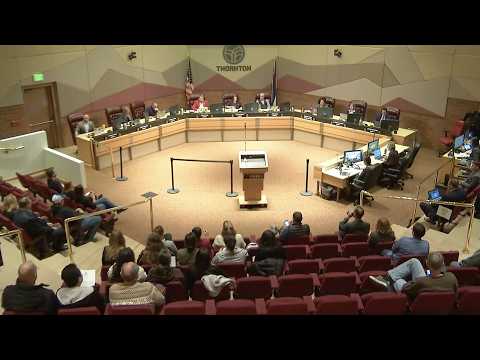
The Thornton City Council unanimously approved a conceptual site plan for Planning Area 5A of the Parterre development, a roughly 72-acre parcel at the southwest corner of E-470 and Quebec Street, after residents urged the city to tighten traffic guarantees.
Principal planner Colin Weihab told the council the plan designates about 38 acres for regional commercial uses and about 34 acres for mixed-use development, and includes 19 lots, a linear park and a regional multiuse trail. "The proposed CSP reflects this vision and aligns with the regional mixed use designation," Weihab said.
Residents at the public hearing pressed for clearer commitments on road improvements and questioned whether traffic studies were current. Tony Enron, a neighborhood speaker, called the master traffic report "ancient history" and asked the council to postpone approval until a more specific traffic plan was provided.
City traffic staff and the applicant said recent, site-specific counts were collected and that the normal plan-development review requires updated traffic analyses and monitoring as part of subdivision plat and development-plan stages. Jeff Plank, who helped prepare the project-specific traffic study, said projected daily traffic at the improved segment would be roughly 13,000 vehicles per day at build-out and that the design anticipates lane expansions and new signals timed to traffic thresholds.
Council discussion focused on balancing growth with responsible infrastructure. Councilmember Byrd, who moved the resolution, said a conditional approval that ties future construction to the agreed roadway improvements was appropriate. "We need responsible planning that gives benefits to the whole community," Byrd said.
The council approved the plan with conditions requiring that subdivision and pad development filings include updated traffic studies and that the master developer and city meet trigger thresholds for road widening and intersection improvements before major occupancy.
With the vote, staff said the approval advances required public-infrastructure design but that individual pad sites will still need separate development-plan review and traffic confirmations.
What happens next: the developer proceeds with subdivision and infrastructure engineering; the city will require updated traffic analyses and verify trigger points before issuing major construction permits.