Get AI Briefings, Transcripts & Alerts on Local & National Government Meetings — Forever.
Residents urge Richmond City Council to address privacy risks from Flock camera systems
Loading...
Summary
Multiple residents used the public-comment period to urge the council to reconsider Flock camera deployments, citing corporate terms that allow broad data use, reported employee access to camera feeds, and alleged improper federal access to Richmond systems. Speakers asked the council to prioritize privacy and equity before expanding surveillance.
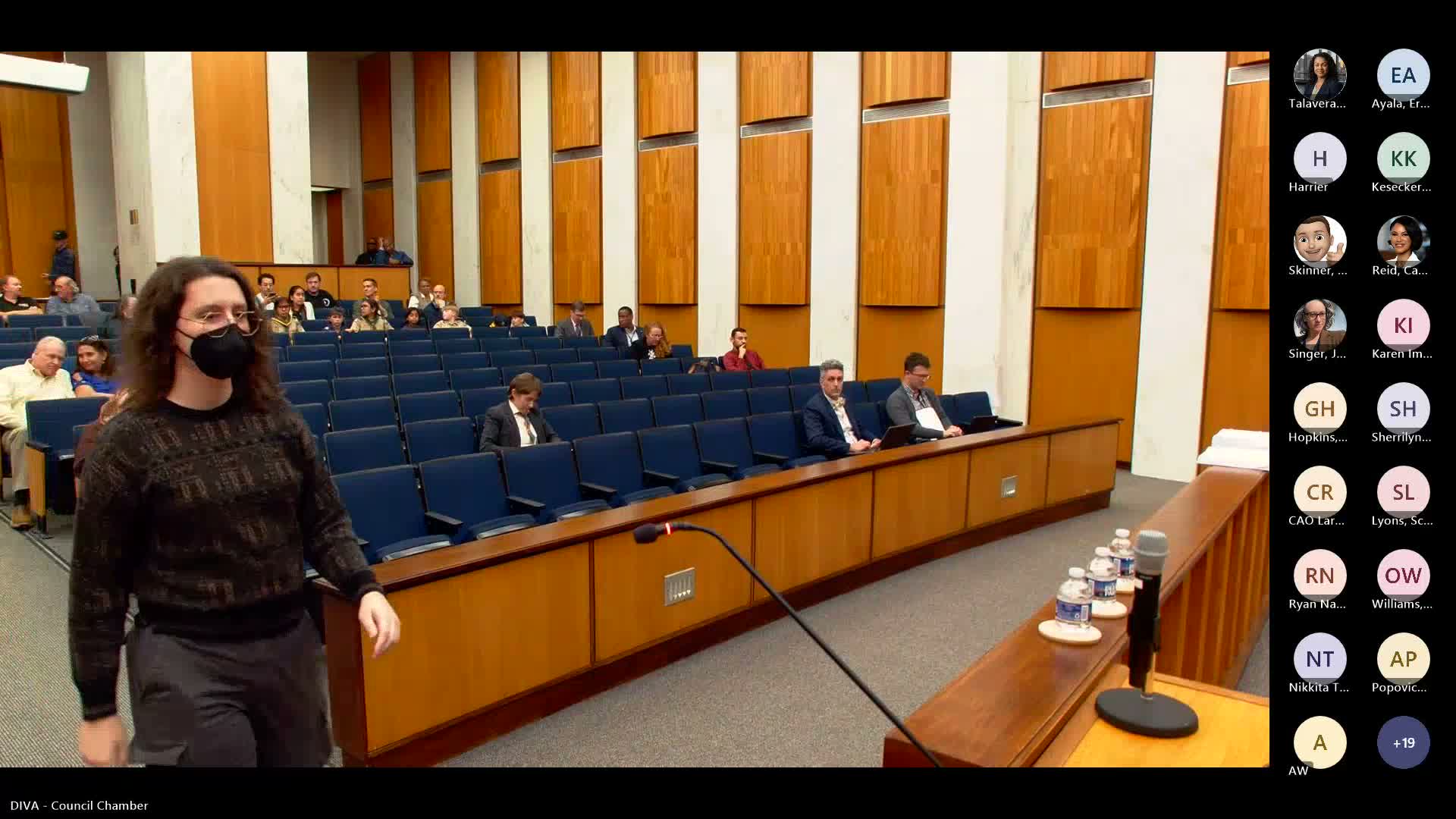
During public comment at the Richmond City Council formal session, three residents raised privacy and equity concerns about the city’s use of Flock automated license-plate and camera systems.
Aurora Britt asked the council to “get rid of the cameras,” saying she had recently heard reports from Los Angeles where, she said, federal agents used camera feeds to follow protesters home. Michael Weiss read from Flock’s terms and conditions, warning that customer agreements can grant Flock broad rights over ‘‘customer data’’ and that Flock employees or third parties may access feeds. He said, ‘‘Customer hereby grants the Flock limited nonexclusive royalty free, irrevocable, perpetual worldwide license…’’ and pointed to reporting alleging company employees accessed cameras at a children’s gym in Atlanta.
Daniel Tobias framed the issue as both a local privacy concern and a matter of civil liberties and racial equity. He told the council that, in his view, Richmond’s systems were improperly accessed by a federal agency for immigration enforcement across several months in 2025 and warned that predictive policing tied to aggregated camera data ‘‘disproportionately and hugely impact minority-majority areas’’ worked into existing patterns of over-policing.
None of the three speakers asked the council to adopt a specific ordinance during the meeting; they urged staff and elected officials to investigate reported access incidents, reconsider existing contracts and technical controls (two-factor authentication, logs and access limits), and ensure that any surveillance tools do not entrench inequitable policing. The council did not take immediate formal action on Flock during the session.
The public comment brought up three kinds of claims: contract provisions that may permit broad corporate use of data, reported employee access to camera feeds in other jurisdictions, and an allegation of improper federal access to Richmond’s systems. Council members acknowledged the concerns during later agenda items but did not vote on new restrictions at the meeting. The issue was raised publicly and may be expected to resurface in committee or future council discussions.