Get Full Government Meeting Transcripts, Videos, & Alerts Forever!
Get email alerts on the Tax Deferral Program topic
No spam. Unsubscribe anytime.
Finance committee continues tax-deferral ordinance after administration raises administration and cost concerns
Summary
The committee heard opposing administration testimony that the proposed real-estate tax deferral is an administratively complex loan program rather than tax relief and continued the ordinance to the May 20 finance meeting so sponsors can tighten implementation details and fiscal estimates.
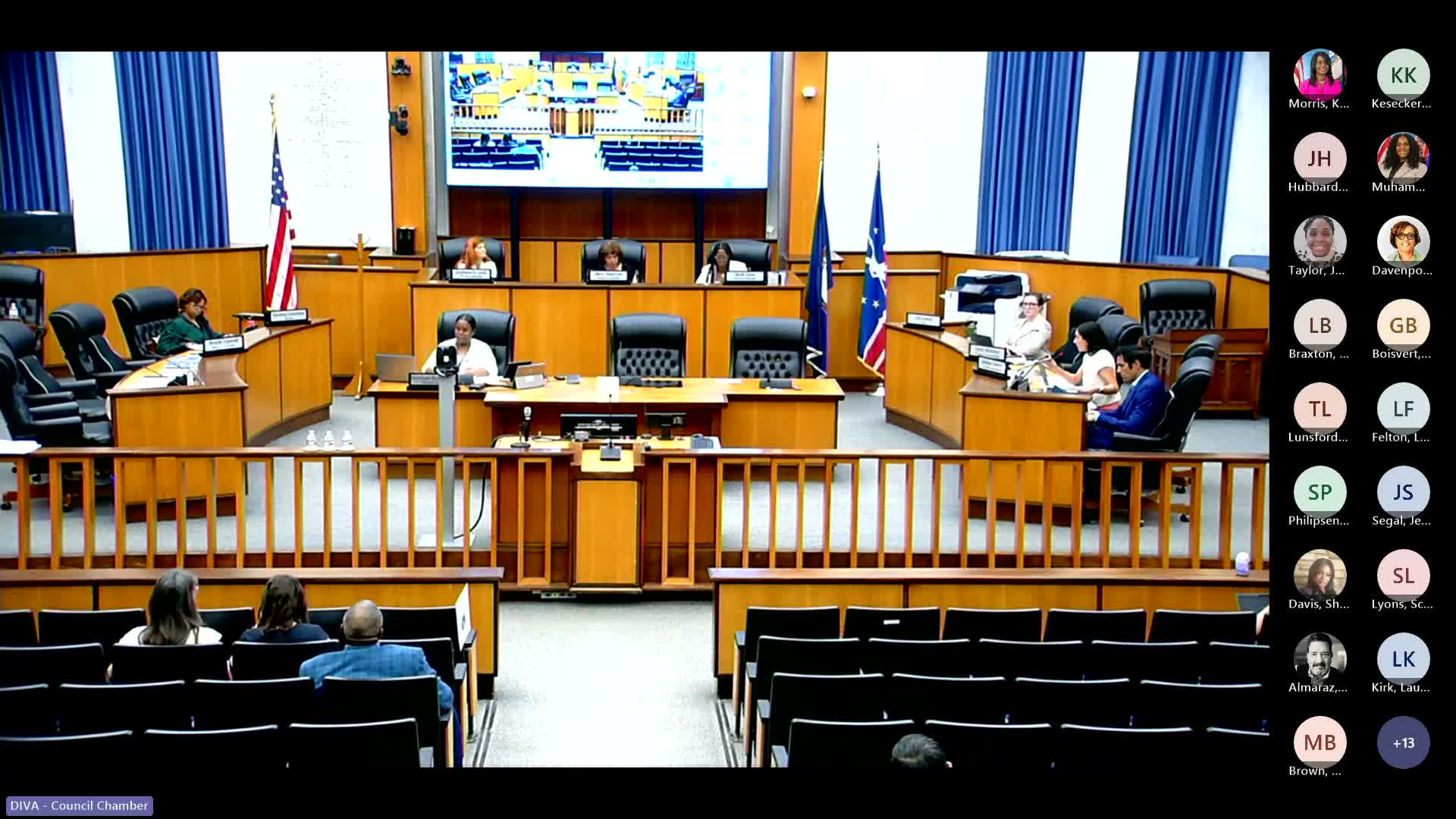
The Richmond City Finance and Economic Development Standing Committee on Thursday continued consideration of an ordinance that would create a real-estate tax deferral option for some owner-occupied homes, after city revenue staff warned the measure could be costly and administratively complex.
The ordinance, as introduced by the lead patron, would let owner-occupied residences with assessed values under two times Richmond’s median home value defer taxes on assessment increases above a 5 percent year-over-year threshold. Deferred amounts would accrue at a 2 percent interest rate and the draft includes a combined principal-and-interest cap of $50,000.
At a public hearing, Ken Martinez, director of revenue administration, told the committee the administration opposes the ordinance in its current form. "The ordinance doesn't actually provide any tax relief," Martinez said. "It provides a deferral, a mechanism that actually attaches interest and a lien." He also warned that processing could require substantial additional staff and back-end systems, estimating "at least $1,700,000" annually in staffing costs under one high-participation scenario and noting the estimate assumed roughly 20 additional full-time equivalents and unspecified software costs.
Lead sponsor (Lawmaker) described the program as an alternative anti-displacement tool intended to help homeowners stay in place through near-term assessment spikes. The sponsor said the draft includes annual reporting and an implementation committee, and that the bill would push the program start date to Jan. 1, 2028, to allow planning time. "The success of this program will be measured by people staying in the city of Richmond," the sponsor said, and said reporting would include participant counts, deferred amounts, interest charged and customer satisfaction metrics.
Committee members pressed administration staff on the $1.7 million estimate and whether staffing could be scaled; Martinez said the figure was a ballpark based on a scenario with several thousand participants and a per-application processing time the revenue team estimated at about 4–6 hours. Several council members said the staffing number should be refined during implementation planning, and asked that the implementation committee more clearly define membership, selection criteria, deliverables and approval procedures.
After extended discussion of administrative capacity, reporting requirements and the timing of assessment data the assessor will provide, the committee voted to continue the ordinance to the May 20 Finance and Economic Development Standing Committee meeting so sponsors and administration staff can refine amendments and provide a tighter implementation plan and cost estimate. The motion to continue was carried by recorded voice vote (Miss Lynch: Aye; Vice Chair Jones: Aye; Chair: Aye).
What happens next: the ordinance will return to the Finance committee on May 20 with proposed amendments to the implementation date, the establishment of an implementation committee and deadlines for submission of a proposed implementation plan. The committee asked that the plan include a breakdown of FTE needs and any third-party contract costs before any final vote.