Get Full Government Meeting Transcripts, Videos, & Alerts Forever!
Get email alerts on the Surveillance Alpr topic
No spam. Unsubscribe anytime.
Residents, scholars and advocates urge Richmond to end Flock Safety ALPR contract
Summary
Dozens of Richmond residents, academics and civil-rights advocates told council during public comment that the city's contract with Flock Safety's automatic license-plate readers harms privacy and is deployed unevenly; speakers cited documented unauthorized access by federal agents and asked the mayor and council to cancel the contract.
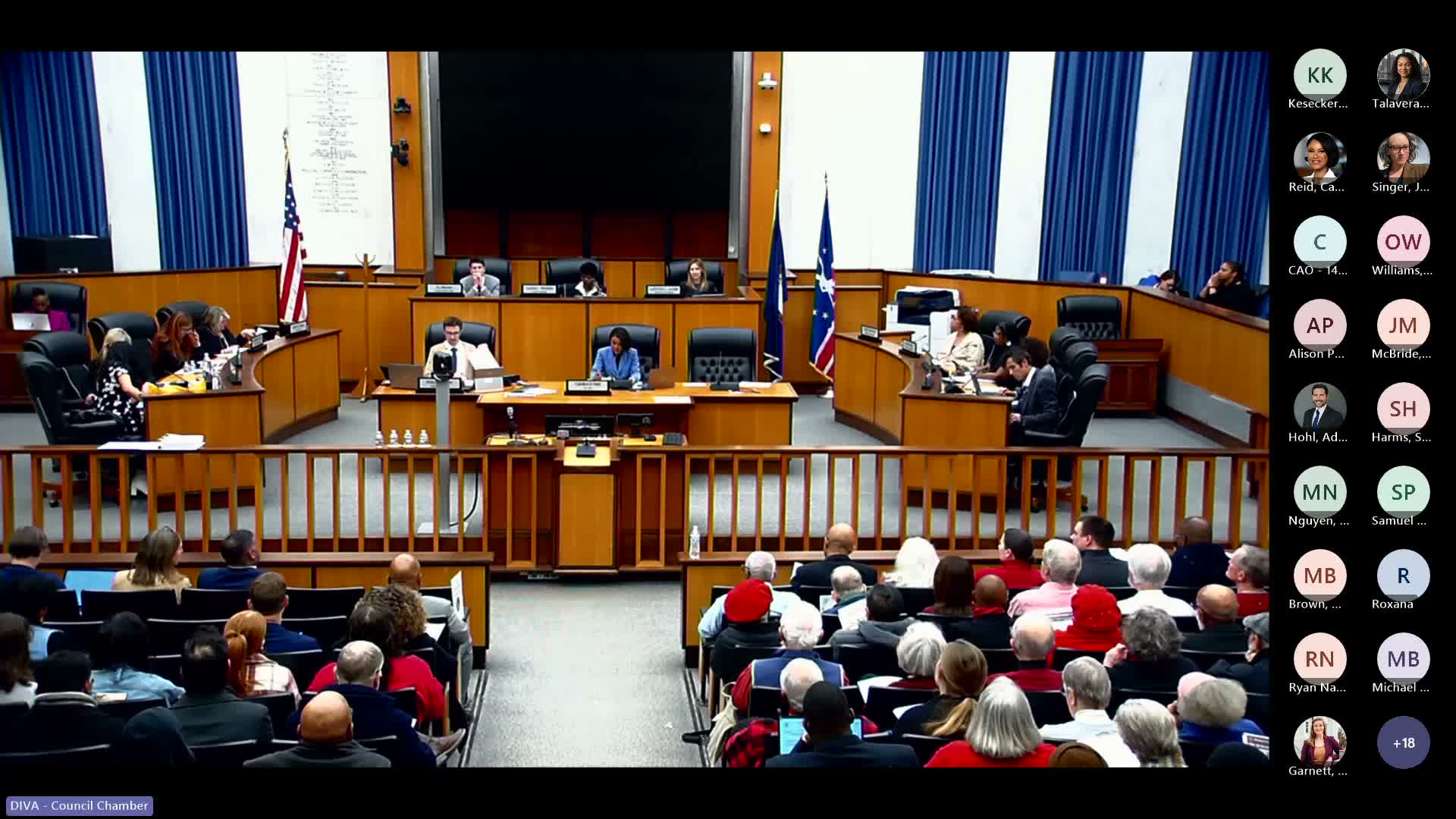
Dozens of Richmond residents, scholars and civil-rights advocates told the City Council during public comment that the city should end its contract with Flock Safety, a private vendor that sells automated license-plate readers (ALPRs).
Speakers urged the mayor and council to cancel the contract on the grounds of privacy, racial equity and data-security risks. "Flock Safety is a private company that has anecdotally been said it's essential to solving crime, but most of the empirical evidence demonstrating effectiveness primarily comes from the company itself," said Jing Lei, a resident of the 1st District.
Experts and advocates framed their case around three concerns: the pattern of camera placement, documented third-party access to Richmond's data, and the company's contractual terms. "When you live in a predominantly Black, high-poverty neighborhood, you are surveilled at a far higher rate," said Steven Keener, a criminology professor who said his work mapping camera locations shows cameras cluster in majority-Black census tracts. Keener told council the result is a feedback loop of surveillance that can intensify policing in the same neighborhoods.
Several speakers cited an ATF analyst's access to Richmond's ALPR data between February and June 2025 and said that access was used in immigration-related queries. "The ATF had access to Richmond's Flock data for six months," said Cullen Murr, a 5th-District resident who said his driveway is within view of four ALPRs. "We are not aware of any criminal charges stemming from this incident." Speakers also mentioned reports of ICE and other federal agencies accessing ALPR networks in other localities.
Advocates warned about contract language that could allow broader data uses. "Flock updated their terms of use to remove many guardrails against machine-learning use and abuse," said Victoria McCullough of the Richmond Democratic Socialists of America, adding that the company's updated terms narrow exit options and route disputes to arbitration in Georgia.
Speakers asked council to pursue alternatives that prioritize community-driven public-safety strategies and to halt contract renewals. "Flock Safety is not only fundamentally dangerous and unethical," one commenter said, "but it places a large burden on our local law enforcement and decreases trust in the community."
The council closed the public-comment period and the president noted a staff presentation on this topic would appear at the public-safety committee meeting scheduled for Tuesday, Feb. 24 at 1 p.m. in City Hall; copies of the presentation were also made available in the back of the chamber.