Get Full Government Meeting Transcripts, Videos, & Alerts Forever!
Get email alerts on the Diamond District topic
No spam. Unsubscribe anytime.
Richmond council approves $14.7M contingency transfer to EDA for Diamond District parcel; one member votes no
Summary
The council voted to amend the FY26 budget to advance a short‑term $14.7 million transfer (promissory note) from contingency reserves to the EDA to acquire a 6.6‑acre parcel from VCU for the Diamond District redevelopment; Council Member Gibson cast the lone No vote after raising concerns about contingency‑fund rules and liquidity.
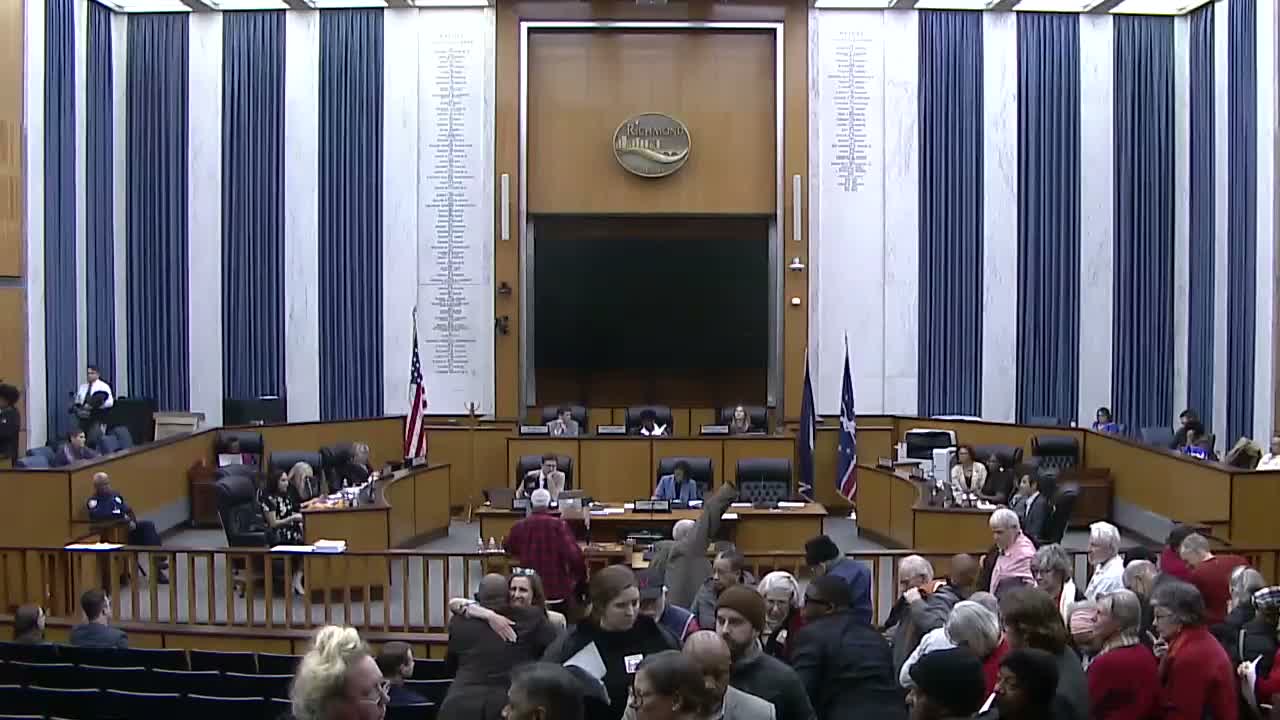
The Richmond City Council on Feb. 23 approved an amendment to the fiscal‑year 2026 general fund budget that transfers $14.7 million from the city’s contingency reserve to the Economic Development Authority (EDA) to acquire a 6.6‑acre parcel (Sportsbacker Stadium site) from Virginia Commonwealth University for the Diamond District redevelopment.
The ordinance (20‑26‑041) authorizes a short‑term financing structure: a promissory note from the EDA with expected repayment from land‑sale proceeds from future phases of the project. Administration staff told council the EDA holds approximately $11 million from prior phase sales and that the city’s cash would be exchanged for a promissory note that remains an asset on the fund balance rather than a permanent depletion.
Why it matters: Project backers said closing the ‘‘doughnut hole’’ parcel is needed for phase‑one infrastructure and private development to proceed. Developer Diamond District Partners said it is ready to break ground on a 276‑unit market and affordable apartment building and plans include 161 affordable units averaging 60% AMI, with some 30% AMI units reserved for public‑housing voucher holders.
Council debate and vote: Councilmember Gibson raised statutory and prudential objections, quoting city code 12‑2‑63 to argue contingency funds should be reserved for catastrophic, unforeseen events, not for a short‑term loan to a private developer. ‘‘I don’t see how this aligns with the codes that this body adopted,’’ she said during a lengthy exchange with finance staff and the administration.
Finance director Michael Wynne explained the administration’s view that the transaction converts cash into a promissory note, which remains on the contingency fund balance and can be liquidated if necessary, though not as readily as treasury securities. Administration representatives argued a bond issuance for $14.7 million would be disproportionally expensive for this relatively small, short‑term need.
The vote passed on a roll call; the clerk recorded a single No vote by Miss Gibson and Aye votes from the other members present.
Representative details from the record: • Purchase price and structure: the parcel purchase price described in prior agreements is $25 million; the EDA has about $11 million available from prior phase sales; the city would advance roughly $14 million plus $700,000 in carrying charges as a short‑term promissory arrangement. • Developer plans: Jason Guillot (Diamond District Partners) said the team is ready to break ground on a 276‑unit building, has financing lined up and expects the EDA to repay the city with future land sale proceeds.
Next steps and safeguards: Administration said the note is expected to be repaid within a 5‑ to 7‑year window from land‑sale proceeds; council asked for additional transparency and periodic reporting on the project’s finances. Council member Gibson said she would continue to press for clearer reporting and protections.
Vote record (as read at meeting): Mr. Bridal — Aye; Miss Gibson — No; Miss Jones — Aye; Miss Robertson — Aye; Miss Lynch — Aye; Miss Trammell — Aye; Miss Abubakar — Aye; Vice President Jurden — Aye; President Newbill — Aye.