Get Full Government Meeting Transcripts, Videos, & Alerts Forever!
Get email alerts on the Planning Commission Duties topic
No spam. Unsubscribe anytime.
Staff walks Richmond Planning Commission through duties, special-use permit criteria and location/character/extent reviews
Summary
City planning staff presented a refresher on the commission's authority, special-use-permit standards and general location/character/extent (LCE) reviews, reiterated departmental circulation for SUPs and reminded commissioners of the 60-day approval clock for LCE items.
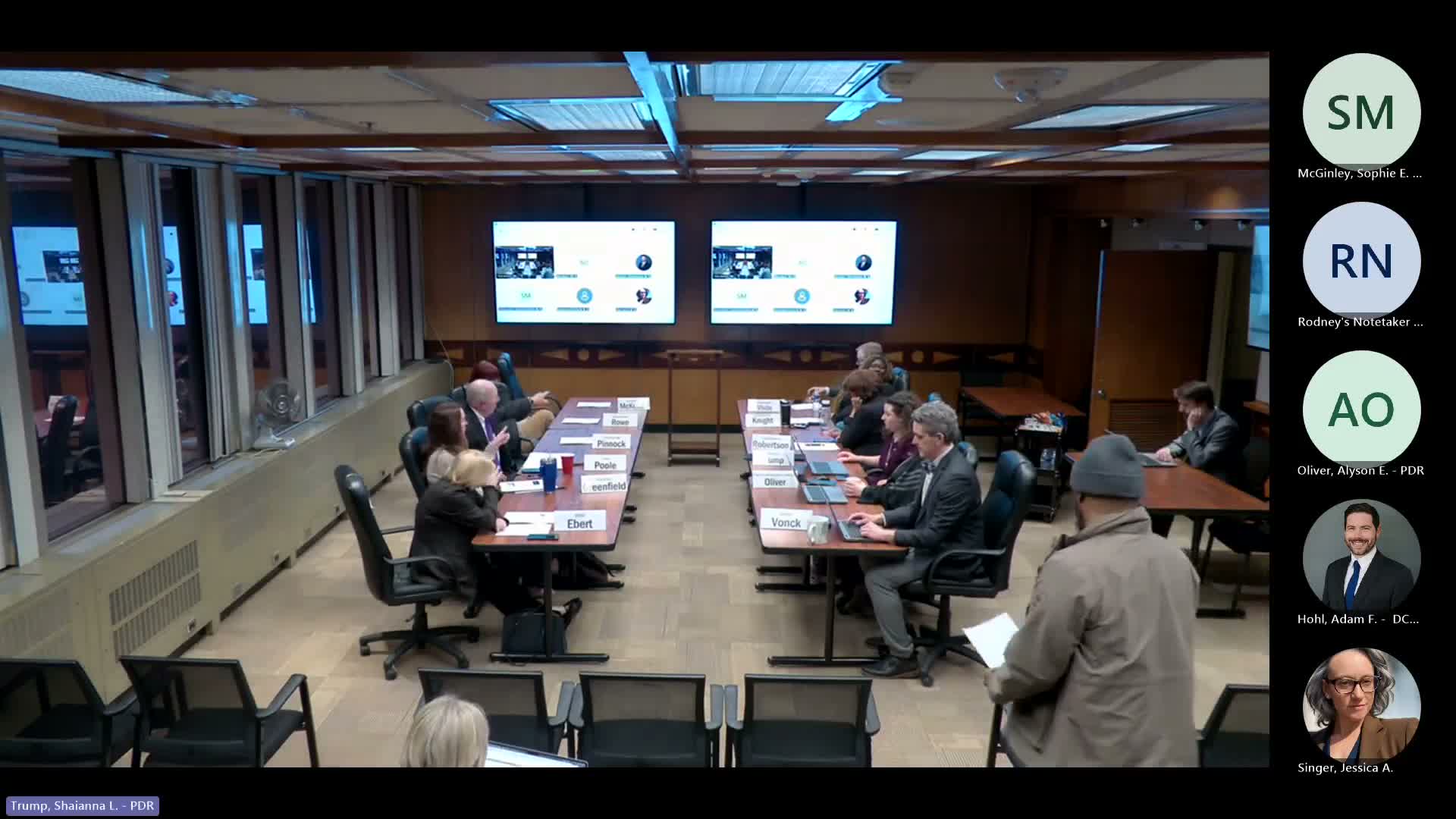
City planning staff led a refresher on the planning commission's authority and common application types at the commission meeting, emphasizing the body's role in the city's master plan and how it reviews special use permits (SUPs) and general location, character and extent (LCE) items.
The presenter summarized the commission's composition under the city charter and said the commission is primarily a recommending body that forwards many decisions to city council, but that it acts as the approving body for master plan amendments, final community unit plans and LCE reviews. "Everything the planning commission does comes back to this," the presenter said, describing the commission's duty to make, adopt and administer the master plan.
On SUPs, the presenter outlined the charter's minimum criteria that staff evaluates: the proposed use must not be detrimental to public safety, health or welfare; it must not create congestion on public ways; must not create fire or panic hazards; must not cause overcrowding or unduly concentrate population; must not adversely affect schools, parks, water or sewer systems, transportation or other public requirements; and must preserve adequate light and air. The presenter said staff circulates SUP applications to multiple departments, including transportation and public utilities, and will not generally move forward with a recommendation for approval if those departments raise a "glaring" issue.
The presentation also explained LCE reviews under the charter. The presenter described them as "general" reviews of proposals for public spaces, public buildings, changes to public ways, and the acquisition or disposition of city property, stressing that LCEs are meant to be broad rather than technical engineering reviews. The presenter noted a 60-day approval clock in the charter: if the commission does not act within 60 days of official submission, the item is deemed approved.
Commissioners asked clarifying questions about the planning commission's relationship to the city's capital improvement plan (CIP) and whether the commission formally reviews CIP content. Staff said the charter requires the CIP be submitted to the commission but does not mandate a formal review, and that the master plan remains the principal reference for evaluating public projects. A commissioner raised sewer-capacity concerns tied to the SUP minimum-criteria test for adequate light and air; the presenter said SUPs are circulated to public utilities and noted a recent case where lack of capacity informed a recommendation for denial.
The presenter closed by encouraging commissioners to suggest future refresher topics and by pointing to training resources: the Virginia Certified Planners Planning Commissioners program at Virginia Commonwealth University, which the city can help fund and register commissioners for.
The meeting concluded after a brief council-action update and adjournment.