Get Full Government Meeting Transcripts, Videos, & Alerts Forever!
Get email alerts on the Surveillance Alpr topic
No spam. Unsubscribe anytime.
Residents and advocates urge Richmond to end Flock Safety contract, citing privacy and equity concerns
Summary
Dozens of residents and civil-rights advocates told the Richmond City Council on Feb. 23 that automated license plate readers from Flock Safety threaten privacy, have been accessed by federal agencies and disproportionately target Black and low-income neighborhoods, and urged the council and mayor to end the contract.
Dozens of Richmond residents urged the City Council on Feb. 23 to cancel the city’s contract with Flock Safety, a private vendor that supplies automatic license plate readers (ALPRs), saying the technology harms privacy and is deployed unevenly across the city.
The appeals came during the public-comment portion of the council meeting, where speakers including Jing Lei, Steven Keener and Kalia Harris described documented and alleged problems with ALPR networks and with how Flock shares and secures data. ‘‘Flock is a private company … there’s little oversight and accountability,’’ Jing Lei, a 1st District resident, told the council. ‘‘How do we keep us safe when we cannot guarantee data security and privacy?’’
Why it matters: Commenters argued the costs and civil‑liberties risks of ALPR networks outweigh any law-enforcement benefits and that the burdens fall disproportionately on Black and low-income neighborhoods. Several speakers cited instances they said showed federal access to Richmond’s ALPR data and warned that access can enable immigration enforcement or stalking.
Advocates and experts gave specific examples and studies. ‘‘The 10 census tracts with the most cameras—eight are majority Black,’’ criminology professor Steven Keener said, summarizing a geospatial analysis he said shows intensive surveillance in historically redlined neighborhoods. Keener said the distribution of cameras was a better predictor of race and class than of crime.
Speakers described alleged local and national misuses and technical errors. Ruby Cherian of the Legal Aid Justice Center warned of misidentifications and costly mistakes: she pointed to national cases in Aurora, San Francisco and Toledo where ALPR errors led to arrests or other harms. Several speakers also said federal agents, including an ATF analyst, had accessed Richmond’s ALPR data without authorization during a six‑month period earlier in 2025 and that queries had been used in immigration‑related cases.
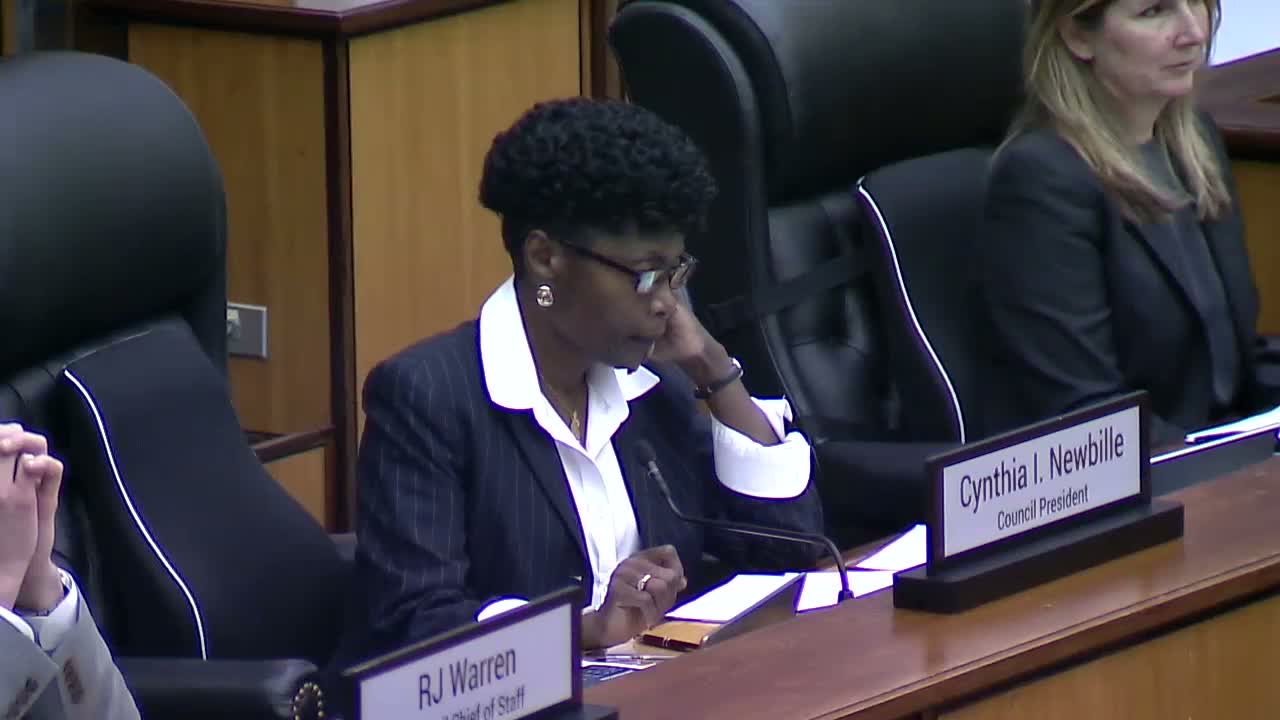
Council response and next steps: Council President Cynthia Newbill thanked speakers and noted a public‑safety presentation would be held the following day. The council said Chief of Police’s materials and state legal bounds will be discussed at that public safety meeting and that copies of the presentation were available in the chamber.
What was not decided: The council did not vote on citywide ALPR policy or on ending the contract at the Feb. 23 meeting. Speakers asked the mayor and council to act ahead of any planned contract renewal; council members said they would review the forthcoming staff presentation and legal analysis.
Representative quotes: "Flock Safety is a private company … there’s little oversight and accountability when it comes to how they operate," Jing Lei said. "When you live in a predominantly Black, high‑poverty neighborhood, you are surveilled at a far higher rate than other residents of the city," Steven Keener said.
What’s next: City staff and the police department will present details at a public safety meeting on Feb. 24; council members said they expect additional briefings and will consider the public’s concerns in any future contract decisions.