Get Full Government Meeting Transcripts, Videos, & Alerts Forever!
Get email alerts on the Governance Compensation topic
No spam. Unsubscribe anytime.
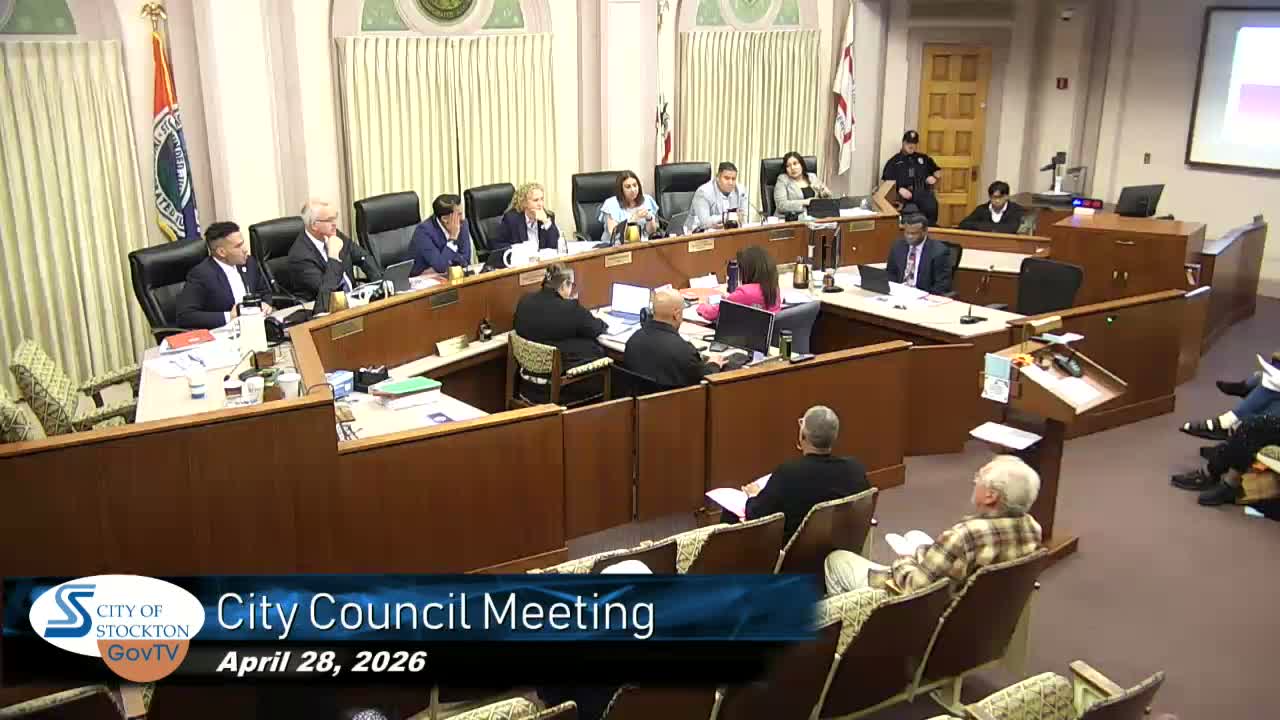
Council accepts salary-setting panel—s recommendation amid split vote and public pushback
Summary
The council narrowly accepted a salary-setting commission—s recommendation to raise council pay (roughly a 30% adjustment) after public opposition and debate about timing while public-safety contracts remain unsettled. The vote passed 4-3; several members tied the decision to workload and recruitment concerns.
The Stockton City Council on April 28 voted 4-3 to accept a salary-setting commission recommendation that increases council compensation. The recommendation, produced by a commission convened under the city charter, proposed a roughly 30% adjustment to bring council pay closer to peer cities.
Opponents said the timing was poor while public-safety labor contracts remained unresolved and urged prioritizing police and fire pay and service needs. "At a time when Stockton continues to face public-safety challenges and understaffed emergency services, council pay increases send a bad message," a speaker told the council during public comment.
Proponents framed the change as a recognition of the council—s de facto full-time duties and the frequency of late and additional meetings, committee work and constituent demands. "This is about making the position viable and compensating elected officials for the real workload," said Vice Mayor Lee (speaker 5), noting that some council roles require 60-plus hour weeks.
The council debate included legal and charter constraints: the salary-setting commission had a March 1–April 30 window to make a recommendation to council. Council members discussed whether to accept, reject or take no action; accepting the recommendation sets the compensation for future terms and takes effect next year. After competing motions, the council accepted the commission—s proposal by the narrow margin. Members voting against cited poor optics and requested stronger public engagement before implementing such increases.