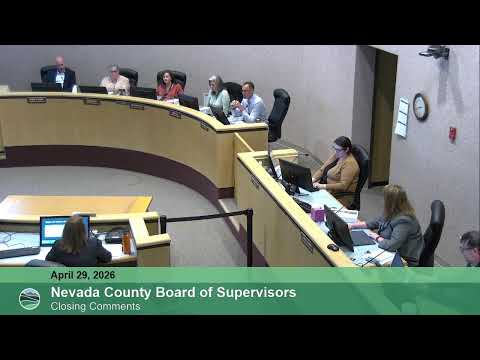
Auditor‑Controller highlights Workday rollout, seeks internal audit capacity
Summary
Auditor‑Controller Gina Whel. told the Board the office implemented Phase 1 of the county ERP (Workday) on time and within budget and is targeting a January 2027 go‑live for HR/payroll. She outlined staffing needs, a request to restore an internal audit position, and constrained discretionary funds.
Gina Whel., the Auditor‑Controller, presented the Auditor‑Controller Office budget for fiscal 2026–27 and framed much of the proposal around the county’s enterprise resource planning (ERP) project.
Whel. said the office of 17 staff manages accounts payable, general accounting, payroll and property‑tax administration and processes “more than $400,000,000 each year” in vendor payments. She emphasized that the county completed Phase 1 of its Workday ERP for financials on time and within budget and is preparing Phase 2, which will add human resources and payroll functions and has a target go‑live in January 2027.
Why it matters: the ERP changes combine a major one‑time investment with ongoing maintenance and training costs. Whel. said the county is adding a permanent position to support Workday stabilization and budgeted a new maintenance charge for the Workday system, which together drove part of the requested increase.
On staffing and savings, several supervisors asked whether automation will reduce positions over time. Whel. said it is “really hard to quantify” immediate headcount reductions and that transaction volumes processed by her office continue to grow; Deputy CEO Erin Mettler added that some efficiency gains are expected in other departments rather than in the Auditor‑Controller’s office itself. Whel. said at minimum the ERP will help maintain current staffing levels while supporting higher transaction volumes.
Internal audit request: Whel. and several supervisors discussed re‑establishing a dedicated internal audit function the county eliminated after the Great Recession. Whel. framed the request as an internal control and fraud‑risk mitigation tool; the position was identified as a contingent staffing request for further board consideration.
Budget details and constraints: Whel. walked the board through core expenses (payroll, software costs and intra‑fund charges) and said the office has “very little discretionary funding.” She noted salary and benefit cost increases of roughly 6% tied to MOUs and the addition of an ERP program manager. Whel. highlighted that many compliance‑driven costs (GASB reporting, audits, mandated filings) leave little room to absorb new mandates without targeted funding.
Next steps: the board signaled interest in deeper review of the internal audit request and asked staff to return with more detail on long‑term ERP costs and projected efficiencies. Whel. and Mettler said staff will continue to monitor post‑implementation staffing impacts and report back as Phase 2 is tested and rolled out.
Ending: The Auditor‑Controller noted the office earned the Government Finance Officers Association award for excellence in financial reporting and said the Phase 2 Workday implementation and restored internal audit capacity are top priorities for 2026–27.
AI generated
The text on this page is AI generated. Summaries, highlights, analysis, and video transcripts are all produced from the original source material.
AI can make mistakes, so if you spot one, and we will fix it for everyone.
Note: the source content is unaltered by us. Any content source we link to, be it a video, an audio recording, or a document, is presented exactly as its publisher released it. That publisher is usually a government body, sometimes an individual official or another organisation.