Get Full Government Meeting Transcripts, Videos, & Alerts Forever!
Get email alerts on the Affordable Housing Sites topic
No spam. Unsubscribe anytime.
Commission finds county parcels along Harbor consistent with General Plan, clearing step for possible acquisition
Summary
The Planning Commission unanimously adopted a resolution finding county‑owned parcels on the east side of Harbor Boulevard consistent with La Habra Heights’ General Plan, a procedural step toward city acquisition that staff said could help the city meet housing‑element obligations despite sewer and site constraints.
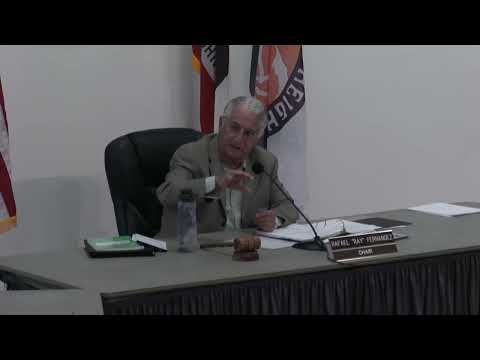
La Habra Heights — The Planning Commission on April 28 voted unanimously to adopt a resolution finding that acquiring certain county‑owned parcels along Harbor Boulevard would be consistent with the city’s General Plan, a required step under the Surplus Land Act and the housing element certification process.
Rafferty, the presenter, said the parcels were identified in the city’s certified housing element as potential sites for affordable housing, but that the area lacks sewer service — a significant development constraint for almost all of La Habra Heights because most properties use septic systems. Staff said options include consolidating lots, negotiating with developers to offset sewer installation costs by reducing land price or coordinating with Los Angeles County and utility agencies to provide service.
Commissioners probed the financial and infrastructure implications. Commissioner Steven Blagdon asked whether buying the land would obligate the city to construct sewer or other utilities; Rafferty said the government code provision cited in the report does not automatically impose a construction obligation on the city but that practical steps would be required to enable development. He also noted other constraints including fault lines, stormwater easements and an oil pipeline that cross the site.
Commissioner Blagdon pressed whether the sites’ theoretical capacity would be limited by buildable area after accounting for slopes and easements; staff answered that developable capacity would reflect those constraints and that the city could seek density bonuses or adjust zoning in future cycles to meet RHNA (regional housing needs allocation) requirements.
After discussion the commission moved, seconded and voted 5–0 to adopt resolution 2026‑03 finding that conveyance of the parcels from Los Angeles County to the city would be consistent with the General Plan. Commissioner comments ranged from concern about maintenance costs for additional acreage to support for acquiring control of the parcels rather than leaving control to other entities.
What happens next: Adopting the resolution is an administrative finding needed under state law and will allow the city to proceed with negotiations or further steps required under the Surplus Land Act if the county is willing to transfer parcels to the city.