Get AI Briefings, Transcripts & Alerts on Local & National Government Meetings — Forever.
Assembly approves vaccination requirement for regulated summer camps
Loading...
Summary
The Assembly passed a bill requiring children who attend regulated summer camps to be vaccinated during designated seasonal windows; supporters cited child safety and high vaccine coverage, while opponents said the Legislature lacks data and stakeholder buy-in.
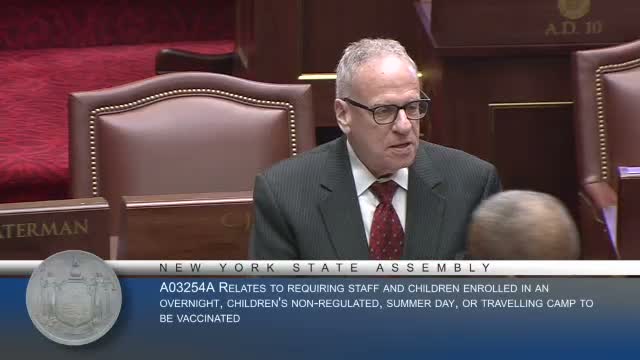
The New York State Assembly on April 28 passed legislation that would require children who attend regulated summer camps to be vaccinated during specified seasonal windows, a measure sponsors said is aimed at protecting vulnerable campers.
Sponsor and intent: The bill’s sponsor, Assembly Member Dinowitz, said the measure "would require those children who go to a regulated summer camp to be vaccinated, potentially saving lives," and described the policy as targeted to traveling acts and to camps operating within defined date ranges. He told colleagues the change is meant to protect children, including those who are medically unable to be vaccinated.
Why it mattered: Supporters argued the mandate closes a gap between school-entry vaccine rules and seasonal youth programs, citing high childhood vaccination rates as a public-health defense. Dinowitz and backers said regulated camps — defined in the bill to include day, overnight and traveling camps operating within specified windows — are appropriate settings for a uniform standard to reduce transmission risks.
Opposition and concerns: Detractors pressed the sponsor on the absence of state data showing outbreaks tied specifically to summer camps and warned the legislation removes choice for families without sufficient stakeholder outreach. Assembly Member Ari Brown said he supports vaccines but opposed imposing a statewide mandate without clearer evidence and without the input of operators and local authorities. Several members asked whether municipal or nonprofit-run camps would be covered; the sponsor said the law applies to all "regulated" camps and that medical exemptions consistent with school law would remain.
Implementation and exemptions: The sponsor and questioners discussed the bill’s medical-exemption standard and whether the statutory language mirrors school immunization law. Dinowitz said camps already often require vaccinations; the bill would make compliance a legal requirement for regulated programs, while medical exemptions would follow the same narrow standards applied to school immunization statutes.
Vote and next steps: Party leaders called a party vote and the Assembly approved the bill by recorded roll call. Proponents said the next step will be coordination with state health authorities on enforcement guidance and communications for camp operators and families.