Get Full Government Meeting Transcripts, Videos, & Alerts Forever!
Get email alerts on the School Budget topic
No spam. Unsubscribe anytime.
Lodi Board reviews tentative 2026–27 budget as health-benefit spike and state aid cut squeeze finances; no approval
Summary
At a March 18 special meeting, Lodi School District leaders presented a tentative 2026–27 budget that administrators say is driven by a health-benefit increase (roughly $2.6M–$2.7M) and a state-aid reduction (~$1.2M–$1.25M). Board members questioned capital projects bundled into a $4.5M withdrawal from capital reserve; the board made no motion to approve the budget and adjourned without action.
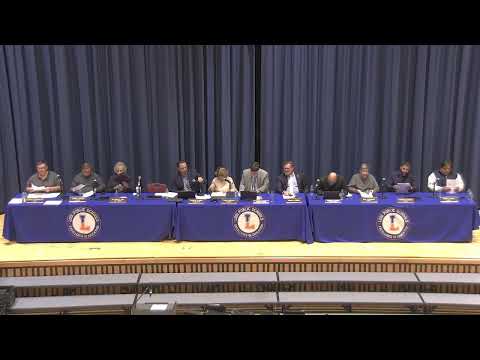
The Lodi Board of Education on March 18 reviewed a tentative 2026–27 budget that administrators said is strained by a large health-benefit cost spike and a recent cut in state aid, but the board did not vote on the proposal and adjourned without approving the budget.
Superintendent Mister D'Amico told the board the budget aims to “provide a comprehensive educational program” while coping with a health-benefit increase and a reduction in state aid. "A health benefit increase of over 30%, which approximately, adds up to $2,600,000 in increases," he said, and warned that the district must weigh program impacts against fiscal constraints. He also said the district plans to expand full-day pre-K for three-year-olds through partnerships with private providers, serving an additional 45 students.
Business administrator Mister Lam gave a revenue overview and said the district learned last week of a state-aid reduction he described as roughly $1,250,000, a near 3% cut. "We got a 3% cut in our state aid," Lam said, and outlined that the budget uses about $2,000,000 of budgeted fund balance (surplus) carried forward under state audit rules.
Administrators said the largest single budgetary pressure is the rise in employee benefits. Lam and D'Amico estimated total employee benefits at roughly $14 million, with between $9 million and $10 million of that for health benefits. Given rising benefit costs and contractual salary increases averaging 3.5%, administrators proposed a tax-levy strategy that uses available adjustments and banked cap to support a recommended 5.5% levy increase.
Board members pressed for detail on several fronts: staffing counts, reductions in tuition and out-of-district placements, and the method for applying prior-year surplus. When asked how many employees the district has, the board was given an estimate of "over 300." Administrators said tuition expenditure lines fell as the district has worked to bring special-education students back in-district, reducing reliance on higher-cost placements.
A major point of contention was a proposed $4.5 million withdrawal from the district's capital reserve for projects including replacing the high-school turf field, renovating concession stands and restrooms, door and vestibule security upgrades and HVAC work. Administrators stressed that capital-reserve withdrawals do not increase the operating tax levy directly and argued that pre-authorizing capital funds speeds procurement and preserves eligibility for state ROD grants that can reimburse up to 40% of renovation costs. Lam said the district could reject bids if prices are too high and that unspent funds would return to capital reserve at year-end.
Several trustees objected to bundling diverse projects into one line. "It's just too open ended for me… I couldn't in good conscience without these prices in my head," said Mister Mastrofilippo, urging the board to postpone the $4.5 million line until the board had detailed cost estimates.
Administrators responded that including projects in the budget is a procedural step that gives the district the option to bid this spring and act during the summer; they emphasized that final decisions would follow detailed scopes and bids. Lam noted that capital reserves have been built in part by prior years' unspent appropriations and that districts with sufficient reserve balances can pursue state grants and necessary projects without burdening the operating budget.
The meeting also included a procedural dispute over whether board members could interject motions mid-discussion; the board president and administration clarified that no motion had been made to approve the budget sections on the agenda, so no approval took place. A motion to adjourn was later made by Mister Cannizzaro and seconded by Mister Thomas; the board voted "Aye," and the meeting ended without formal action on the tentative budget sections under discussion.
What happens next: administrators were asked to return to the board with additional detail and options for the regular meeting, including more precise project scopes and updated fiscal figures. The board did not approve the tentative budget at the special meeting; the district is expected to continue budget work before the regular meeting and any formal approval process.