Get AI Briefings, Transcripts & Alerts on Local & National Government Meetings — Forever.
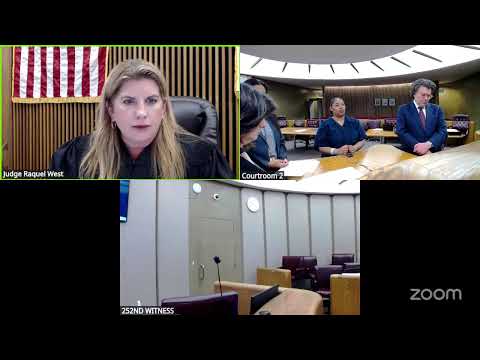
Judge accepts guilty pleas, continues and sentences multiple defendants in 252nd District Court docket
Loading...
Summary
The 252nd District Court accepted several guilty pleas, ordered competency restoration for one defendant, continued probation in multiple revocation matters with treatment conditions, and set bonds or sentencing dates across a multi‑defendant docket.
A judge in the 252nd District Court resolved a packed docket on a range of probation revocations, guilty pleas and bail matters, accepting plea agreements, ordering one inpatient competency restoration and continuing probation in other cases while imposing treatment and supervision conditions.
The court found sufficient evidence to revoke probation in cause number 2137917 and adjudicated the defendant guilty of evading detention with a motor vehicle; the judge sentenced the defendant in accordance with the parties’ agreement to two years in the institutional division of the Texas Department of Criminal Justice and noted the defendant will receive credit for time in custody. The court also read written trial‑court certifications and handed the defendant a written admonishment explaining that under Texas law the judgment renders the defendant ineligible to possess a firearm or ammunition.
Across the morning docket the court accepted written plea agreements in several matters. In two related causes (23 DCCR 1786 and 1787), the court accepted Paul Nelson’s guilty pleas to third‑degree felony charges and sentenced him under plea agreements to concurrent eight‑year terms in the Texas Department of Criminal Justice. In another proceeding the court accepted a plea and sentence recommendations that will result in a five‑year institutional sentence in the institutional division for Lloyd Calhoun after the court found prior convictions to be true. The judge repeated the standard admonition in each case that a guilty plea may affect immigration status for non‑citizens and that the plea agreements waive appeal rights once the court follows them.
The court ordered inpatient competency restoration for William Miller after receiving a report from Dr. Grimsley finding Miller not competent to stand trial; the judge directed placement at the appropriate facility for a period not to exceed 120 days to restore competency.
In several probation‑revocation matters the judge heard argument and took a rehabilitative approach where recommended. For example, the court found sufficient evidence to revoke Ahmad LeBlanc’s probation but declined immediate incarceration and instead continued LeBlanc on supervision, extending probation for one year and ordering enrollment in a Texas drug education program, negative drug testing and a new substance‑abuse assessment; the judge warned that any future violations would be treated with zero tolerance. The court took a similar path with Eric Tran, finding the allegations true but continuing Tran on probation contingent on completion of the court‑ordered safety/treatment program and strict compliance with probation conditions.
The court set bond and monitoring conditions in at least one matter: for defendant Edwinia Johnson the court set bonds of $50,000 and two $25,000 bonds for related cases, ordered GPS monitoring and house arrest as bond conditions, required payment for monitoring, and prohibited contact with specified co‑defendants and addresses.
The court paused one sentencing after defense counsel filed a written habeas application under article 11.072 on behalf of Louisa McGruder, noting the filing arrived the morning of the hearing. The judge held the habeas filing in abeyance, gave the state time to review and respond, and reset the sentencing and any related motions with a requirement that all motions be filed at least seven days before the new date.
The docket included multiple administrative matters, plea rejections, and instructions to counsel to file amending or enhancing notices where prior convictions were omitted from indictments. The court repeatedly provided trial‑court certifications, admonished defendants about firearm ineligibility and appeal waivers, and instructed released defendants to report promptly to probation.
The court paused for a short recess toward the end of the session and indicated the calendar would continue after the break.