Get Full Government Meeting Transcripts, Videos, & Alerts Forever!
Get email alerts on the Bond Program topic
No spam. Unsubscribe anytime.
PVPUSD staff urges flexible, project-by-project approach to Measure SOS delivery methods
Summary
District bond manager told the board that design-bid-build and construction management will remain tools, design-build is 'off the table' for phase 1, and lease-leaseback and multi-prime should be retained for projects where they provide best value and schedule advantages.
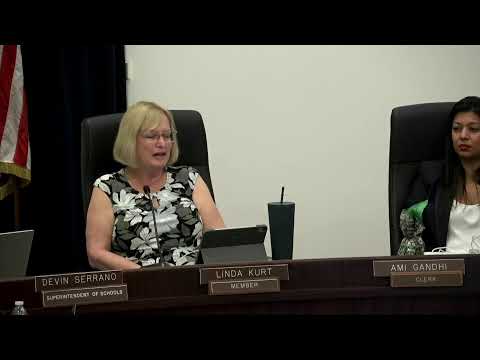
Board members and staff spent the bulk of the January 14 meeting on an update to the Measure SOS bond program and options for how the district will contract construction work.
Alan Reising, the district’s bond program manager, told the board there is ‘‘a lot of work happening’’ behind the scenes on schematic designs, site investigations and state approvals. He presented the standard contracting options — design-bid-build (hard bid), construction management / multi-prime, design-build and lease-leaseback — and laid out the trade-offs among price certainty, control, schedule and risk.
Reising said design-build ‘‘is pretty much off the table at this point for phase 1’’ because the district has already advanced design work with selected architects. He recommended retaining design-bid-build for straightforward maintenance and deferred-maintenance projects, keeping construction management / multi-prime as a tool for phased work, and preserving lease-leaseback as a valuable option for complex modernization projects where early contractor involvement can limit change orders and improve constructability.
The presentation emphasized budget certainty and schedule. Reising reviewed the district’s current plan for roughly $134 million in phase‑1 scope and said staff and the program team are working within that framework while refining scope and performing value engineering.
On lease-leaseback, staff described the statutory process that requires the board to adopt selection criteria and list the projects to which the method would apply before soliciting proposals. Reising said the process allows evaluation on factors beyond price — experience, team capability, schedule performance and local hire commitments — and that a selection committee would provide a short list for board consideration.
Board members asked for clearer matrices that connect each delivery method to the program priorities the board cares about — for example, which approaches reduce change‑order risk, which require more staff oversight, and which are better for schedule or quality control. Several members said they wanted any lease‑leaseback criteria and candidate project lists circulated for public review and city input before a formal resolution is posted.
Superintendent Devin Serrano and the construction-management partner also described operational next steps: the team will work with architects and Balfour Beatty to develop site-specific recommendations and, if warranted, return to the board with a resolution that (1) adopts the selection criteria for lease‑leaseback and (2) identifies the projects proposed for that delivery method.
The board did not take action at the meeting; staff described the item as informational and said a future packet will include proposed criteria and project lists for the board’s consideration.
Why it matters: the delivery method can affect final cost, timing and the district’s ability to minimize disruption to students. The presentation framed the choice as balancing owner control and oversight costs against the risks and adversarial dynamics that can accompany change orders in low‑bid contracting.
What’s next: staff will refine a criteria matrix, collaborate with city partners and present a formal resolution that lists specific phase‑1 projects and the recommended delivery method for each.