Get Full Government Meeting Transcripts, Videos, & Alerts Forever!
Get email alerts on the Public Safety Surveillance topic
No spam. Unsubscribe anytime.
Residents urge council to cancel Flock Security surveillance contract, cite privacy and safety concerns
Summary
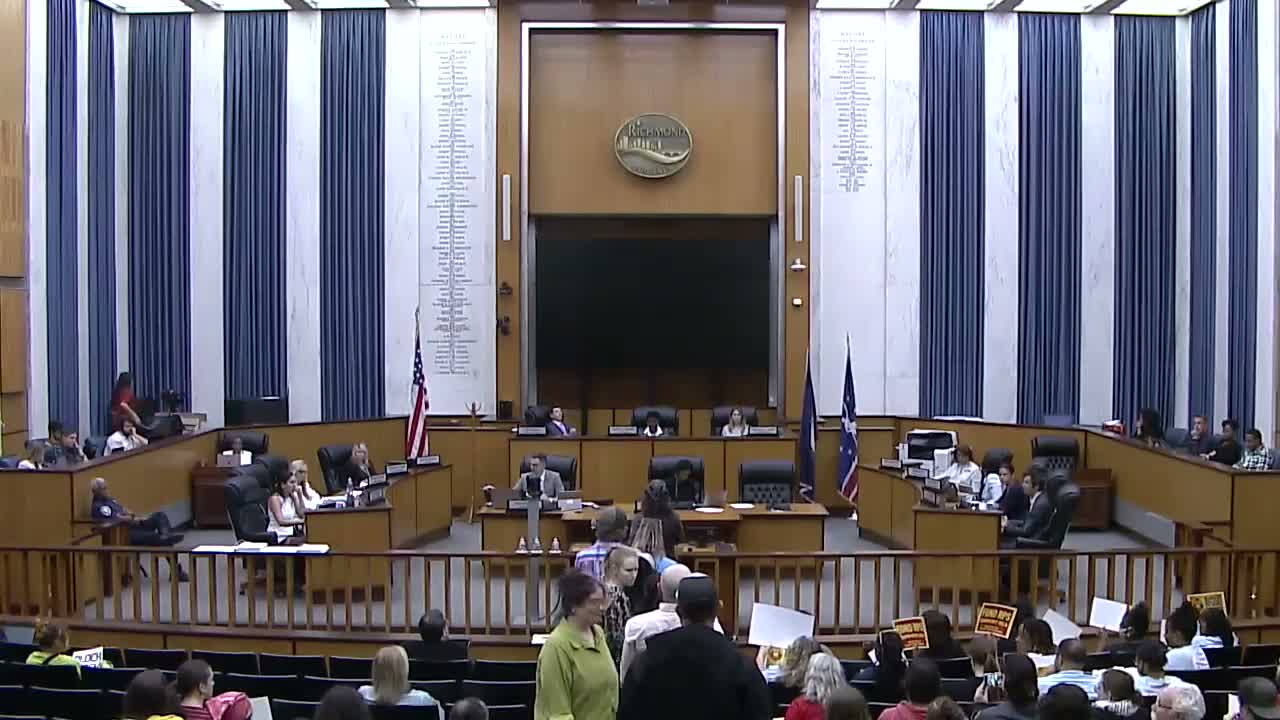
Multiple residents and teachers urged Richmond City Council to cancel or pause the city’s contract with Flock Security and to stop funding automated license‑plate readers, saying the technology is hackable, disproportionately surveils marginalized neighborhoods and diverts funds from schools and community services.
Several residents, teachers and advocates asked Richmond City Council to cancel or rethink the city’s contract with Flock Security and to halt increased spending on automated license‑plate readers and related surveillance technology.
Aurora Britt told the council she found evidence that third parties can access the city’s Flock camera network and said she emailed councilors a how‑to video showing unauthorized access. “The fact that anybody can access these cameras is insane,” she said, urging the city to “get rid of the cameras.” Lisa Delau, a teacher at Huguenot High School, urged the council to cancel the Flock contract and to make RPS funding contingent on a third‑party forensic audit of the school system’s budget: “We need fully funded schools, not Flock.”
Other speakers highlighted civil‑liberties and safety concerns. Michael Rafferty compared automated surveillance to historical state surveillance abuses and said extremist actors could exploit camera access; Jaden White and others cited incidents of AI or camera errors and warned of disproportionate impacts on Black, Brown and poor neighborhoods. Emily Grimes emphasized that the mayor’s proposed budget adds approximately $1,300,000 for police department contracts, including license‑plate readers, and argued that money should instead fund community‑based safety and schools.
The public hearing included calls for a city audit of surveillance use, stronger access controls, and community engagement around public‑safety technologies. Council did not vote on the Flock contract during this session; speakers asked the council to reconsider surveillance spending as budget decisions move forward.
What happens next: Speakers asked council to review the Flock contract, consider a forensic audit of related data‑sharing and cybersecurity practices, and reallocate surveillance funds to schools and community programs; no formal council action on the contract was taken at this meeting.