Get Full Government Meeting Transcripts, Videos, & Alerts Forever!
Get email alerts on the Public Health Opioids topic
No spam. Unsubscribe anytime.
Richmond committee backs $620,000 opioid-abatement package to fund harm reduction and recovery housing
Summary
The Finance & Economic Development Standing Committee voted to forward seven ordinances to council that would accept roughly $619,950 from the Virginia Opioid Abatement Authority to fund a coordinated overdose-prevention program, harm-reduction outreach, naloxone dispensers in designated safe zones and at least 3,000 nights of recovery housing with community partners.
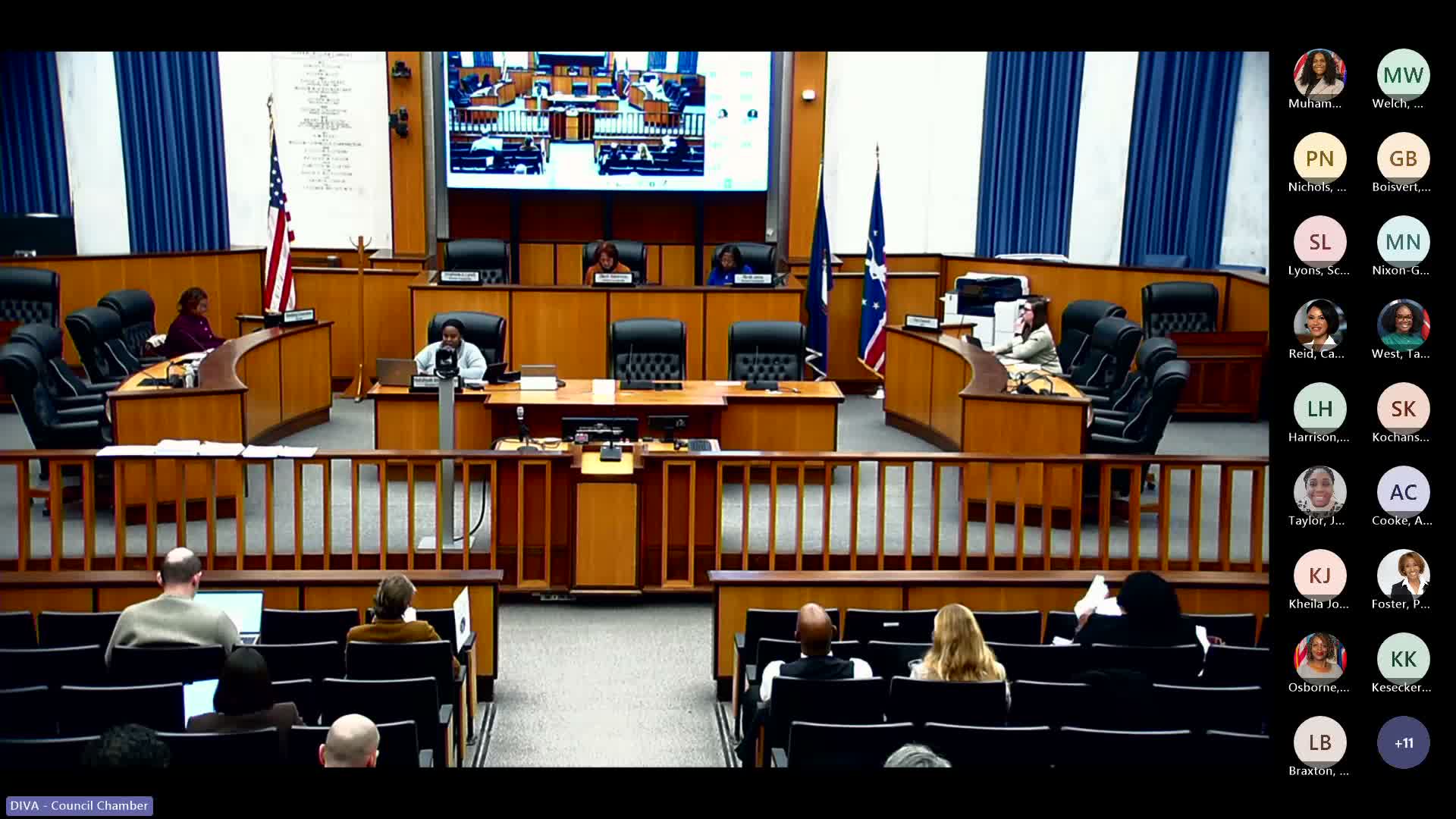
The Finance & Economic Development Standing Committee voted to forward seven ordinances to City Council that would accept about $619,950 from the Virginia Opioid Abatement Authority and establish an "Operation Stop" special fund to support expanded overdose-prevention work across Richmond.
Anna Jones, the city’s opioid response strategist, told the committee the award will be routed through the Department of Neighborhood and Community Services and directed to community partners with deep ties in impacted neighborhoods. "We prioritize organizations with deep roots in the most impacted communities and a long history of doing the work," Jones said.
Under the plan, Health Brigade will lead harm-reduction outreach and distribution of supplies and education; Richmond Behavioral Health Foundation, working with Trauma Healing Response Network, will install naloxone dispensers in designated safe zones and run quarterly community education events; Atlantic Outreach Group and Daily Planet will provide bed-fee scholarships to reduce financial barriers to recovery housing; and Child Savers will offer trauma-informed counseling for youth affected by family overdose. Jones said VCU will provide program evaluation and the collective partners will fund at least 3,000 nights of recovery housing for Richmond residents.
A council member asked whether the safe-zone sites are identified; Jones said Trauma Healing Response Network has locations mapped to the city’s fatal and nonfatal overdose data and offered to provide exact addresses and vending-machine ZIP-code data to the committee. "I most certainly can," Jones said, and offered to share the maps with committee members.
No members of the public testified for or against the ordinances during the committee’s public hearing. Vice Chair Jones moved to forward the seven ordinances to council with a recommendation to approve; Chair Robertson recorded an "aye," and the motion passed.
The measures will next appear before full City Council, which will consider accepting the grant agreements and amending the FY25–26 special fund budget to establish Operation Stop funds and appropriate the awards to the listed partners.