Get AI Briefings, Transcripts & Alerts on Local & National Government Meetings — Forever.
Committee releases bill updating parentage law to reflect assisted‑reproduction advances
Loading...
Summary
The Judiciary Committee voted to report SB 250, which adopts the Uniform Parentage Act (2017) language to clarify parentage in cases of assisted reproduction, surrogacy, and donor‑conceived individuals’ access to information; supporters argued it avoids delays and harm to families, while opponents raised concerns about genetic surrogacy and pre‑birth contracts.
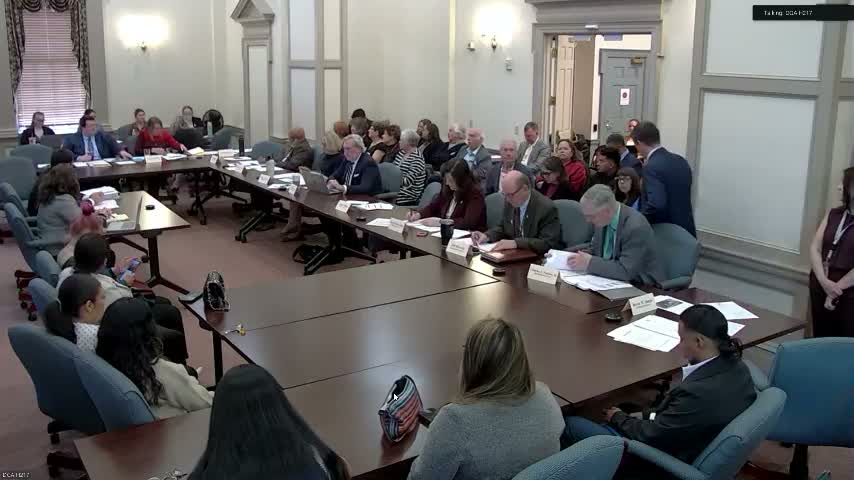
The Delaware House Judiciary Committee voted to release Senate Bill 250 on April 22, 2026, a measure updating the state’s parentage statutes to reflect modern assisted‑reproduction methods and to clarify surrogacy and donor‑conceived persons’ access to identifying information.
Libby Snyder, who explained the measure to the committee, said SB 250 implements the Uniform Parentage Act of 2017 and modernizes existing Delaware law to recognize intent-based parentage, clarify donor and gestational carrier roles, and give donor‑conceived adults access to identifying and medical donor information. "This closes that loophole permanently," Snyder told the committee, referencing a recent case in which a surviving genetic parent’s name was contested on a birth certificate.
Supporters from family‑law and LGBTQ advocacy groups urged passage. Jamie Spears, vice president of government affairs at the U.S. Donor Conceived Council, described personal harms when parentage is not legally recognized and said the bill would prevent children from losing access to a parent. Patience Crozier, a family-law practitioner and member of the national Uniform Parentage Act enactment committee, called the update "child‑centered" and said it would reduce litigation and instability for families.
Opponents raised questions about Section 90 and genetic surrogacy: Rich Bryant, a citizen testifying in opposition, said the bill’s allowance of pre‑birth contractual transfers and compensation in genetic/traditional surrogacy raises ethical concerns and could be seen as commodifying fetuses. Committee members and DOJ child‑support staff (Jessica Kupek) discussed preserving a Delaware rule that voluntary acknowledgments by minors remain void.
Outcome: the committee moved and carried the bill for release. Sponsors and staff said they worked with the Department of Health and Social Services, Family Court, and the Uniform Law Commission during drafting; proponents said the law will give greater clarity to judges and protect children born via assisted reproduction.
Next steps: SB 250 will be reported out to the House for further consideration. Stakeholders said they will continue to advise on technical drafting and implementation, especially for surrogacy and donor‑information provisions.