Get AI Briefings, Transcripts & Alerts on Local & National Government Meetings — Forever.
Senate adopts transparency measure for large energy purchases after amendment
Summary
The Oklahoma Senate on April 28 passed House Bill 2992, requiring notice and public meetings before purchases of large electricity loads (defined in the bill as over 75 megawatts) and creating administrative penalties for violations; an amendment setting a 5‑mile notice radius and a $1,500‑per‑day penalty passed first.
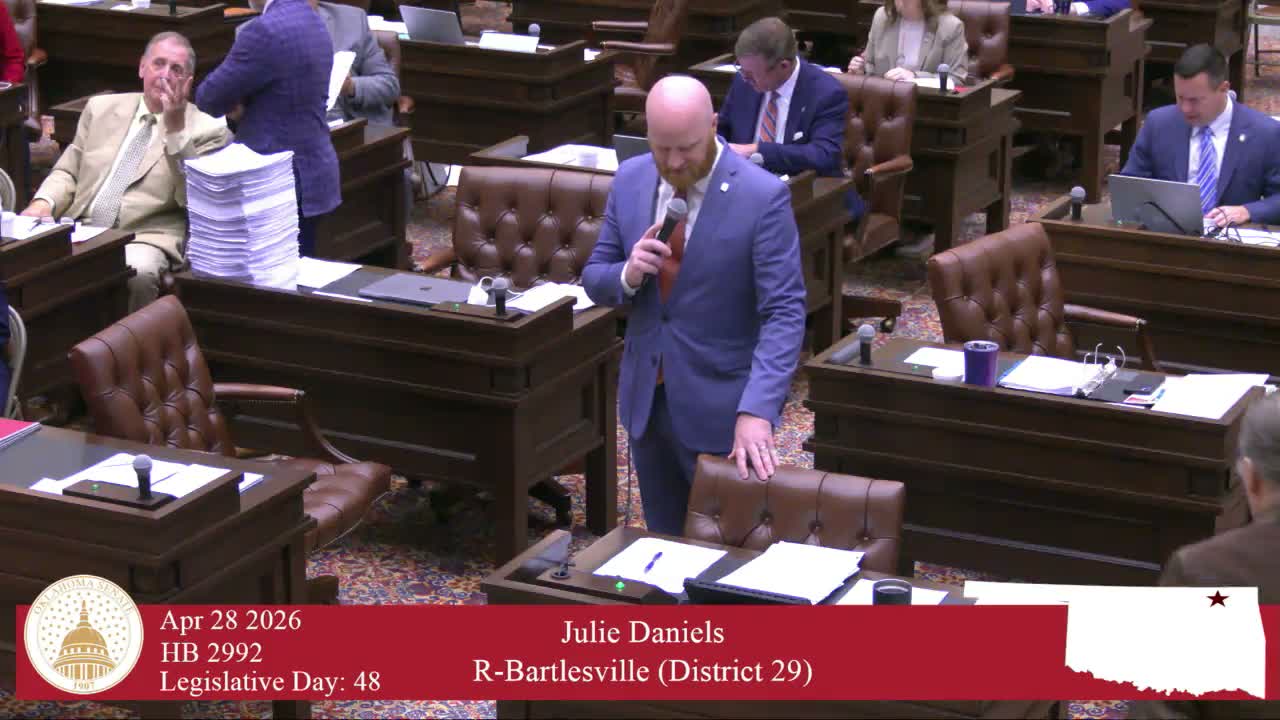
Senator Michael Green, sponsor of House Bill 2992, said the bill adds transparency to large electrical load land purchases by requiring public notice and a local meeting before a developer can close on property for data centers or crypto mining operations. "This is a transparency amendment," Green said, arguing the measure helps protect rural landowners.
The proposal requires a 60‑day notice published in a newspaper of general circulation in the county and direct notice to property owners within a five‑mile radius of the proposed purchase; it defines a "large load customer" as a load in excess of 75 megawatts and specifically references data centers and crypto‑mining operations as examples. An amendment adding the five‑mile radius, newspaper notice, and a $1,500 per‑day administrative penalty passed by roll call (44 ayes, 2 nays). The full bill later passed 46–0 and was declared an emergency measure.
Why it matters: Supporters said the bill will give neighbors and county officials early notice of large‑scale energy projects that can have infrastructure and land‑use implications. "Landowners need the opportunity to know what's going on," Green said during debate. Opponents questioned whether the penalties create sufficient deterrence for projects that may be backed by hundreds of millions in investment, and whether newspaper notice requirements remain practical in some rural counties.
Key provisions and debate highlights: Senator Guthrie asked for a precise definition of a large‑load customer; Green and supporters confirmed the 75‑megawatt threshold and cited data centers and Bitcoin mining as primary concerns. Senator Howard raised how the per‑day fine would be calculated if closing dates shift; the sponsor said timing adjustments would be considered when enforcement occurs. Senator Hicks pressed on whether newspapers of general circulation exist in every county and whether the noticing requirement would be onerous for some projects; the sponsor acknowledged variance across counties but said the purchasing entity would pay for the notice.
Votes and next steps: Amendment to HB 2992 adopted by roll call 44–2. Final passage vote recorded 46–0; the bill was passed as an emergency measure. The measure now proceeds to enrollment and transmission to the governor.
The Senate’s action came amid a broader package of procurement and transparency bills considered that day; HB 2992 was one of several measures the Senate advanced during the April 28 session.