Get Full Government Meeting Transcripts, Videos, & Alerts Forever!
Get email alerts on the Public Safety Response topic
No spam. Unsubscribe anytime.
Denver outlines plan to embed clinicians in 911 and expand STAR co-responder programs
Summary
City officials briefed the Health and Safety Committee on steps to embed clinicians at Denver 911, transition some STAR clinicians into city employment, launch a STAR-specific dispatcher role and pursue an RFP for EMT/paramedic services; councilmembers pressed for oversight, timelines and sustainable funding.
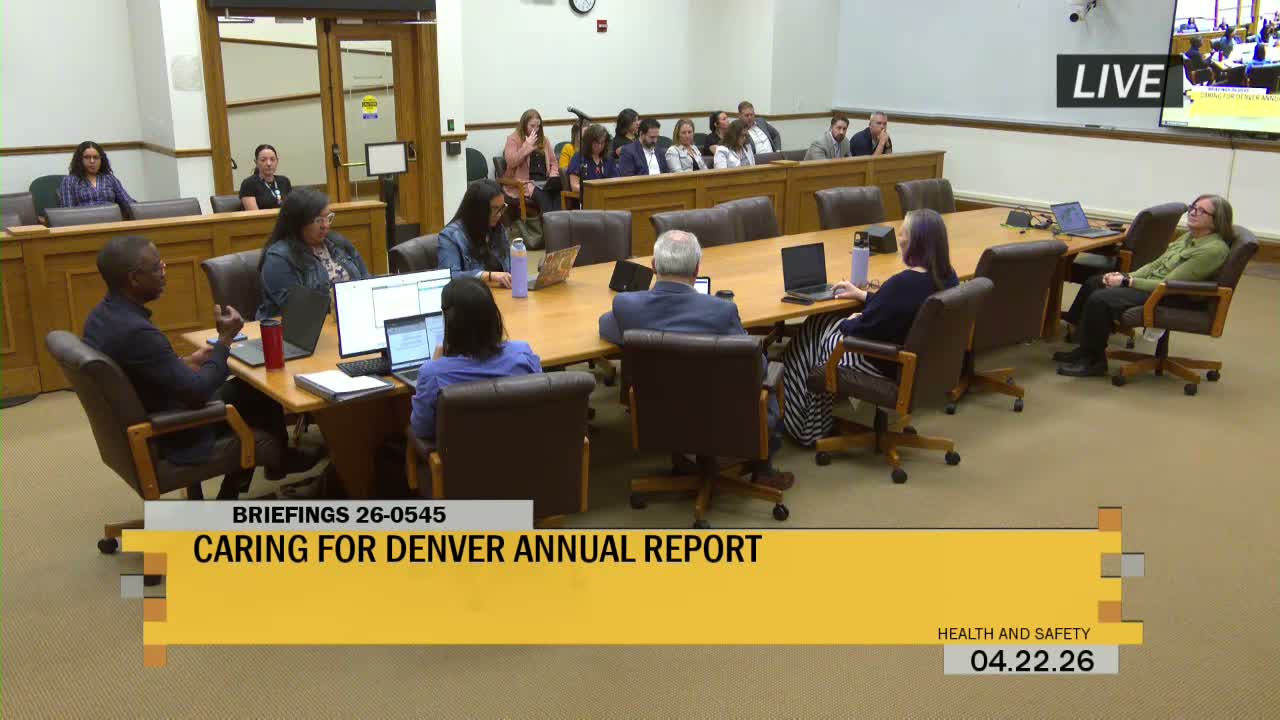
Aaron Nattenzio, director of Roads to Recovery in the mayor's office introduced an operational update on Denver's clinical response system on April 22, joined by Andrew Dammer (director, Denver 911), Chris Richardson (director, crisis services) and Tristan Sanders (director, community behavioral health, DDPHE). They described a new call-response cascade designed to get "the right teams to the right people in a timely fashion," including embedded clinicians at 911, STAR van operations, and co-responder partnerships with Denver Police Department.
Why it matters: The city is piloting clinicians inside the 911 center to triage behavioral-health-related calls, route appropriate callers to 988 where possible, and resolve some calls by phone to reduce on-scene responses and delays. Staff said Caring for Denver granted funds to support clinician staffing in 911 and that STAR and co-responder services are supported by multiple funding streams, including a $2.1 million contribution to co-responders.
What officials told the committee: Andrew Dammer said embedding clinicians into 911 will allow call takers to transfer callers to clinicians for trauma-informed triage and potentially resolve more calls without deploying vans or police. The pilot funding was described in the briefing (presenter referenced roughly $385,000; participants discussed the number of clinicians and shifts and then clarified staffing plans). Tristan Sanders and other staff described STAR as a civilian response pairing clinicians with EMTs or paramedics, operating seven days a week (6 a.m. to 10 p.m.) with up to five vans; follow-up services are coordinated with partners including Servicios de la Raza and the behavioral health solution center.
Operational changes and timeline: Staff said they are pursuing an RFP for EMT/paramedic services for the vans and plan to transition clinician roles into city employment over the coming months, targeting staffing and operational milestones by late summer or early fall. They said hiring clinicians into the city workforce will enable a common electronic medical record and tighter operational oversight; staff offered a public-facing dashboard and periodic briefings as accountability measures.
Council concerns and responses: Councilmember Amanda Sawyer said she was nervous about the city hiring clinicians directly and asked for metrics to evaluate whether the change is improving outcomes. Staff cited peer cities (Seattle, Albuquerque and Durham) where responder staff are city employees, argued the move increases operational efficiency and promised program evaluation data and dashboard metrics. Sawyer also raised domestic violence response capacity; staff acknowledged clinician staffing has fluctuated and said some state funding had been lost, creating shortfalls that the city is trying to address.
Dispatch and workforce notes: Andrew Dammer described plans to create a STAR-focused dispatcher to triage STAR-appropriate calls rather than relying on police dispatchers, and to develop training and policy to improve prioritization. Chris Richardson highlighted continued collaboration with Denver Police and Fire and reported low arrest/citation rates for co-responder responses.
Next steps: Staff committed to provide a public-facing dashboard, return with interim briefings and share more granular metrics as the city phases in clinician hires and completes procurement for van EMS partners.