Get AI Briefings, Transcripts & Alerts on Local & National Government Meetings — Forever.
City and Newark Unified officials explore housing on surplus public land, including teacher units
Loading...
Summary
City staff presented a plan to evaluate surplus city and school-district land for housing, citing a target to permit 1,874 homes by 2031, over 40 developable acres in preliminary analysis, and funding tools including $29 million in impact fees and a $12 million city commitment to a local affordable project.
City staff presented to a joint committee on plans to evaluate surplus public land — including Newark Unified School District sites — for housing and supportive uses, and officials said they will continue study and coordination before any formal land sales or redevelopment.
Michael Coolum, the city’s housing policy and programs manager, told the committee the city’s housing element (updated in December 2023) sets a permitting target of 1,874 homes by 2031 and directs planners to look for opportunities on public land. "Cities don't build housing, but that is our target for how many homes we would permit," Coolum said. He placed the local target in a statewide context, saying California would need roughly 2,500,000 new homes by 2040, of which about 1,000,000 would be for low and very low‑income households, according to the State Department of Housing and Community Development figures he cited.
Why it matters: officials said the city faces a persistent affordability and displacement problem and is looking to public land as one way to accelerate housing that serves teachers, staff and lower‑income residents. Coolum said a UC Berkeley study identified substantial school‑district land statewide for potential reuse and that the city’s housing element includes programs (H2.6 and H5.3) to coordinate with school districts on redevelopment and to allow housing on public facility sites where permitted.
Coolum walked the committee through examples from other jurisdictions: Sugar Pine Village in South Lake Tahoe (an 11‑acre project with 248 low‑income units), Oak Hill in Marin (about 250 homes in phased development, including units for faculty and staff), and a San Francisco project that will provide 75 faculty/staff homes on state land atop replacement parking. He said local projects include the Thornton Avenue Apartments, for which the city provided about $12,000,000 in financing and took ownership of the land in April 2025 to help secure long‑term affordability.
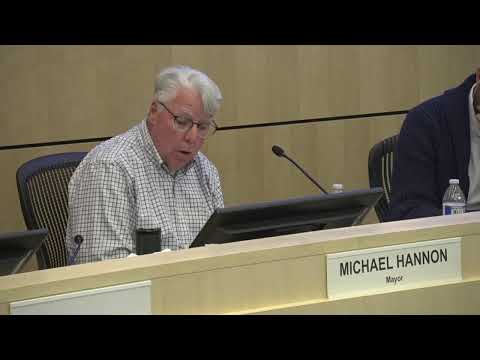
Council members and the mayor pressed on specifics. "We're not building multifamily rental properties, are we?" Mayor Hannon asked; Coolum replied that the city is not currently producing significant multifamily rental development. When the mayor asked whether state requirements set unit expectations on surplus school parcels, Coolum cited the Surplus Land Act and said residential reuse typically requires a minimum dedication (about 20 percent) for lower‑income households.
A Newark Unified representative told the committee the district has begun a portfolio study of its properties to help recruitment and retention and to consider housing, affordable units and health‑care uses. "That report will come to the board in June. Probably the second meeting in June, we're shooting for the seventeenth," the district official said.
Council members stressed the city’s financial position and prior commitments: officials said the city holds roughly $29,000,000 in housing impact fees and recalled a previous $12,000,000 commitment to support a Satellite Affordable Housing Associates project. Mayor Hannon said the council remains "absolutely committed to affordable housing" and to exploring teacher housing and other workforce housing options.
Public commenters urged stronger city–district communication and noted aging district facilities; one commenter said the district "has plenty of land" and suggested land swaps and cooperative planning. Officials responded that periodic council–board coordination is already under way and suggested additional partnerships — for example with Ohlone College and the Chamber of Commerce — to advance workforce and internship opportunities as part of broader collaboration.
Next steps and limitations: staff said they will continue evaluating public‑land opportunities and prepare a public‑land framework or policy; the district will present its portfolio study to its board in June. Officials repeatedly emphasized study and planning steps rather than any immediate sale or redevelopment action. No formal motions or votes on land disposition were recorded at the meeting.
The committee discussed inviting the new superintendent (Will Eager) for a 90‑day check‑in later in the year to report on progress. The meeting moved to future agenda items and adjourned without a decision on any specific land transfer or project.