Get Full Government Meeting Transcripts, Videos, & Alerts Forever!
Get email alerts on the Talent Development topic
No spam. Unsubscribe anytime.
Mankato Public Schools outlines talent-development update; nearly 900 students participate
Summary
District staff told the board the talent-development program — supported by a past Javits grant and a long-term audit — now serves roughly 494 elementary and 338 middle-level students ("almost 900" districtwide); the presentation covered identification (CogAT), cluster classrooms, rising scholars and teacher professional development.
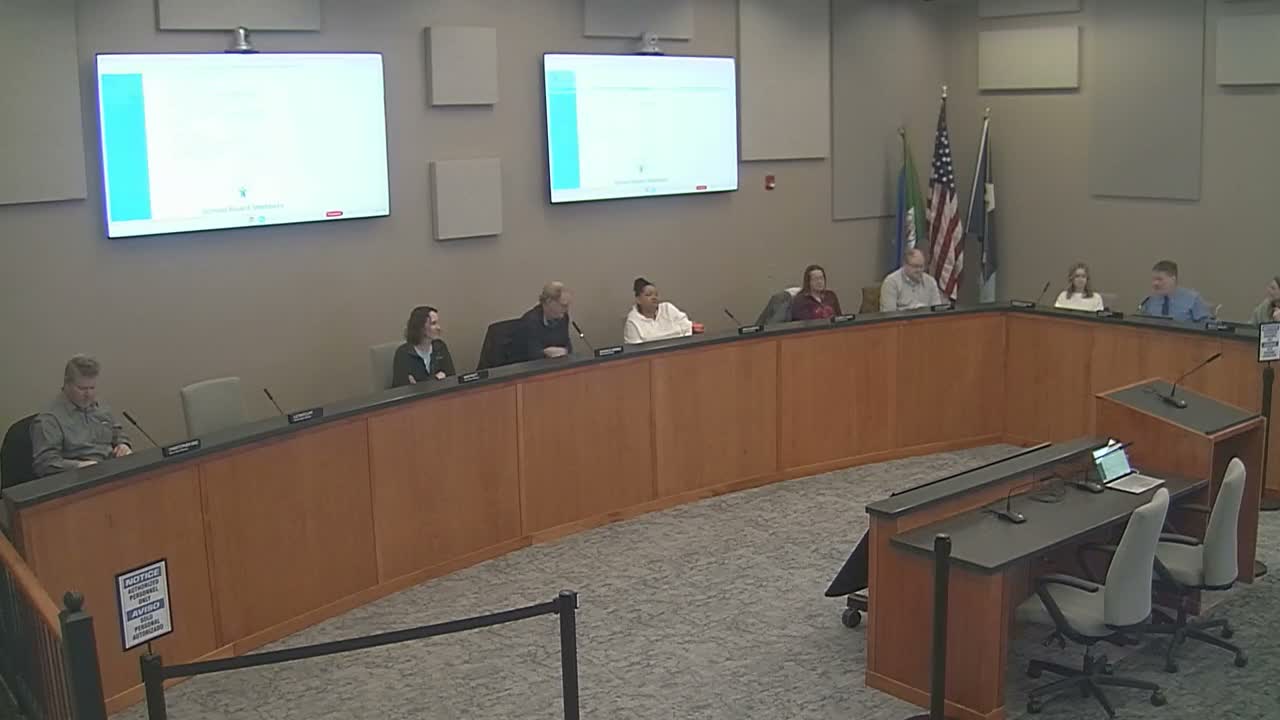
District leaders presented a two-part talent-development update to the school board on March 2, 2026, describing both the district's traditional gifted-and-talented services and a broader community partnership effort to retain local talent.
Travis Olson, director of teaching and learning, and Bobby Joe Bastine, the district's talent-development coordinator, described the program's evolution after a 2012—2013 audit and a subsequent Javits grant that funded staffing, resources and professional development. Bastine said the program emphasizes differentiated instruction, cluster classrooms and districtwide resources now hosted in Canvas rather than the older Moodle platform.
Bastine detailed the district's identification procedures: second graders receive CogAT testing and new students in grades 3—5 who were not previously tested are assessed; the district also uses NWEA/MCA data and a z-score calculation to rank candidates rather than enforcing a fixed "cap." He reported 494 elementary students identified for talent-development services (including rising scholars) and 338 at the middle level, noting that "almost 900 students out of our 8,000 are in talent development somehow."
Board members asked how students who develop later are identified and whether enriched curricula are implemented consistently across sites. Bastine said teachers and principals can flag students for late identification and described "win time" and intermittent pull-out supports rather than wholesale class-switching at most sites. The presenters said cluster classrooms typically group six to 10 highly capable students within a general-education classroom to allow both differentiated work for high-capacity learners and inclusion benefits for peers.
The presentation also highlighted extracurricular opportunities (math contests, spelling bee, Project Lead The Way, AP and concurrent-enrollment offerings) and the district's ongoing work to audit and align services across buildings.
No formal action was taken; staff said they will continue the audit and bring recommended policy changes or implementation updates back to the board as needed.