Get Full Government Meeting Transcripts, Videos, & Alerts Forever!
Get email alerts on the Administrative Appeals Nuisance topic
No spam. Unsubscribe anytime.
Milwaukee appeals board hears dozens of nuisance cases; several fines reduced or waived
Summary
Milwaukee’s Administrative Review Board of Appeals heard more than 40 property, snow/sidewalk and refuse appeals on March 19, 2026. The board granted some appeals, reduced fees in hardship cases and held others for additional evidence or the chair’s call as it weighed evidence about posting, eNotify notices and contractor documentation.
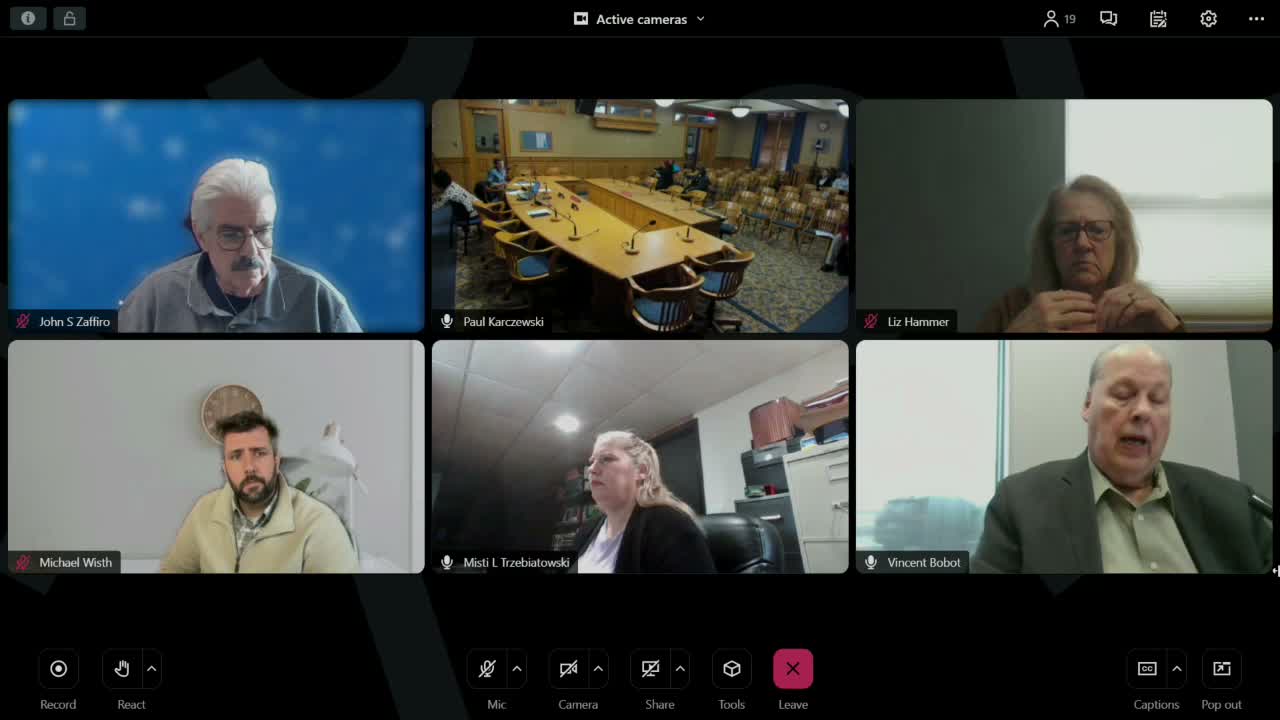
The Administrative Review Board of Appeals in Milwaukee on March 19 heard a packed docket of property- and nuisance-related appeals, ranging from sidewalk snow-and-ice citations to garbage and vacant-building reinspections. Chair Vincent Bobbitt presided as city witnesses and dozens of appellants presented testimony, evidence and negotiated settlements.
The board granted the appeal of James Raymond for a snow/ice citation for a property on South Mabbit Avenue, finding the city had not met its burden to show an effective posting or other adequate notice. Board member Yandell moved to grant the appeal, saying, “The city hasn’t met its burden of proof,” and the board approved the motion without objection, relieving Raymond of the $280.05 charge.
Assistant city attorney Joseph Dobbs reminded the board that Wisconsin’s 2017 Act 317 (codified at Wis. Stat. § 66.0628(2)(m)) generally requires notice before imposing municipal fees but expressly excludes charges for clearing snow or ice from sidewalks and violations that create an immediate danger to public health or safety. Dobbs read the statute’s limiting sentence and advised the board that sidewalk snow removal fees can therefore be assessed under that exemption.
Not all appellants prevailed. Jared Triplett, owner of a West Fond du Lac property, contested a $579.65 charge and said he had not received contractor photos or notice; after reviewing the record and testimony that the ordinance requires clearing within 24 hours, the board denied his appeal. In several other sidewalk cases the board followed a case-by-case approach: some appellants received partial reductions (typically waiving the posting/inspection or administrative fee), while others were required to pay contractor and tax amounts where photos and contractor records showed substantial remediation.
The board also tackled garbage- and litter-related appeals presented by the Department of Neighborhood Services. Those cases included detailed disputes about contractor photos, parcel boundaries and whether contractors cleaned only the cited property. Appellant Michael Wiss argued that contractor photos misrepresented work that he and his crews had already performed; after reviewing the photo evidence and testimony about contractor practices, the board granted his appeal and waived the assessed fees.
In another garbage case, Edward Gant provided receipts and testimony that he had ordered dumpsters and was actively cleaning the property when a contractor abatement occurred; the board granted his appeal after questioning whether contractor work and photographs accurately matched the billed pickup.
Throughout the hearing board members raised recurring concerns about notice and evidence: several appellants said they never received a physical posting or an eNotify alert; others said contractor before-and-after photos were incomplete or taken from angles that made it difficult to verify the contractor’s work. City witnesses described quality-control checks, the contractor bid process, use of MAP Milwaukee and parcel tools to determine property boundaries, and how contractor cubic-yard calculations are estimated.
Where evidence was incomplete or disputed the board often held cases for the “call of the chair” so parties could exchange records (for example, contractor after-photos) and attempt a resolution before a full hearing. The board repeatedly encouraged property owners to sign up for the city’s eNotify system and suggested the city consider renaming the “posting fee” to “inspection fee” to reduce confusion.
The board also addressed several reinspection and vacant-building matters tied to public-safety concerns; where the city described ongoing safety issues (including a property operating without an occupancy permit), the board typically denied appeals or set short timelines for compliance. For certain complex reinspection matters members allowed limited time for appellants to secure contractors or architectural approvals and held the cases for follow-up inspections.
What’s next: the board resolved or deferred multiple items and set a follow-up meeting for Tuesday, April 28, to continue the backlog of pending appeals. Appellants will receive written notices of the board’s actions and their appeal rights; several matters were held to give parties time to provide missing photos or to permit negotiated resolutions outside a full board hearing.
Votes at a glance: the board’s actions included granted appeals (e.g., James Raymond; Michael Wiss; Edward Gant), denials (e.g., Jared Triplett; multiple nonappearance denials), and multiple grants-in-part (fee reductions or waivers for medical hardship or lack of posted evidence). Officials said the city will continue refining posting and notification procedures and will revisit how contractor evidence is documented.
The hearing record includes sworn testimony from city forestry and neighborhood-services staff, attorney guidance about state statutory notice exceptions for sidewalk snow/ice, and multiple appellant statements alleging missed postings, inadequate photos or disputed contractor scope. The clerk will send formal written decisions and appeal instructions to affected parties.