Get Full Government Meeting Transcripts, Videos, & Alerts Forever!
Get email alerts on the Employment Discipline topic
No spam. Unsubscribe anytime.
City commission upholds DPW discharge of electrical worker after hearing over missed follow-up drug test
Summary
The Board of City Service Commissioners voted unanimously on March 6, 2026 to uphold the Department of Public Works’ discharge of electrical worker Deshaun L. Smith, finding the department had cause after testimony that Smith twice failed to submit to required DOT-based testing, including a refusal on Dec. 19, 2025.
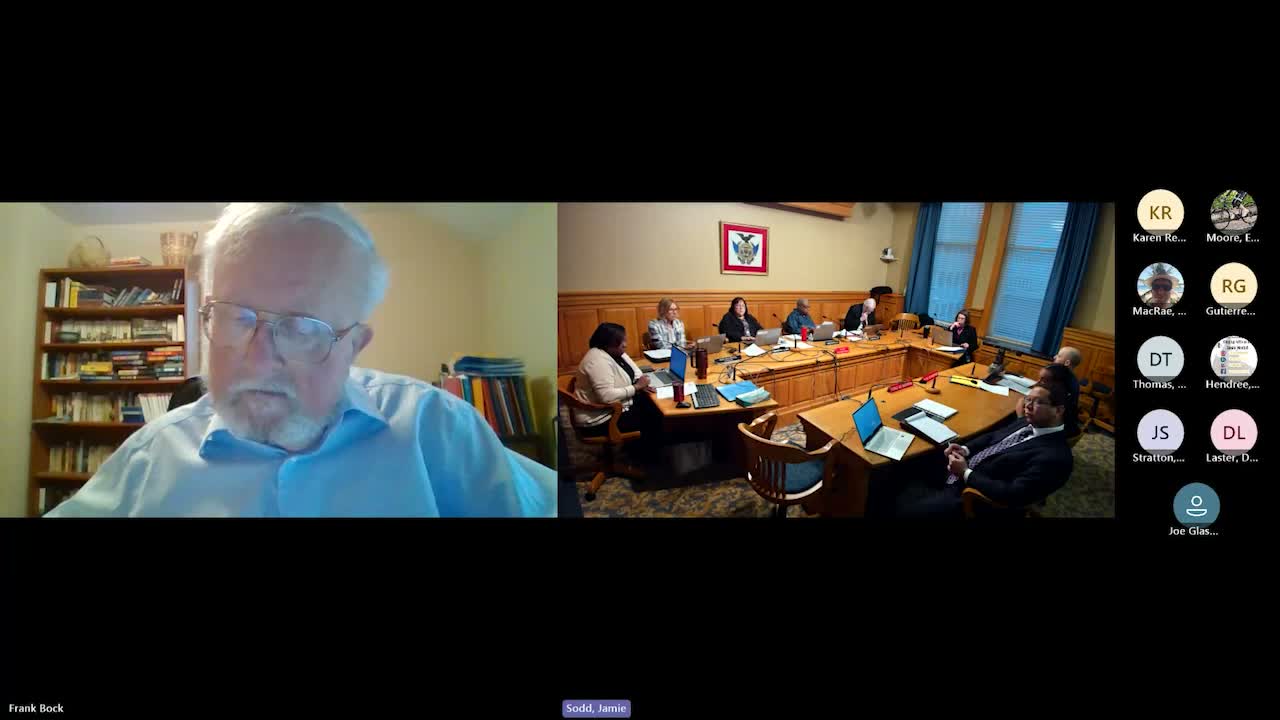
The City Service Commission on March 6 upheld the Department of Public Works’ decision to discharge electrical worker Deshaun L. Smith after a full-day hearing that included testimony from department managers, HR and independent substance-abuse professionals.
The commission found the department had cause to discipline Smith for two violations of the DPW drug-and-alcohol testing rules, including an alleged refusal to take a required follow-up drug test on Dec. 19, 2025. Department HR administrator Andrew Simons told the panel that Smith had been in a safety-sensitive role subject to Federal Motor Carrier Safety Administration rules and that "the appellant refused to take required testing on multiple occasions," including the Dec. 19 incident, which DPW treated as a second violation that can trigger discharge under the department's long-standing policy.
Why it mattered: The hearing turned on whether Smith had in fact exhausted the SAP-prescribed follow-up tests and whether the department properly sought a further follow-up test on Dec. 19. DPW witnesses said federal and department rules treat a refusal to submit to a required test as a positive result; the department also pointed to evidence that Smith had previously refused testing on July 9, 2024. The department's HR and safety witnesses testified that follow-up testing plans are intended to "follow the employee through breaks in service," meaning long absences can extend the testing period.
What witnesses said: Donald Laster, DPW safety supervisor, described the chain of events after the July 2024 incident and the department's expectation that the employee complete follow-up testing; Laster testified that the July 2024 refusal was recorded and later reported to the federal clearinghouse, though not always in a timely manner. Laster said the department learned during its December 2025 review that the appellant’s SAP provider was his mother. "It was confirmed by the city of Milwaukee that after the second violation ... the mother was the SAP for this appellant," Laster testified.
Independent substance-abuse professional Joe Glassman told the commission the federal guidance for SAPs aims to keep the SAP from acting as an advocate for either party and that providing an employee the confidential follow-up testing schedule risks undermining the program. Glassman said SAPs should not give employees the schedule and that a family member serving as a SAP "bump[s] up against the requirements" that the SAP be neutral.
Appellant's account: Smith, who testified on his own behalf, said he selected his mother as his SAP after multiple attempts to proceed with an independent SAP were blocked because he believed he had not been entered in the federal clearinghouse. Smith said he completed what he understood to be the required tests from his SAP and refused the Dec. 19 attempt because he believed he had already met the requirements and felt bullied during the encounter with managers. "He actually yelled and cursed at me ... telling me to take the effing test," Smith said, recounting the exchange with operations management.
Defense and department positions: Attorney William Sultan argued that the record showed confusion about the number and timing of required follow-up tests and pointed out that Smith had been copied on SAP-provider letters. DPW counsel argued that the department followed DOT protocols and that a refusal to test on Dec. 19 constituted a second violation that by policy leads to discharge.
Commission action and vote: After closing arguments the commission moved into closed session to deliberate. Returning to open session, commissioners voted that the department had cause to discipline Smith and then voted to uphold the discharge. The roll-call votes were recorded as yes from Commissioner Miller, Commissioner Smith, Commissioner Cleary, Commissioner Wicksparrow and Chair Frank Bach. The commission also adopted the department’s finding that the discharge penalty was appropriate.
What comes next: The commission’s decision upholds DPW’s discipline. The commission did not adopt additional remedies or conditions in open session; the panel’s action closes the appeal before the Board of City Service Commissioners. Any further administrative or judicial remedies would be pursued outside the commission record.
Context and legal hooks: Testimony cited federal DOT rules (49 CFR Part 40 sections discussed at the hearing) governing SAP procedures, return-to-duty testing, and clearinghouse reporting. Witnesses confirmed that clearinghouse entries were delayed for earlier events, but DPW said those procedural lapses did not negate the department’s authority to treat refusals as positives under its work rules.
The commission adjourned after issuing its ruling.