Get Full Government Meeting Transcripts, Videos, & Alerts Forever!
Get email alerts on the Civic Engagement topic
No spam. Unsubscribe anytime.
FPC discusses public-comment time and adopts enhanced speaker slip; leaves formal rule changes for later
Summary
After hours of public comment, commissioners discussed options for changing the public‑comment format (time limits, reserved longer slots, moving nonagenda comments) and agreed to expand sign-in slips so speakers can indicate simple support or opposition; the commission did not reduce the current five‑minute allotment at this meeting.
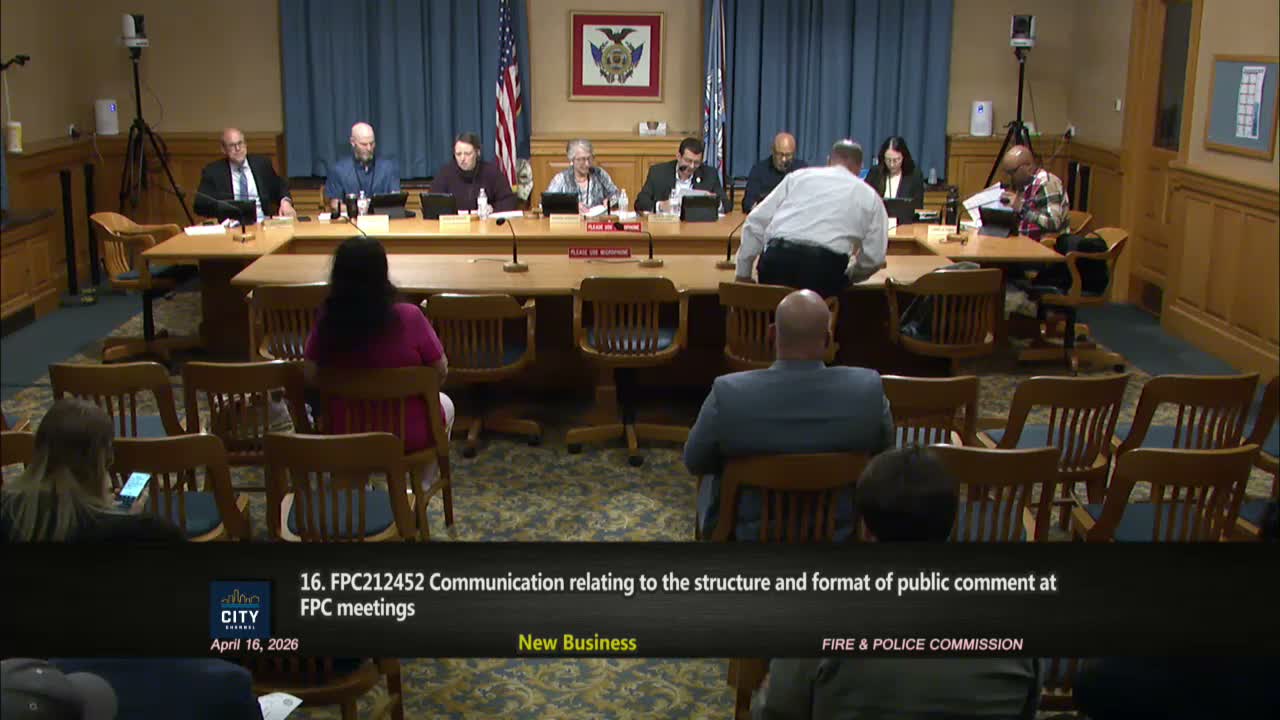
Commissioners and the executive director spent significant time April 16 discussing the structure and format of public comment at Fire and Police Commission meetings.
Executive Director Leon Todd outlined options under consideration: reduce per‑speaker time if signups exceed a threshold; allow a small number of longer slots for organizations that request them in advance; move nonagenda comments to the end of the meeting; or have chairs make ad‑hoc adjustments. Multiple community speakers and advocacy groups urged retaining five minutes per speaker so members of the public can make substantive arguments; others noted long public‑comment sessions sometimes pushed agenda items later into the night.
Commissioners discussed middle-ground options. Several suggested giving community organizations scheduled longer slots so they can present research and recommendations, while allowing individuals who simply wish to register support or opposition to indicate that on the sign‑in slip. The chair announced adoption of a procedural change to expand the public‑comment slip so people can indicate whether they simply wish to be recorded as supporting or opposing an item; the five‑minute practice remained in place. The chair said the commission could schedule any further procedural changes as an agenda item for later deliberation.
Speakers who urged retaining longer comment periods emphasized that public comment is one of the few venues residents have to raise oversight concerns and that shortening time without notice would damage trust. The commission agreed to leave the matter on file for potential future codification rather than imposing an immediate blanket reduction.