Get Full Government Meeting Transcripts, Videos, & Alerts Forever!
Get email alerts on the Immigration Enforcement topic
No spam. Unsubscribe anytime.
Council adopts resolution barring civil immigration enforcement on city property after city attorney pauses related ordinance
Summary
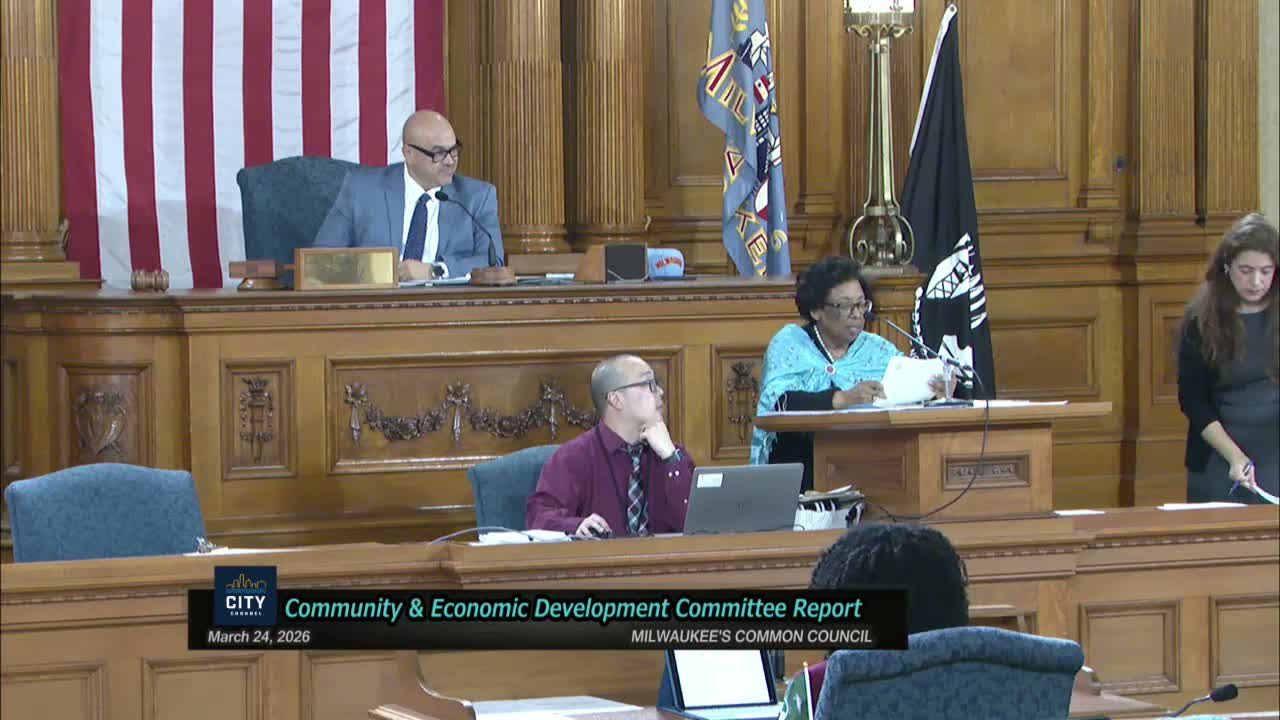
On March 3 the Milwaukee Common Council adopted a resolution prohibiting the use of city property for civil immigration enforcement and debated a separate ordinance that was held after the city attorney requested more time to review its legality.
The Milwaukee Common Council voted to adopt a resolution prohibiting the use of city property for civil immigration enforcement activities, then spent significant floor time reacting to a separate ordinance that the city attorney said required additional legal review.
Alderman Samaripa sponsored the resolution (part of the ICE Out MKE legislative package) and successfully moved amendments that expand the measure to apply to future leases entered by the city (unless the council waives the requirement) and to exclude federal property held by the federal government. Samaripa said the city attorney (named on the record as having reviewed the draft) and his staff helped craft the amendment and advised it was enforceable.
The measure passed with unanimous support as recorded by the clerk. Council supporters framed the resolution as a protection for Milwaukee’s diverse immigrant communities and urged the city to set a legal and policy framework resisting civil immigration enforcement on municipal property.
Separately, the city clerk informed the council that the city attorney had requested more time to determine the legality and enforceability of a related ordinance on the agenda (item 50). Members expressed frustration at receiving a last‑minute change in city attorney advice; several called for the city attorney to appear before a committee of the whole or to provide a written opinion. The clerk said a written opinion was forthcoming and that in some cases the city attorney had indicated matters needed closed-session discussion.
Council leaders said the city attorney’s request pauses the specific ordinance but does not kill the file; it either waits for the city attorney’s written opinion or returns to committee for amendment. Members asked for clarity and an explanation of the timing and the rationale for the late review; the transcript shows strong floor remarks that the city attorney, an elected official, should explain the change publicly when possible.
The adopted resolution will be incorporated into future city leases as amended on the floor unless the council votes otherwise for a particular lease; it also explicitly excludes federal-owned property. The clerk recorded adoption of the Steering & Rules Committee report and the resolution by roll call.