Get AI Briefings, Transcripts & Alerts on Local & National Government Meetings — Forever.
Senate passes linked-deposit loan program for charter and nonprofit private schools
Summary
House Bill 15‑90 creates a linked‑deposit loan program to help charter and nonprofit private schools finance capital needs using state treasurer funds already on hand. Sponsors said existing treasurer funds are used; senators questioned prioritization, caps and accountability. The bill passed 37–8.
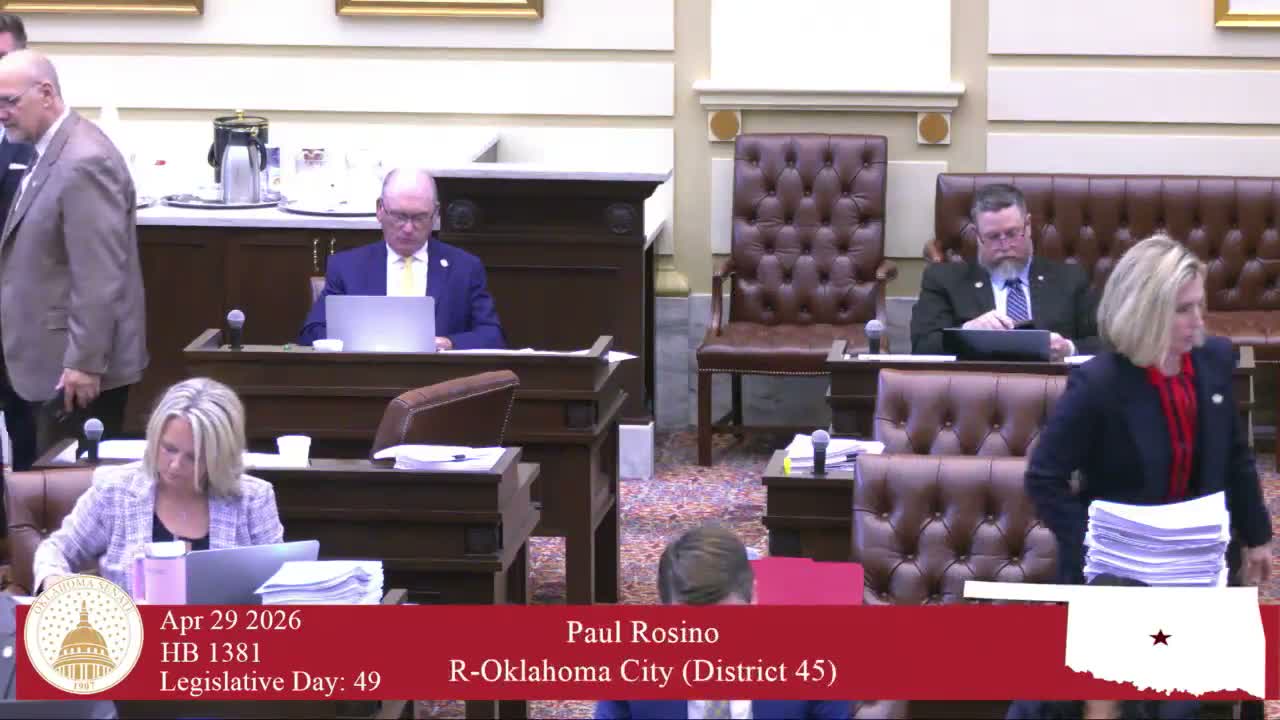
The Oklahoma Senate on April 29 approved House Bill 15‑90, establishing a linked‑deposit loan program to make state treasurer funds available at below‑market rates for capital projects at charter and nonprofit private schools.
Floor Leader Daniels described the measure as modeled on existing linked programs that currently serve agriculture and affordable‑housing needs and said the funds are existing deposits already managed by the treasurer. “There is no loss to the state,” he told colleagues when asked about potential lost interest revenue, saying the program uses funds already on hand.
Senators asked how the program would prioritize applications, whether traditional public school districts could access funds (they cannot under the bill’s definition of eligible education service entities), what accountability and auditing mechanisms would be required and whether private borrowers would displace higher‑need public entities. Sponsor Daniels said the treasurer and participating lending institutions would review applications, and the bill limits loans tied to deposits to a maximum of $1,000,000 as written.
Critics argued the program risks directing public resources to private institutions with less transparency and accountability than public schools. “When the state accepts below market returns, that is a cost,” said Senator Hicks. Supporters replied the program is a tool used elsewhere and would help meet capital needs that otherwise might be difficult to finance.
The senate passed HB 15‑90 by roll call, 37–8. The transcript shows follow‑up discussion about program caps and administrative procedures; the measure was advanced and passed on third reading during the session.