Get AI Briefings, Transcripts & Alerts on Local & National Government Meetings — Forever.
Oklahoma Senate approves bill clarifying birth-certificate sex notation after extended debate
Summary
The Oklahoma Senate passed House Bill 12‑25, which the sponsor described as clarifying that birth certificates should record an 'accurate biological' sex at birth and exclude gender‑identity or nonbinary markers. The measure passed 37–8 after hours of questions and debate about intersex individuals, retroactivity and pending litigation.
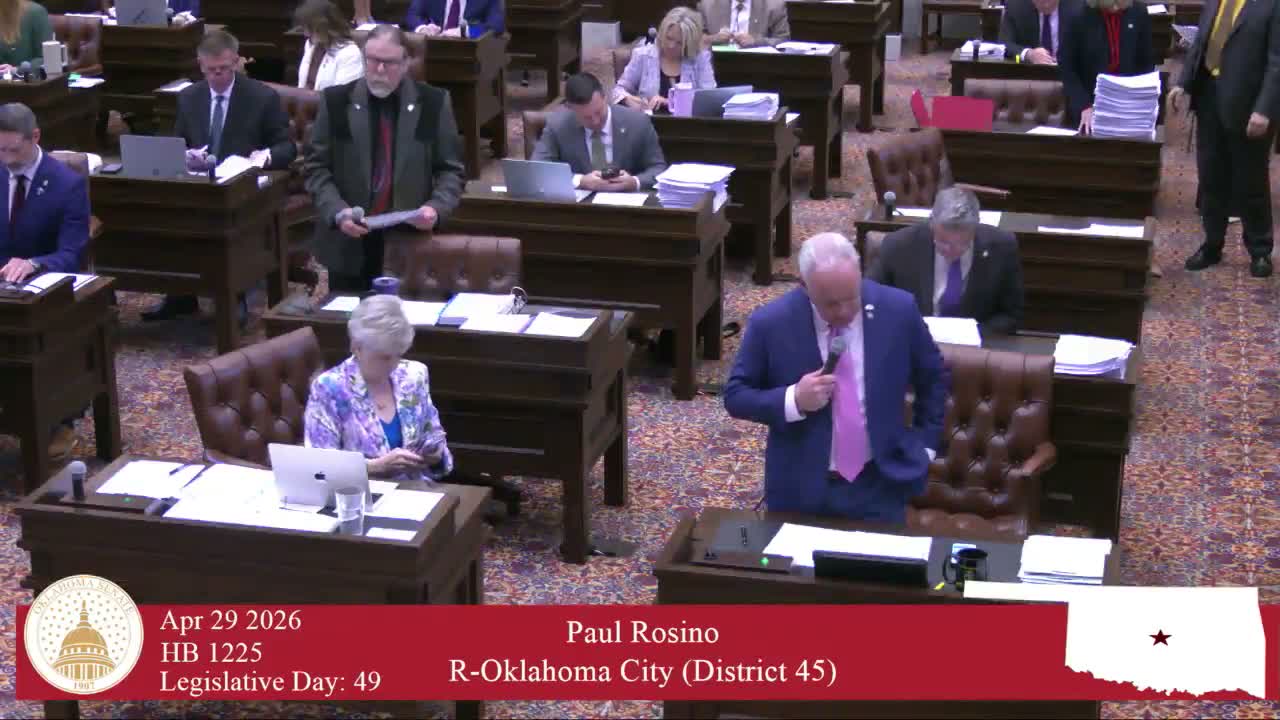
The Oklahoma State Senate on April 29 passed House Bill 12‑25, a measure the sponsor said is intended to clarify state law so birth certificates reflect “an accurate biological” sex designation at birth and not gender identity. The bill passed by a roll-call vote of 37–8 and was advanced with an emergency clause.
Sponsor Senator Bergstrom said the bill is a clarification of existing law and that he worked with the attorney general's office on language that would align with prior statutes and with Senate Bill 1,100. “The legislature finds and declares that it is enacting the statutory changes to clarify existing law as opposed to altering its substance,” he read from the measure and said its purpose is to “protect the integrity and the accuracy of vital statistic records.”
Opponents said the measure could create mismatches among identity documents, invite litigation and harm people whose lived identities differ from the designation on their birth certificate. “If it changes nothing, it wouldn't be here,” said Senator Hicks, urging colleagues to consider whether the bill would make Oklahomans’ lives harder or expose them to confusion or loss of safety in daily interactions.
Lawmakers asked detailed questions about retroactivity, the effect of the bill on people previously issued amended records, and how the state would handle intersex cases. Senator Kurt pressed the author on whether section language was intended for use in litigation and whether the bill was genuinely non‑substantive; the sponsor said the language was drafted to clarify legislative intent and that the attorney general's office had been involved.
The sponsor and several supporters argued the bill preserves the state’s role in recording facts at birth and allows for corrections where errors were made. “Birth certificates should reflect facts at birth, not on something that you decide to change down the road,” the sponsor said in floor remarks. Several senators referenced the bill’s statutory cross‑references and said existing correction processes remain available for bona fide errors.
After extensive questioning and floor debate that included policy, legal and moral arguments, the senate voted to pass House Bill 12‑25. The chair announced the result as 37 ayes and 8 nays and declared the bill passed; the sponsor then requested that the vote on the bill be considered as the vote on the emergency clause, and the chair placed that motion without objection.
What happens next: with passage as an emergency, the measure is slated to take effect immediately, subject to enrollment and transmission to the governor. The transcript shows senators debating the legal implications and the pending litigation; those matters could affect implementation if courts take up related challenges.