Get Full Government Meeting Transcripts, Videos, & Alerts Forever!
Get email alerts on the Sunshine Law topic
No spam. Unsubscribe anytime.
Legal overview of Florida's Sunshine Law stresses prohibited communications for advisory board members
Summary
A county legal presenter reviewed Florida's Sunshine Law and public-records rules for the Coastal Dune Lake Advisory Board, stressing that prohibited communications (including social media, email, texts and passing messages through third parties) can trigger violations and recommending procedures for preserving records.
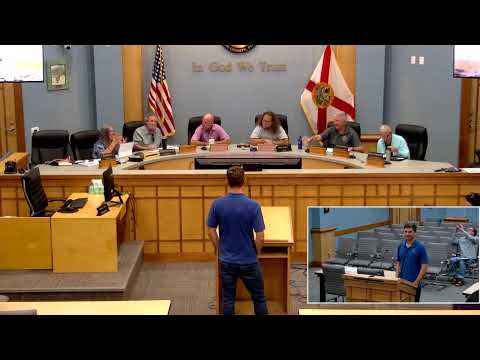
A county legal presenter gave Walton County's Coastal Dune Lake Advisory Board a focused briefing on Florida's Sunshine Law and public-records obligations, advising members that the rules apply to advisory bodies depending on assigned decision-making authority.
The presenter said the briefing was a concise overview and not legal advice, and pointed board members to the 2025 Sunshine Manual and Office of the Attorney General resources for deeper guidance. "This is just, like I said, a brief overview of the Sunshine Law. It's not intended to be a substitute for seeking good advice if you have any questions," the presenter said.
Why it matters: The presenter emphasized that prohibited communications are broad and include in-person conversations, telephone calls, email, text messages, messages passed through others, and social media activity when those communications concern matters that could reasonably come before the board. "What it counts is communication. It is very broad in the state of Florida," the presenter said, adding that social-media exchanges can qualify as prohibited communications.
The presenter explained factors that determine whether the law applies to volunteers, saying the key is what decision-making authority has been granted: advisory boards can be subject to Sunshine requirements if they exercise delegated authority. He cited a recent case, Pierce v. State, as an example frequently discussed in Attorney General materials when explaining prohibited communications.
On public records, the presenter said the definition of a record is broad and can include emails and other materials received in connection with official board business. He advised members to forward potentially official emails to the county's public-records address so they would be preserved in the county system: "If you receive something that may have been officially related to this board and your concern is the public record, just forward the email to her," the presenter said, referring to Miss Gates and the county's records process.
The presenter also warned of penalties for violations, including civil and criminal exposure, potential removal or suspension from office, and paying attorney's fees for failures to produce records. "There are some significant penalties that can come from violations of the open meeting requirements and public records," the presenter said.
Board members asked for clarification on terms such as "reasonable public notice" and were directed to county staff and the Sunshine Manual for specifics. The presenter encouraged members to err on the side of caution if they encounter a suspected violation: "If you think a violation's taking place, you don't participate, leave, and separate yourself from it."
Next steps: The presenter offered to discuss individual questions after the meeting and provided the public-records contact (publicrecords@myWaltonfl.gov) for preserving materials and seeking follow-up assistance.