Get Full Government Meeting Transcripts, Videos, & Alerts Forever!
Get email alerts on the Mentoring Capacity topic
No spam. Unsubscribe anytime.
Mentor Greater Milwaukee director urges shared data, consistent training to expand youth mentoring
Summary
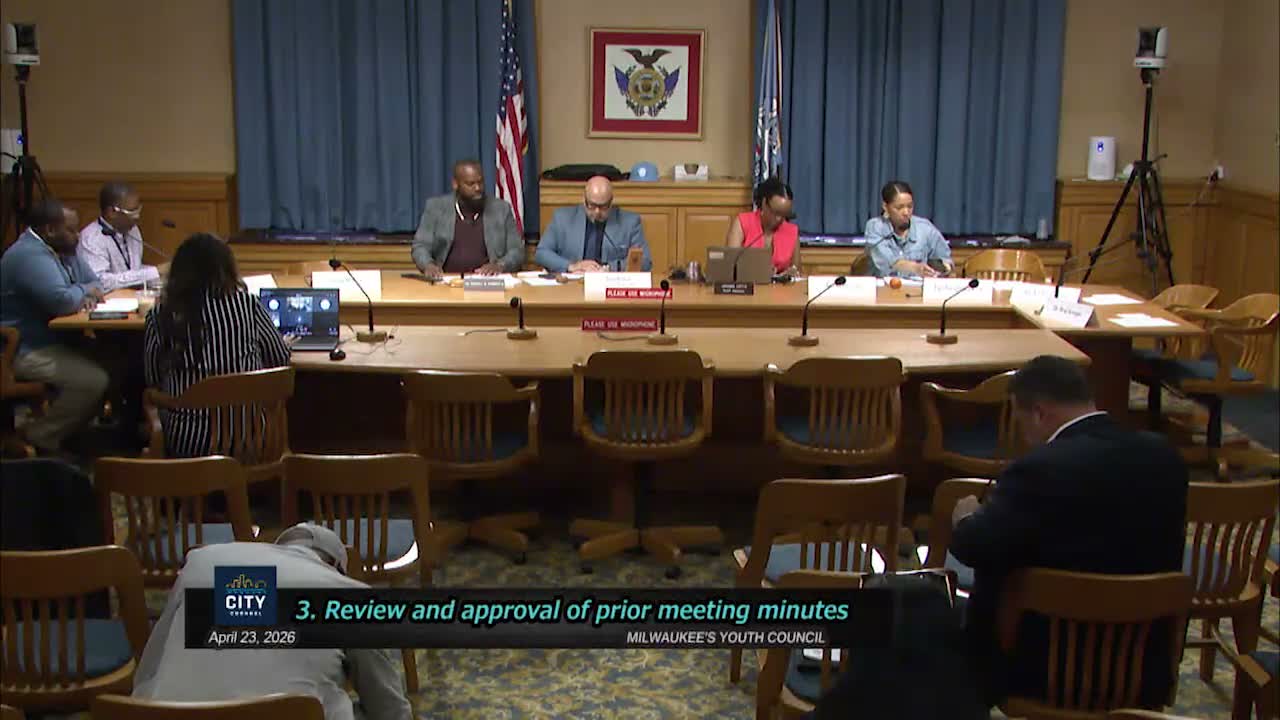
At an April 23 advisory council meeting, Lynell Raymond of Mentor Greater Milwaukee told the Emerging Youth Achievement Advisory Council that standardizing training, requiring evidence-based practices and improving data sharing would help local programs expand mentoring for ages 10–24.
Lynell Raymond, executive director of Mentor Greater Milwaukee, told the Emerging Youth Achievement Advisory Council on April 23 that stronger standards and shared data are needed to grow mentoring capacity across the city.
Raymond said Mentor Greater Milwaukee—founded in 2019 with partners that include the Milwaukee Bucks and Milwaukee Public Schools—focuses on four priorities: technical assistance, recruitment, advocacy and using data to improve outcomes. "Our job is to really increase the mentoring capacity of mentoring organizations throughout Milwaukee," he said.
Why it matters: Council members heard that many programs describe themselves as mentoring without consistent training or shared definitions, which makes it difficult to measure impact. Raymond said Mentor Greater Milwaukee requires partner programs to adopt an evidence-based "elements" framework and background checks and encourages six-month minimum commitments to move outcomes. "If you do an hour and a half a month for a minimum of six months consistently, you can move the needle on that young person's life," Raymond said.
Details: Raymond described a Mentoring Connector online tool that lists roughly 102 program partners and helps prospective mentors find programs that match their interests. He said about 86 programs are actively accepting new mentors. Mentor Greater Milwaukee also runs a youth voice summit in August that hires 12–15 youth interns to research issues and propose solutions.
Raymond identified practical barriers that limit growth: mentor time and retention, location constraints for community-based mentoring, staffing gaps at after‑school providers, and unstable funding streams (including the loss of prior ARPA support). He urged better data-sharing between providers, saying the network needs consistent program evaluations such as the National Quality Mentoring Services (NQMS) framework to ensure partners deliver evidence-based mentoring.
Council members supported the emphasis on standards and evaluation. Alderman Jose Perez asked whether the city could tighten requirements for CDBG-funded youth programs to ensure funds support bona fide mentoring rather than only ancillary services; Raymond suggested evaluations and partnership agreements as tools to improve accountability.
What happens next: Raymond offered contact information and agreed to provide follow-up materials. Committee members requested further documentation on partner counts, training curricula and sample evaluation templates for consideration at the next meeting on 2026-05-14.