Get Full Government Meeting Transcripts, Videos, & Alerts Forever!
Get email alerts on the Law Enforcement Identification topic
No spam. Unsubscribe anytime.
Council advances ordinance requiring law‑enforcement identification, including ICE agents
Summary
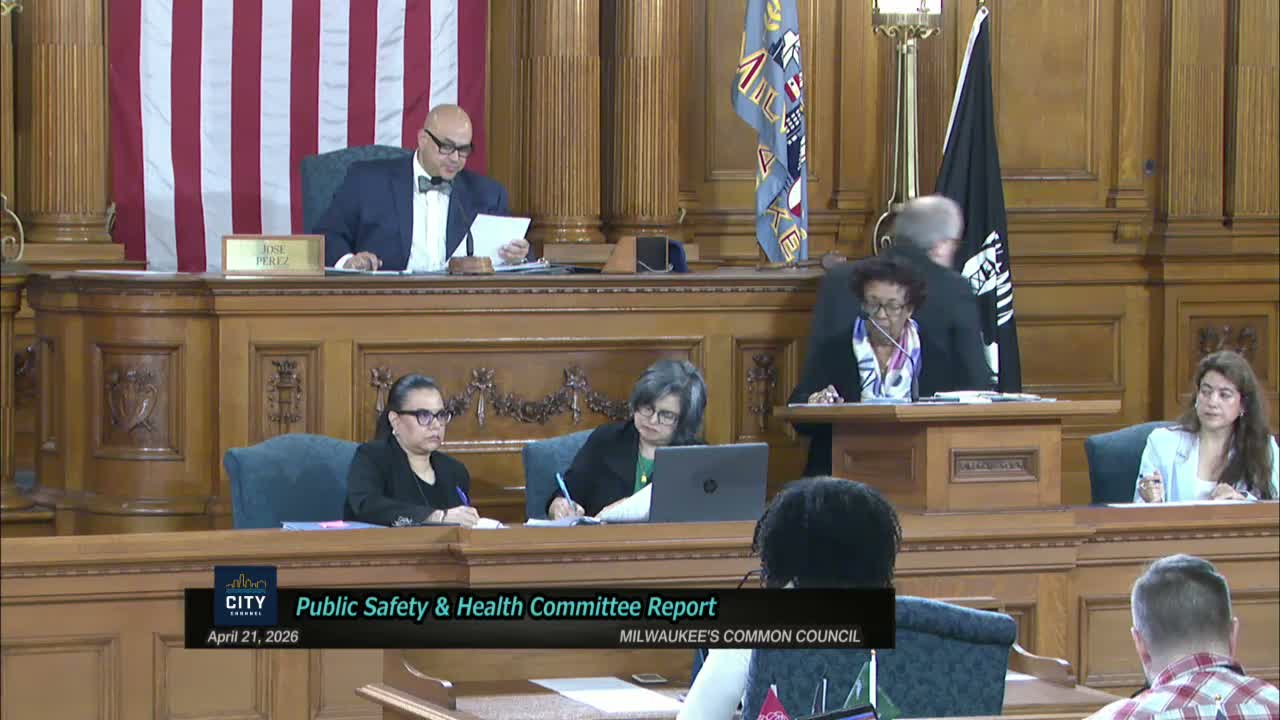
After extended debate and procedural substitutions, the Milwaukee Common Council advanced a substitute ordinance intended to require law‑enforcement officers — including federal agents when operating in the city — to identify themselves when asked; the measure passed on the council floor with recorded votes and one abstention.
A substitute ordinance requiring law‑enforcement officers to identify themselves when operating in Milwaukee advanced on the Common Council floor after a lengthy debate about scope and enforceability.
Alderman Brower, who moved the substitute and framed it for the chamber, said the measure’s purpose was to require that “law enforcement of any agency, including ICE, be identified when they’re here” and to provide the city “the best chance of withstanding a court challenge.” Brower argued the ordinance would require officers without visible identification to give badge numbers or agency names when asked by a member of the public or a local officer.
Supporters said changes made with the city attorney clarified legal concerns and narrowed language. Alderman Bergellis described the version before the council as “a small step forward” that reflected guidance from the city attorney’s office; he urged colleagues to view it as part of a longer strategy. Alderman Samaripa thanked the city attorney and sponsors for revising the file so it could be brought before the council.
Opponents and cautious members raised concerns that the ordinance could impair local businesses’ and residents’ ability to respond to masked individuals committing crimes and noted enforcement and unintended consequences. One member said he supported the underlying intent but would abstain because of language and community concerns.
The council took separate roll‑call action on the file after debate. The clerk recorded 13 ayes, 1 excused and 1 abstention; the record shows the ordinance advanced as recorded on the council floor.
What happens next
The ordinance will follow the usual legislative process for the city; sponsors said they intend to use the measure as both a local rule and the foundation for potential legal challenges or further policy changes. The council’s recorded votes are part of the public docket for the file.