Get Full Government Meeting Transcripts, Videos, & Alerts Forever!
Get email alerts on the Operations topic
No spam. Unsubscribe anytime.
Commissioners press staff for fixes as HACM reports roughly 10–12% vacancy rates and slow unit-turn timelines
Summary
Acting director and property/maintenance staff outlined a revised unit-turn SOP and operational steps to reduce long vacancy times. Staff reported approximately 251 public-housing vacancies (10.85% vacancy rate) and 236 affordable vacancies (about 12.3%). Commissioners demanded concrete timelines, triage data and improved coordination with CVR (voucher referrals).
Commissioners spent the bulk of the April 15 meeting pressing staff for a clear, data-driven plan to reduce long vacancy times and turn units faster so the Housing Authority can restore occupancy and revenue.
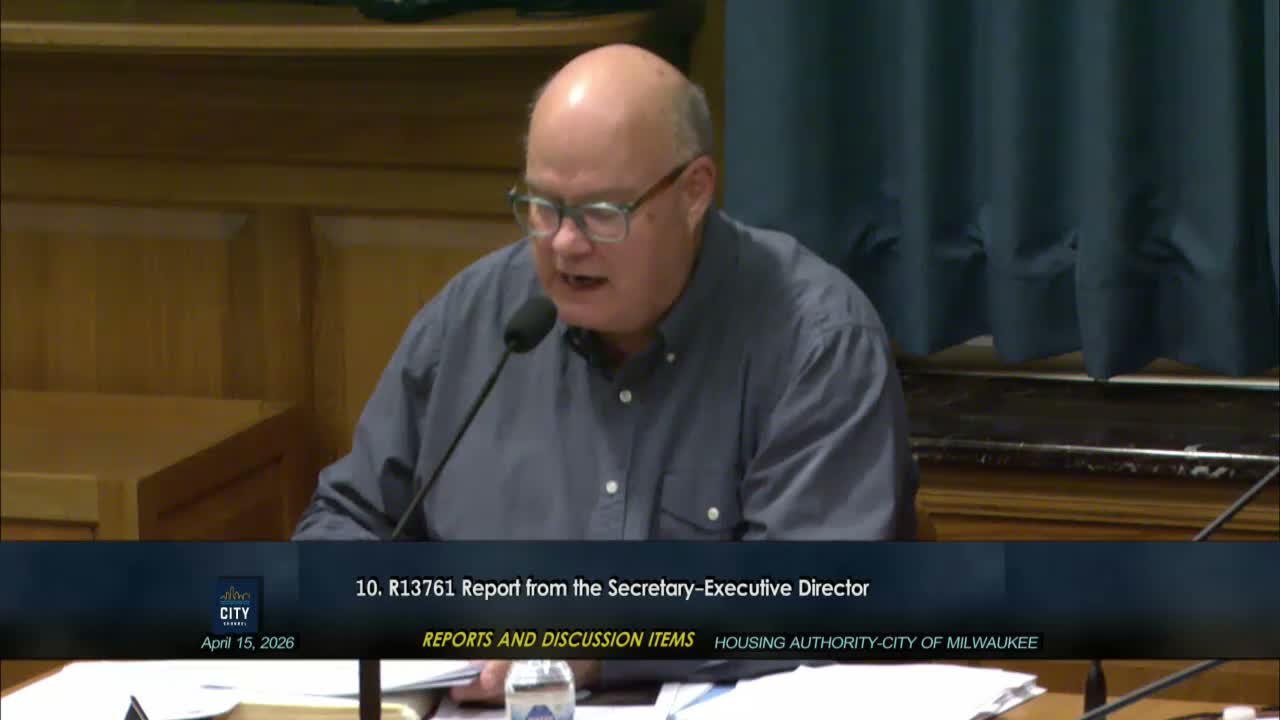
Acting Secretary/Executive Director Ken Barbault said the authority’s public‑housing portfolio is roughly 2,300 units, with 2,062 occupied and 251 vacant (about 10.85% vacancy rate); 50 of those vacant units were ready for leasing. On the affordable side, staff reported about 1,900 units with 1,556 occupied and 236 vacant (about 12.3% vacancy rate); 69 affordable units were ready for leasing.
Property management lead Anicia Robertson and maintenance services manager Mike Wellman walked commissioners through the unit‑turn process: move‑out forms and key turn-in, pest control and debris removal where required, generation of maintenance work orders, completion of painting/repairs and cleaning, creation of an inspection sheet, then referral to CVR for applicant workflow and recertification. Robertson said some property managers are not consistently submitting move‑out inspection sheets, which delays maintenance scheduling.
Commissioners described the current situation as a business problem: "units equal money," Commissioner Moore said, and pressed staff for a triage plan to identify "low‑hanging fruit" units that can be made ready quickly. Vice Chair Gotsler argued the process should start at the 30‑day notice so maintenance and CVR can prepare simultaneously; staff confirmed maintenance typically receives work orders once keys are turned in and that locks are changed within about 24 hours.
Mike Wellman said the department will add staff for vacant turns and dedicate an initial skeleton crew of three workers to focus on the longest outstanding properties (Hillside, Westlawn, Locust Court) to reduce backlogs. Commissioners requested additional data for the May meeting: age of vacancies, unit inspection sheets for triage, and a breakdown of maintenance staff assignments so the board can evaluate where additional hires or reallocation would have the greatest effect.
CBR and HCV staff (Tracy Sheffield and Tina Royalty) described referral constraints and timelines: when a vacancy is reported to CVR they send a workflow link via RentCafe (applicants typically have 10 days to complete required documentation), staff then review eligibility (5–10 days), and property compliance and suitability checks take an additional 10–14 days in many cases. Staff have implemented a RentReasonableness API that collapsed a backlog of 300 rent‑reasonableness tests from hours per test to processing hundreds in minutes. They also reported a significant reduction in late recertifications and a programmatic effort to pre-pull larger applicant pools for challenging properties.
The board asked staff to return at the May meeting with a comprehensive plan showing the current vacancy inventory, how long units have been vacant, the move‑out/inspection sheets, a triage list of quick‑turn units, steps taken to improve the CVR/Voucher workflow, and measurable milestones for occupancy improvements. Commissioners emphasized urgency because HUD obligation deadlines and financial performance depend on restoring occupancy.