Get Full Government Meeting Transcripts, Videos, & Alerts Forever!
Get email alerts on the Opioid Response topic
No spam. Unsubscribe anytime.
Committee preserves MorY overdose-response funding through year-end while pausing broader opioid spending plan
Summary
After a contentious debate, the committee approved short-term funding to keep the MorY overdose-response program operating through the end of the year and deferred a larger three‑year health-department opioid spending plan so members can seek further evaluation and community engagement.
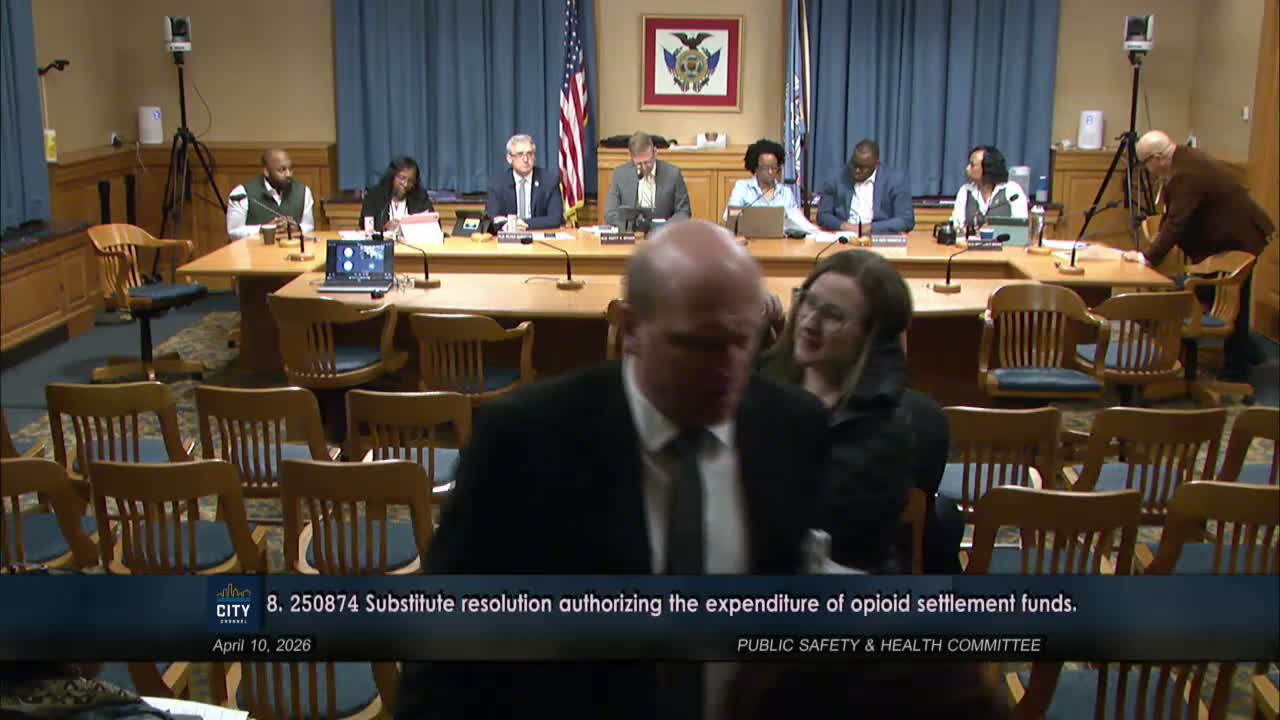
Facing a heated exchange about the city’s planned use of opioid settlement funds, the Public Safety & Health Committee on April 10 approved a narrowed substitute to keep the Milwaukee Fire Department’s MorY overdose-response program funded through the end of the year and defer a wider three-year spending rollout by the Health Department.
Chief representatives from both the Fire Department and Health Department said the pause risks losing momentum for harm-reduction and treatment programs. "We're saving lives out here," the Fire Department chief told the committee, stressing that MorY operations rely on predictable funding to maintain peer supports, outreach and clinical follow-ups.
Health Department staff said they have already designed a three-year continuum of care that includes prevention, treatment and harm-reduction services and noted that roughly $719,000 remained available from earlier allocations for health-department work. The health department and the committee discussed coordination with Milwaukee County and the need to make procurement and community-based funding processes accessible to smaller providers.
Sponsors of the substitute said they wanted time for a third-party program evaluation and better council-level engagement with neighborhood stakeholders before committing a multiyear expansion. After negotiation the committee adopted an amended substitute that removed a $250,000 independent-evaluation set‑aside but preserved MorY funding through 2026 while deferring the larger allocations for further review; the amended motion carried despite an objection, with the chair recording the result as passing on a 3–1 vote.
Physicians and the county EMS medical director cautioned that stopping or even slowing some interventions could reverse progress. Dr. Ben Weston, Milwaukee County EMS medical director, told the committee the combined interventions in Milwaukee have produced a large reduction in overdose deaths in recent years and argued that continuity is essential for planned expansions — including broader buprenorphine access through first responders.
The committee instructed sponsors and departments to return at the next cycle with clarified implementation plans, procurement steps for community-based organizations and how any county programs would coordinate with city-funded services.