Get AI Briefings, Transcripts & Alerts on Local & National Government Meetings — Forever.
Council approves 48‑unit Sunflower Hill project to house adults with intellectual and developmental disabilities
Loading...
Summary
The council unanimously approved a density‑bonus application to build 48 deeply affordable units intended for adults with intellectual and developmental disabilities at 9949 Moraga Road. The project is 100% affordable, requests multiple objective waivers, includes on‑site caregiver offices and staff parking, and project proponents said construction will be prevailing‑wage.
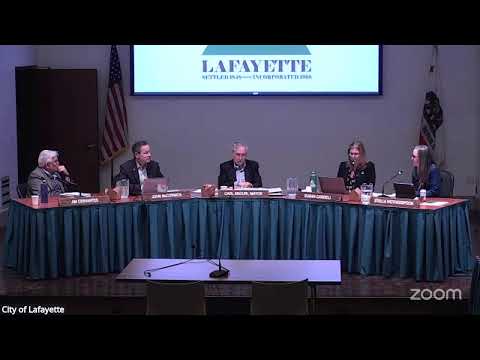
The Lafayette City Council voted unanimously to approve a density‑bonus application for Sunflower Hill, a proposed 48‑unit, 100 percent affordable development designed for adults with intellectual and developmental disabilities at 9949 Moraga Road.
Planning staff described the proposal as ministerial under state density‑bonus law and noted the project requests multiple objective waivers from Lafayette’s MRO zoning and downtown objective design standards, including increases in height to a maximum of about 54 feet 6 inches, reduced front/side/rear setbacks, an increased floor‑area ratio and certain dimensional exceptions. Stephanie Cervantes of the planning division said the project meets state density‑bonus thresholds for an 80 percent bonus and qualifies under the city’s housing element program as an opportunity site.
Applicant representatives described design revisions made after the design‑review referral—added street trees, adjusted colors and fenestration, a second‑floor resident courtyard and caregiver offices and lounges. Architect Adrianne Steichen said the roof shapes were designed to maximize south‑facing solar and that the project seeks to limit grading to control construction costs.
Family members, nonprofit partners and service‑provider representatives urged approval during public comment, stressing the local shortage of affordable supportive housing for adults with developmental disabilities and the value of locating units near family and services. “This project is important to me because it is very difficult for people with disabilities to find and obtain high quality affordable housing,” Lillian Callahan Cline told the council. Several speakers said the downtown location would allow residents proximity to programs and shops.
A union representative asked whether the project will include enforceable labor standards. In rebuttal, the applicant stated the development will pay prevailing wage and said their selected general contractor, Senseri, has no wage‑claim history in their review.
Council members asked technical questions about setbacks, tree planting, sidewalks and the project financing stack. Staff reported that county Measure X staff recommended approximately $5.47 million (with potential additional recapture funds) for the project and that that funding would make the project more competitive for tax credit financing. The council approved Resolution No. 2026‑30 and the project’s conditions of approval unanimously.
The project approval authorizes the waivers and concessions outlined in the staff report and directs the applicant to meet the listed conditions prior to building permits.