Get Full Government Meeting Transcripts, Videos, & Alerts Forever!
Get email alerts on the Rggi Policy topic
No spam. Unsubscribe anytime.
Delaware committee hears sharply divided testimony on bill to exit RGGI
Summary
A Senate committee heard hours of testimony on SB 65, which would remove Delaware from the Regional Greenhouse Gas Initiative. Supporters said RGGI raises electricity costs; agency and many public commenters said RGGI funds weatherization, low‑income aid and local loans that create jobs and reduce bills.
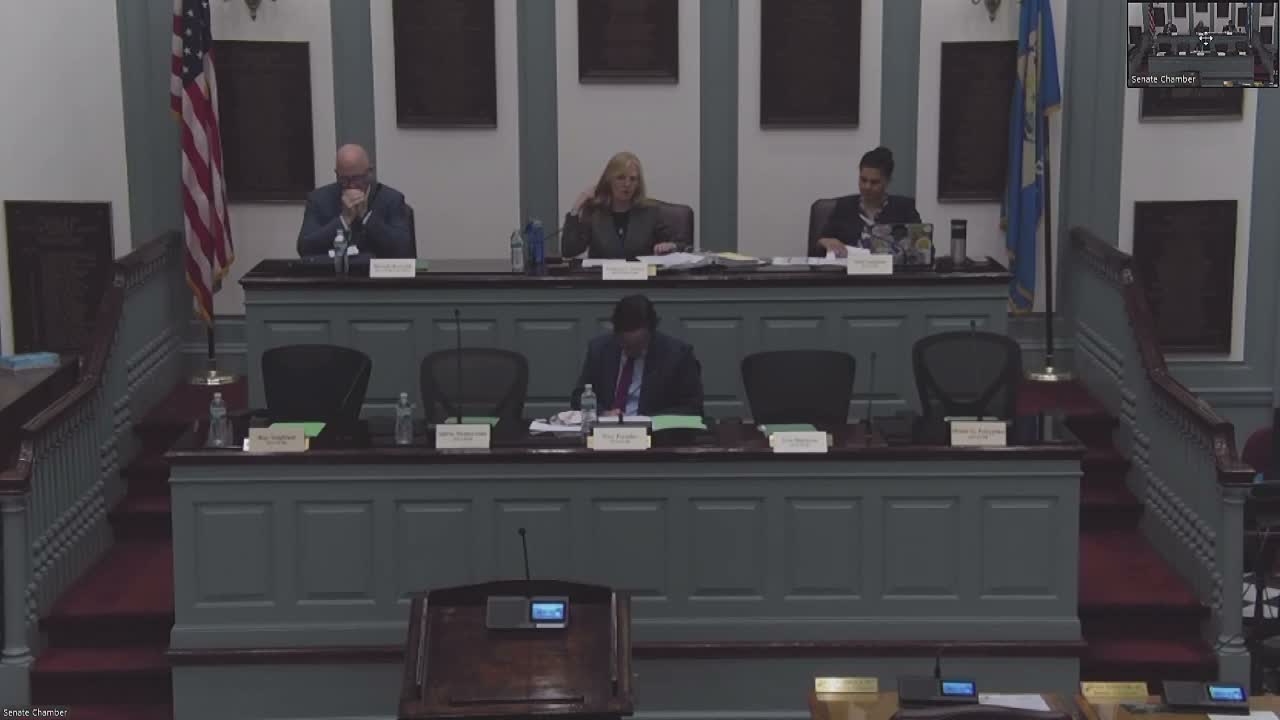
Senate Environment, Energy & Transportation Committee Chair Senator Stephanie Hanson convened a hybrid hearing on April 22 to consider Senate Bill 65, sponsored by Senator Hocker, which would repeal Delaware’s participation in the Regional Greenhouse Gas Initiative (RGGI) and remove the state’s CO2 emissions‑trading program from law.
Senator Hocker argued the state has already exceeded RGGI’s emissions goals and that the program has become “a cost driver on electricity bills,” saying higher rates hurt low‑ and middle‑income households and small businesses. Hocker asked the committee to reassess whether continued RGGI participation is the best approach for Delaware.
The committee heard testimony from multiple perspectives. Witness Dave Stevenson testified remotely that RGGI increases electricity bills, shifts generation to non‑RGGI states, and that RGGI‑funded programs have produced only marginal emissions reductions relative to their cost. Stevenson said some consultants estimated RGGI added about $67 million to Delaware electricity costs in the most recent year and questioned how DNREC and the Sustainable Energy Utility (SEU) are using RGGI proceeds.
By contrast, Jamieson Tweedy, Delaware’s public advocate, told the committee he relied on the Independent Market Monitor’s 2025 state‑of‑the‑market analysis and said the monitor estimates a carbon price at current RGGI levels would have at most a 0.5% effect on locational marginal prices (the real‑time supply price), and that fuel‑cost increases (primarily natural gas) explained most of the 2024–25 increase in energy costs.
Dana Cobb, deputy secretary at the Department of Natural Resources and Environmental Control, and Drew Slater, CEO of the Sustainable Energy Utility (SEU), presented detailed breakdowns of how RGGI revenues are spent in Delaware. Cobb said RGGI funds energy efficiency, electrification, clean‑transportation rebates, the Weatherization Assistance Program (10% of annual receipts), LIHEAP support and other DNREC projects; she said weatherization and direct bill assistance reduce bills for low‑income households. Slater said the SEU receives about 65% of RGGI funds and described programs that produced lifetime savings estimates, low‑interest loans, nonprofit and farm solar projects, and a loan portfolio with a reported default rate under 3%. Slater said the SEU had roughly $18.8 million in unencumbered reserves and that many programs would be reduced or eliminated if RGGI funding stopped.
Committee members questioned witnesses about the size of RGGI receipts, the level of reserves, and the accountability and reporting for RGGI expenditures. Several senators asked for the studies and calculations that witnesses cited during testimony. The chair paused to display the Independent Market Monitor slide and requested copies of outside studies cited by proponents of repeal so the state’s analysts could review them.
During the public‑comment period, more than a dozen speakers provided two‑minute remarks. Opponents of SB 65 — including the League of Women Voters of Delaware, conservation and health groups, contractors who participate in SEU programs, small businesses, nonprofits and farmers — said RGGI directly funds weatherization, low‑income bill assistance, nonprofit and farm solar grants, and loan programs that create jobs and lower operating costs. Several public commenters urged the committee not to dismantle programs that, they said, reduce bills and fund services for vulnerable households. Supporters of repeal included some contractors and small‑business owners who said solar costs have dropped and that subsidies or RGGI costs have been absorbed into prices.
No committee vote was taken on SB 65 at the hearing. With quorum restored at the end of the session, the committee approved its April 2026 minutes by voice vote and adjourned.
The committee requested documentation and underlying studies referenced during testimony — including the Independent Market Monitor report and the outside studies cited by witnesses — and asked DNREC and SEU to provide more detailed accounting of RGGI receipts, reserves and program balances for follow‑up review.