Get Full Government Meeting Transcripts, Videos, & Alerts Forever!
Get email alerts on the Public Safety topic
No spam. Unsubscribe anytime.
Weatherford council adopts ordinance doubling exclusion zone for certain registered offenders to 2,000 feet
Summary
The Weatherford City Council voted to adopt an ordinance extending residency exclusion zones for certain registered offenders from 1,000 to 2,000 feet of child-safety zones, with grandfathering for current residents and new notification and Halloween restrictions; the change was presented by Police Chief Jason Hayes.
The Weatherford City Council voted to adopt an ordinance expanding the city's exclusion zone for specified registered offenders from 1,000 feet to 2,000 feet of designated child-safety zones, council members confirmed during their April meeting.
Chief of Police Jason Hayes told the council the ordinance is intended to increase physical separation between those offenders and locations where children commonly gather. "We currently have around 60 registered offenders that live within the city limits of Weatherford," Hayes said, adding that 53 of those would qualify under the ordinance because their victims were age 17 or younger. "Of those 53 offenders, 28 of them have victims that are 14, and 16 of them have victims that are 10," he said.
Hayes described key provisions that will accompany the expanded radius: a grandfather clause allowing current residents who now live inside the 1,000-foot buffer to remain at their addresses; a requirement that registrants notify authorities within seven days of changing residence; and two Halloween-specific restrictions that would prohibit registrants from leaving exterior lights on and from handing out candy or treats to children on Halloween.
A council member asked whether churches are included on the city's child-safety-zone map. Chief Hayes said churches that host qualifying child-care activities (for example, day-care or after-school programs) can be included and that the city's GIS map will be updated as qualifying facilities are added. A staff member later clarified that TABC sets a 200-foot distance rule for churches and 300 feet for schools in certain contexts, which constrains local regulation of alcohol-distance requirements.
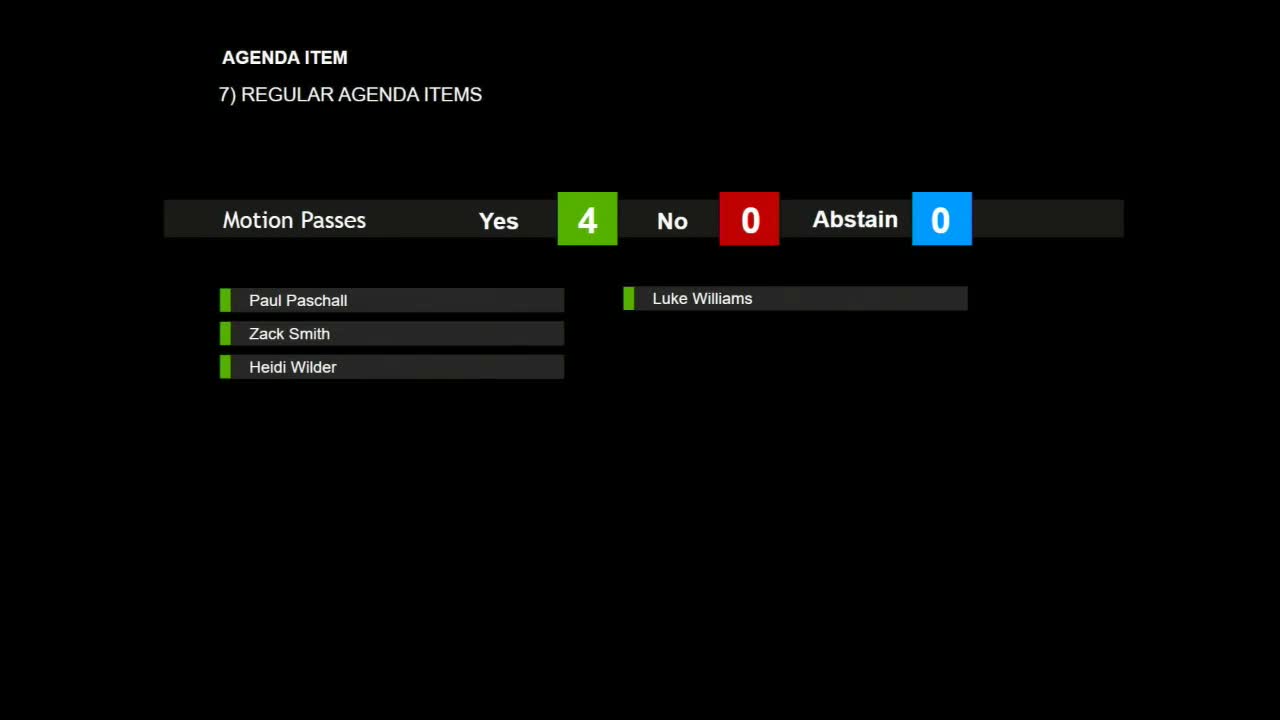
Council discussion did not record a roll-call tally in the public transcript, but the item was moved, seconded, and the mayor indicated the ordinance passed. The council also asked staff to return within 60 days with potential revisions and additional analysis on the ordinance's implementation.
The ordinance text and the map referenced by staff were in the meeting packet; council members said the change was prompted by public-safety concerns and local data on offender recidivism. Chief Hayes told the council that about 15 percent of listed individuals are typically arrested within three to five years of release for some subsequent offense and that overall the proposed change "demonstrates our commitment to protecting our kids."