Get AI Briefings, Transcripts & Alerts on Local & National Government Meetings — Forever.
Codington County commissioners approve Flock Safety license-plate reader contract amid privacy concerns
Loading...
Summary
After public testimony and an extended presentation, the Codington County Board of Commissioners approved a two-year contract with Flock Safety for automatic license-plate readers (four stationary and 12 vehicle cameras) at an annual cost of $21,700; critics warned of privacy and data‑sharing risks and asked for external audits.
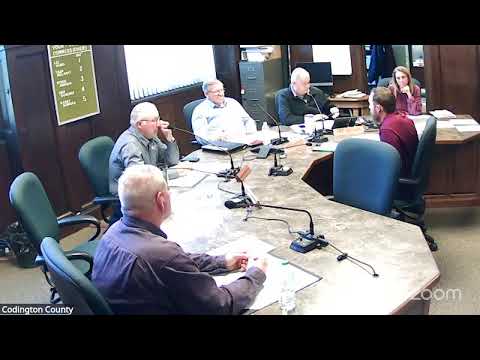
Codington County commissioners voted April 28 to approve a two-year contract with Flock Safety for an automatic license-plate reader (ALPR) system after a public presentation, video materials from Flock, and public comments urging caution.
James Simmons, a frequent public commenter, framed his opposition as evidence-based, telling the board he found “no evidence” that the systems reliably reduce crime or locate missing children and arguing they pose meaningful risks of misuse and broad data access. “They can do so much more than simply capture a license plate,” Simmons said, adding that known cases exist where authorized users abused access to stalk others and that public‑records requests show third‑party data sharing in some jurisdictions.
Doug Allen, a Watertown resident, echoed cost and operational concerns, saying officers spent time clearing false alerts and that the city’s bundled purchase—he said previously exceeded $1 million—warrants a careful cost‑benefit review. “For a clearance rate that doesn’t markedly improve, I think you have to do a cost benefit analysis,” Allen said.
Sheriff Howell and county staff defended the system and the proposed contract. In a slide presentation and remarks, the sheriff described ALPR as a targeted investigatory tool that captures still images of vehicle plates, checks them against NCIC and hot lists, logs each search, and requires case documentation under the office’s policy. The sheriff said Codington County’s policy requires audits of search logs monthly and that agencies control whether and how they share ALPR data. “Every search that’s done in Flock, according to our policy, we have to have it attached to a case,” the sheriff said.
A recorded Flock representative in the presentation said the platform requires investigators to enter an offense type, case number and search justification, and that agencies own and control their data and sharing settings. The company’s presenter said the system is designed to log who ran a search, when and why, and to allow agency administrators to audit access.
Commissioners pressed staff on operational details: the contract term is two years, the stated annual cost for county coverage is $21,700, and the implementation described in the presentation would deploy four stationary cameras and 12 vehicle cameras. The sheriff said the trial ends April 30 and that recorded hits would be extracted into case files when needed; images in the system are retained for 30 days absent extraction.
Commissioner Gable moved to approve the contract; Commissioner McElhaney seconded. During a roll-call vote the chair read recorded names who voted in the affirmative (Van Duzer, Johnson, Weir and Mackle were recorded as voting “aye”), after which the chair announced that the motion carried and the contract would be implemented.
Critics asked for stronger external oversight of audits and access logs rather than relying solely on internal reviews by sheriff’s office staff. Commissioner and public comments during the meeting suggested the county could explore third‑party or jointly managed audit processes; the chair and commissioners expressed openness to further transparency measures and said the state’s attorney might review audit practices.
The board moved on after the vote to routine business, including the sheriff’s monthly report and other budgeted purchases; commissioners later recessed to executive session for contract negotiations. Several public commenters said they plan to file public‑records requests for Flock audit logs and camera locations.
The county packet and contract documents were available to commissioners during the meeting; staff said the county’s attorney and an additional outside attorney had reviewed the agreement before the vote.