Get Full Government Meeting Transcripts, Videos, & Alerts Forever!
Get email alerts on the Housing Land Disposition topic
No spam. Unsubscribe anytime.
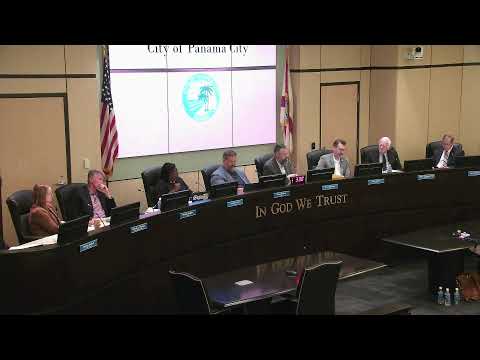
Panama City commissioners push staff for faster land‑disposition options to spur affordable housing
Summary
After a lengthy debate, the commission directed staff to present multiple land‑disposition options within two weeks, weighing selling lots on the open market against disposition that requires affordable homes and deed restrictions to preserve long‑term affordability.
Panama City commissioners on April 28 ordered staff to return within two weeks with multiple options for disposing of city‑owned parcels intended for affordable housing, aiming to speed production while preserving long‑term affordability.
The discussion, which consumed much of the meeting, followed staff briefings on recommendations from the Florida Housing Coalition and an inventory of roughly 40 parcels held by the housing department. Staff said larger parcels (about 10 parcels roughly a half‑acre or greater) could generate meaningful revenue if sold, while smaller infill lots were already designated for affordable housing and often could not be subdivided further.
Veil Ware, director of Housing and Community Services, told commissioners the infill program has delivered homes priced as low as $175,000 and that disposition methods range from nonprofit conveyance to restricted sales. “We need a cohesive plan,” Ware said, describing draft land‑disposition methods and urging protective covenants where needed.
Commissioner Hughes argued for a faster, practical approach that uses city land to directly require affordable construction: “If we give them the lot, that's how we are helping it get below $200,000,” he said, advocating awards of parcels to builders who can commit to a low sales price. Commissioner Lucas and others echoed a desire for guardrails to prevent investors from flipping properties later.
Mayor Branch said he wanted small, actionable steps rather than extended planning: “I want to see 40 in the next year,” he said, urging staff to identify a handful of parcels that can move quickly and to return options for both marketplace disposition and disposition with affordability restrictions.
The commission voted unanimously to have staff bring multiple policy options — including examples from other Florida cities, potential restrictive covenants, request‑for‑proposals models, and market‑sale scenarios that funnel proceeds back into housing — to the next meeting. The motion passed 5–0.
Next steps: staff will produce specific disposition options and sample contract language for the commission to consider, with the goal of balancing speed and lasting affordability.