Get Full Government Meeting Transcripts, Videos, & Alerts Forever!
Get email alerts on the Hemp Regulation topic
No spam. Unsubscribe anytime.
House votes unanimously to ban intoxicating hemp products; sponsor says conference will finalize technical limits
Summary
Senate Bill 3, sponsored by Representative Marty, would criminalize sale of intoxicating hemp products (defines threshold as 0.4 mg total THC per package), impose fines and license sanctions, and was passed 82‑0 by the House; sponsor said the measure will go to conference for detailed technical and enforcement language.
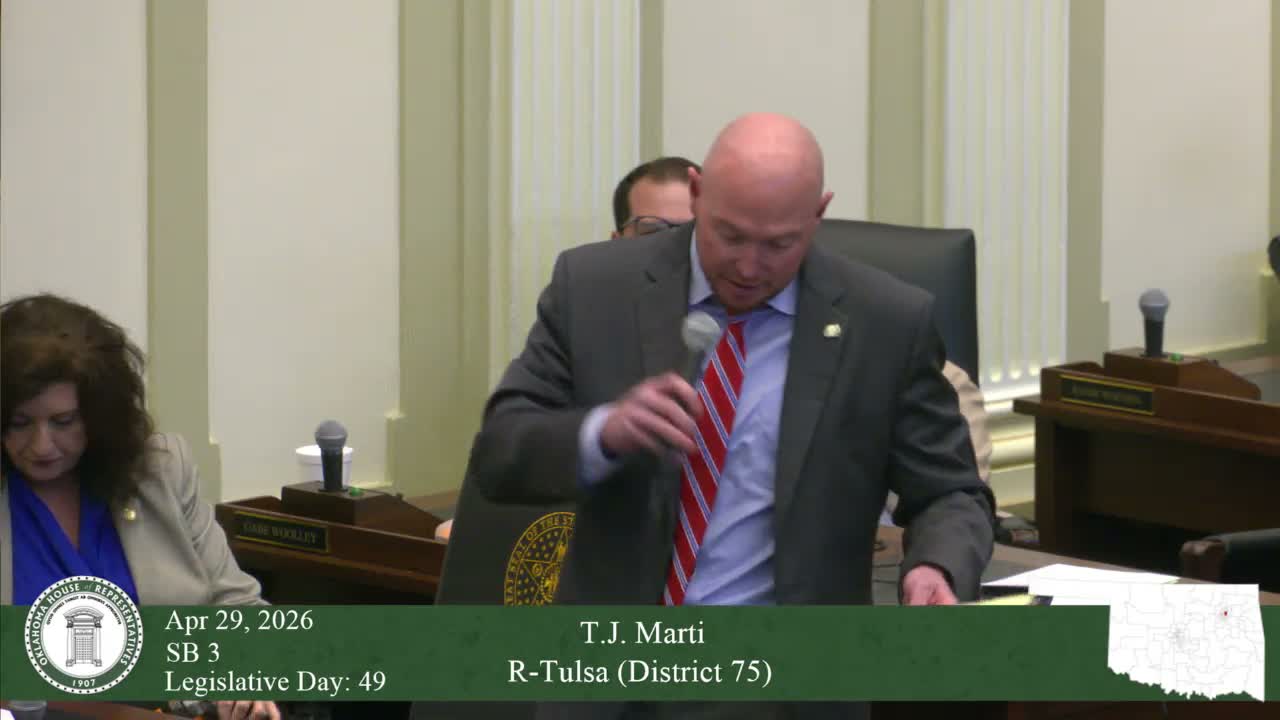
The Oklahoma House voted 82‑0 April 28 to pass Senate Bill 3, a measure authored by Representative Marty that would make the sale of intoxicating hemp products illegal in the state.
Marty told colleagues the bill was prompted by reports from pages and school communities and described widespread availability of intoxicating hemp products in convenience stores, liquor stores and online. On the floor he described the bill’s key threshold — 0.4 milligrams total THC per package — and said the intent is to eliminate products being marketed as “hemp” that have intoxicating effects and are reaching minors.
Members asked detailed questions about process, enforcement and penalties. Marty said the bill includes civil penalties — including fines up to $10,000 and potential license revocation for sellers — and clarified that legitimate low‑THC CBD products for therapeutic uses would remain lawful. The sponsor repeatedly said portions of the bill would be refined in conference committee with Senate negotiators, particularly to settle technical unit definitions for beverages and the language aligning state and federal hemp definitions.
Marty and other supporters urged colleagues to treat the measure as a child‑safety and public‑health bill. Several members noted the late stage of the session and asked whether the final conference language could change specific numeric limits; Marty said he would report back to the House on conference outcomes.
The House passed the measure unanimously and the sponsor requested the emergency be declared so implementation can move quickly; the clerk recorded the emergency vote as part of the roll call.