Get Full Government Meeting Transcripts, Videos, & Alerts Forever!
Get email alerts on the Immigration Enforcement topic
No spam. Unsubscribe anytime.
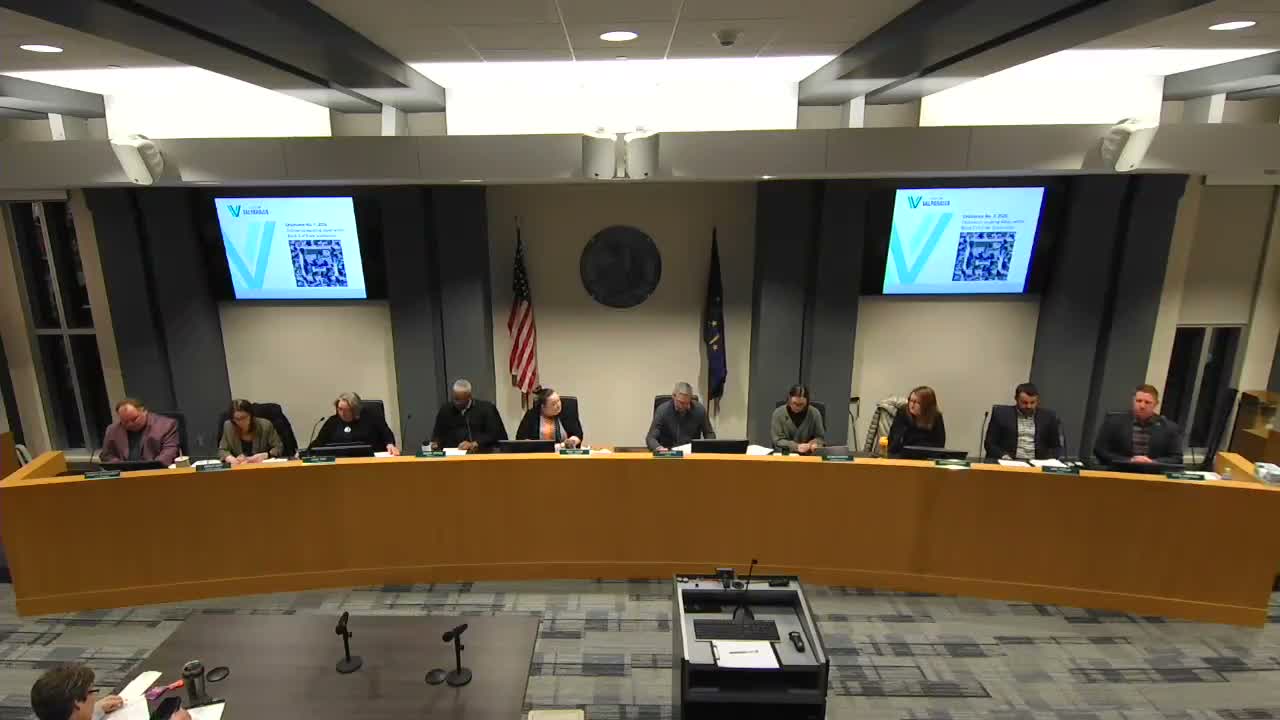
Valparaiso council adopts resolution affirming civil rights and due process after contentious debate
Summary
The Valparaiso Common Council passed Resolution 4, a values statement reaffirming civil rights, nondiscrimination and limits of municipal authority in the wake of recent federal immigration enforcement actions; the 5–2 vote followed extended council debate and more than an hour of public comment. Ordinance 6 was tabled and the alley-vacation ordinance (Ordinance 7) was continued for later action.
The Valparaiso Common Council voted 5–2 on Feb. 23 to adopt Resolution 4, a statement reaffirming ‘‘civil rights, equal protection, and due process’’ and the city’s nondiscrimination ordinance, sponsors said. President Capitan presented the measure as a reassurance to residents worried about recent federal immigration enforcement tactics.
President Capitan said, ‘‘This resolution is a statement of our values,’’ and described it as reaffirming ‘‘equal protection under the law, our city's current non discrimination ordinance, the protection of constitutional rights of all residents, [and] the role and limits of municipal authority.’’ She told the council the resolution responds to community concerns raised after highly publicized enforcement actions in other cities.
Why it matters: supporters said the resolution gives residents reassurance and signals that Valparaiso will prioritize civil liberties and transparent policing. Opponents said it was symbolic, risked legal exposure under state law, and distracted from municipal priorities such as roads and public safety.
Several council members and members of the public urged the council to be precise about legal authority and practical protections. A council member who opposed the measure said the council should focus on ‘‘local issues like public safety, infrastructure and economic growth’’ and described the resolution as ‘‘political theater’’ (opinion expressed in council debate). Another councilman urged recognizing the long history of federal immigration policy and cautioned that legal determinations belong to the courts.
Public comment was extensive and divided. Amy Nondorf told the council that ‘‘when you put together a new resolution and you rechange the verbiage and then you shut down public comments on it, that's appalling,’’ and argued the council lacked authority under state law to take the actions she described, citing multiple Indiana code sections. Derek Taylor, a Valparaiso resident, called the resolution ‘‘shameful’’ and said it attacked federal immigration agents and risked encouraging unlawful conduct; other residents urged empathy and supported the council passing the statement.
Legal question raised: after the meeting a city attorney told the council that it is within the council’s authority to consider and adopt such a resolution as an expression of policy, but public commenters and at least one resident urged the council to reconsider the measure on legal-risk grounds and cited pending state legislation (SB 76) that could affect municipal authority on immigration-related matters.
Votes at a glance: Resolution 4 — passed 5–2 (five yes, two no); Ordinance 6 20 26 (general-fund appropriation) — motion to table carried and final reading moved to the next meeting; Ordinance 7 20 26 (vacating platted alley in Block 2 of Fisk Subdivision) — public hearing held and the item was carried to the next meeting for further consideration.
What’s next: the council did not adopt changes that would alter police operations; the resolution language is framed as a values statement and sponsors said it does not direct police to interfere with federal operations. The city attorney confirmed the council may consider the resolution; members of the public who raised legal concerns said they may pursue reconsideration or other remedies. The council will revisit the ordinance and appropriation items at its next scheduled meeting.