Get Full Government Meeting Transcripts, Videos, & Alerts Forever!
Get email alerts on the Municipal Resolutions topic
No spam. Unsubscribe anytime.
Valparaiso council declines to adopt resolution condemning federal immigration enforcement actions after extended public comment
Summary
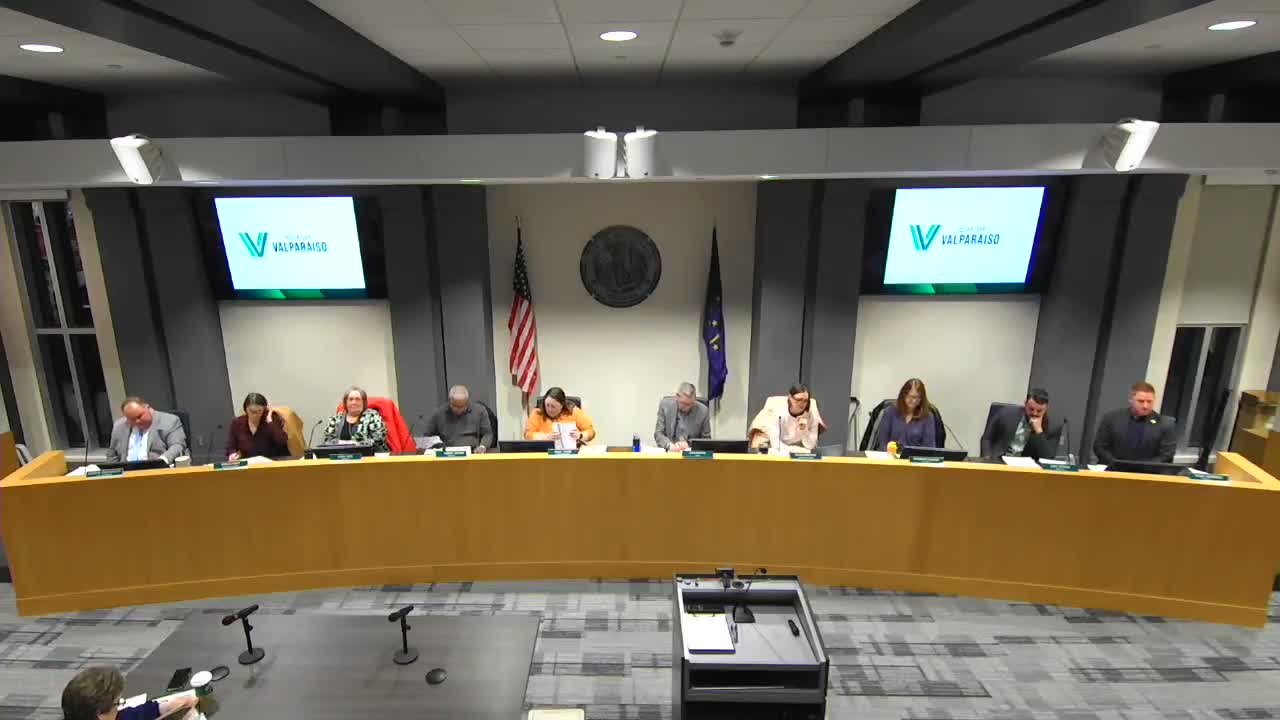
After more than an hour of public comment and a split council debate over wording and jurisdiction, the Valparaiso City Council voted on Resolution 3-20-26 — which called for impartial investigations into two deaths during federal immigration enforcement actions — and rejected the measure in a roll-call vote.
Valparaiso City Council considered Resolution 3-20-26, a statement expressing grief and calling for impartial investigations into the deaths of Renee Nicole Goode and Alex Pretti during federal immigration enforcement operations. The council took public comment first and then debated whether the city should issue a statement about federal actions that occurred in another state.
The resolution was read aloud at the start of the meeting by the clerk-treasurer. Councilman Robert Cotton, who introduced the measure, said the draft was intended to affirm "the protections of human life, civil liberties, and constitutional rights" and to request independent oversight when federal enforcement actions result in loss of life. Cotton said he had met with Police Chief Andrew McIntyre to correct a line in the draft about the presence of federal immigration enforcement in Valparaiso and was prepared to accept amendments that add clarity.
Dozens of residents filled the council chamber and split sharply in their comments. Valerie Kabaki, a Valparaiso resident, told the council the resolution "doesn't make anyone safer" and warned it could discourage cooperation between local and federal law enforcement. "Saying we don't want ICE tells those criminals that Valparaiso is a safe haven," she said. Several other speakers cited recent crimes and argued the city should not signal resistance to federal assistance.
Other speakers urged the council to adopt the resolution as a nonpartisan call for due process and accountability. "This is simply stating that if a crime occurs, we should be able to investigate them," said Nathan Allen. Elizabeth Gingrich and others described concerns about federal tactics and the need for checks on enforcement methods; Gail Gallon said "ICE is out of control" and called for protections for immigrant families.
Council debate turned on two main questions: whether the council should weigh in on federal actions outside the city’s jurisdiction, and whether the draft language prematurely "condemns" actions before investigations conclude. Several council members — including Councilmember Anderson and Councilmember Reed — voiced concern about the process and substance, noting the resolution had been filed without broad council collaboration and that wording appeared to assert facts not yet established. Anderson said he supported transparency and investigation in principle but would vote against the measure because of the way it was brought forward and framed.
Other members urged a timely statement that reflected community concerns. Councilmember Hunt, who supported further edits, said the issue deserved thoughtful discussion and possible action items tied to local commitments. President Capitan and Hunt circulated amendments to clarify language and to ensure accurate statements about whether ICE or other DHS components had conducted operations inside Valparaiso.
After procedural exchanges about tabling versus immediate action, the council took a roll-call vote on the resolution. The clerk recorded: Cotton — yes; Domer — no; Papillo — no; Anderson — no; Capitan — no; Hunt — no; Reed — no. The vote defeated the resolution. Mayor Costas then recessed the meeting for 10 minutes.
The council decision followed an extended public-comment period in which residents raised concerns about selective outrage, public safety, due process and the appropriate role of a municipal government in responding to federal operations. Several callers and council members said they would continue to work on revised language and possible future measures that better reflect city jurisdiction and local commitments.
The council did not adopt any immediate enforcement changes; members said further conversation with the executive branch and staff would be appropriate before any new local action. The council reconvened after recess to continue the evening’s agenda.