Get Full Government Meeting Transcripts, Videos, & Alerts Forever!
Get email alerts on the Budget Extender topic
No spam. Unsubscribe anytime.
Assembly advances one-week budget extender, citing $16.4 billion funding need
Summary
The Assembly advanced a one-week budget extender to fund state operations through May 4, increasing the appropriation to $16.4 billion (a $1.5 billion rise from the prior extender). Members raised questions about NYSERDA funds, school aid timing and the impact on ratepayers before the 134–0 vote.
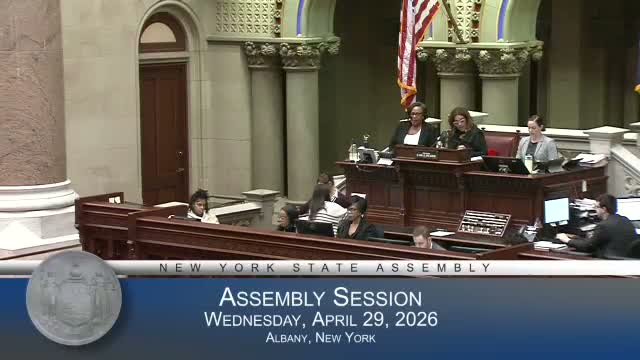
The Assembly on April 29 advanced a one-week budget extender to keep state operations funded through May 4, raising the total appropriation associated with this short-term measure to $16,400,000,000, an increase of $1,500,000,000 over the prior extender.
Sponsor and floor explainer Mister Pretlow described the measure as “another extender” in a series that ensures continued funding for emergency payroll, the Children’s Health Insurance Program, unemployment insurance, OPWDD services, veterans programs and general state charges.
Why it matters: Members said the patch keeps government running while broader policy negotiations continue between the houses and the governor’s office. “There is progress on the policy items, but we haven’t started talking finances yet,” Pretlow said, urging colleagues that fiscal work will move once policy language is resolved.
Members pressed fiscal and policy points on the floor. Mister Palmisano asked for and received the fiscal totals: “The total amount is $16,400,000,000,” and that the increase above the previous extender was “$1,500,000,000.” Palmisano questioned whether any state workers were unpaid under extenders; Pretlow replied that, to his knowledge, only members of the Legislature were not getting paid.
Palimsano pressed the chamber on energy policy and ratepayer relief, citing a report and stating that NYSERDA is holding roughly $2,400,000,000 in collected funds. He urged immediate direct relief to residents rather than rebates or programs he said would shift costs to ratepayers. “We need to provide direct ratepayer relief now,” Palmisano said, arguing that rebates subsidized by higher bills would not address immediate household needs.
Several members emphasized the consequences of a late budget for local governments and school districts. Mister Smith, speaking on behalf of school constituencies, warned that districts must finalize budgets by May 5 without state-aid certainty and said he would vote for the extender to keep state operations funded while urging a timely final budget.
Transparency concerns were raised during explanations of votes. Miss Walsh said the budget process remained “so mired in secrecy” that it hampers thorough public briefings and meaningful debate.
The clerk recorded the vote: Ayes 134, Nays 0. The act will take effect immediately.
What’s next: The extender keeps government operations funded through May 4; members said substantive fiscal negotiations remain pending while policy issues are worked out between the two houses and the governor’s office.