Get Full Government Meeting Transcripts, Videos, & Alerts Forever!
Get email alerts on the Ai Regulation topic
No spam. Unsubscribe anytime.
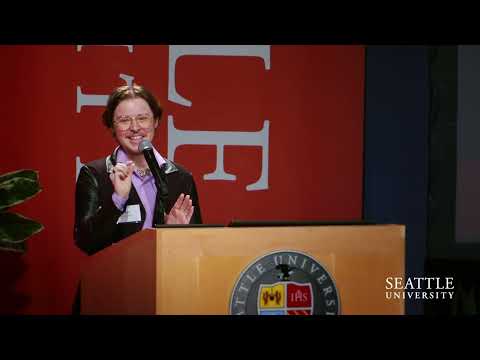
Jay Conrad urges industry-wide uniform definitions and third-party audits to aid AI lawmaking
Summary
At a Seattle University panel, policy strategist Jay Conrad recommended that firms adopt uniform, clear, consistent and periodically reviewed definitions for terms like “transparency” and called for independent third-party audits and stronger academic engagement to help legislators write effective AI laws.
Jay Conrad, a lawyer and policy strategist specializing in international data privacy, told a Seattle University panel that inconsistent language across companies is a major barrier to effective AI regulation. "I want you to try to define what that word actually is in your mind," Conrad said, urging the audience to consider how divergent definitions of "transparency," "disinformation" and "bias" hinder lawmakers.
Conrad recommended businesses adopt uniform definitions that are detailed and operational, not vague. He said definitions should describe how algorithms work, how firms detect problematic content, and the concrete steps taken when issues such as child sexual abuse material or disinformation are found. "There should be some sort of coalition that agrees that these are the definitions," he said, arguing that private-sector consensus can help legislators write enforceable laws despite trade-secret concerns.
Professor Jeffrey Smith, chair of the Department of Management at Seattle University, pressed Conrad on whether precise definitions would require companies to constantly reinterpret rules in different contexts. Conrad acknowledged that detailed rules need updating but pointed to past regulatory cycles — for example, the General Data Protection Regulation-era compliance scramble and what he described as Japan’s APPI five-year review cycle — as models for periodic legal updates done in collaboration with industry.
Conrad also warned of the legitimacy problem when private firms shape governance: "We kind of don't have a choice. It comes down to the fact that these companies know what's going on and we don't," he said, noting that without operational detail legislators are forced to rely on vague company definitions. To mitigate the problem, he advocated for greater involvement of academia and independent auditors: "I honestly wish that the code was just open, like, to everybody," Conrad said, citing past instances where platform-provided data to researchers later proved incomplete.
Conrad suggested that companies willing to fund or collaborate with independent researchers and auditors could improve the evidence base for lawmaking. He warned that federal cuts to academic research risk undermining that role and urged the conference and industry attendees to support third-party evaluation.
The panel ended after a brief exchange about implementation and the role of stakeholders. Professor Smith thanked Conrad and reminded attendees of the next sessions on the conference schedule.