Get Full Government Meeting Transcripts, Videos, & Alerts Forever!
Get email alerts on the Arts And Culture topic
No spam. Unsubscribe anytime.
Arts and Humanities Commission chair Katie Crenshaw outlines grants, SHINE inclusion initiative and plan for public-art policy
Summary
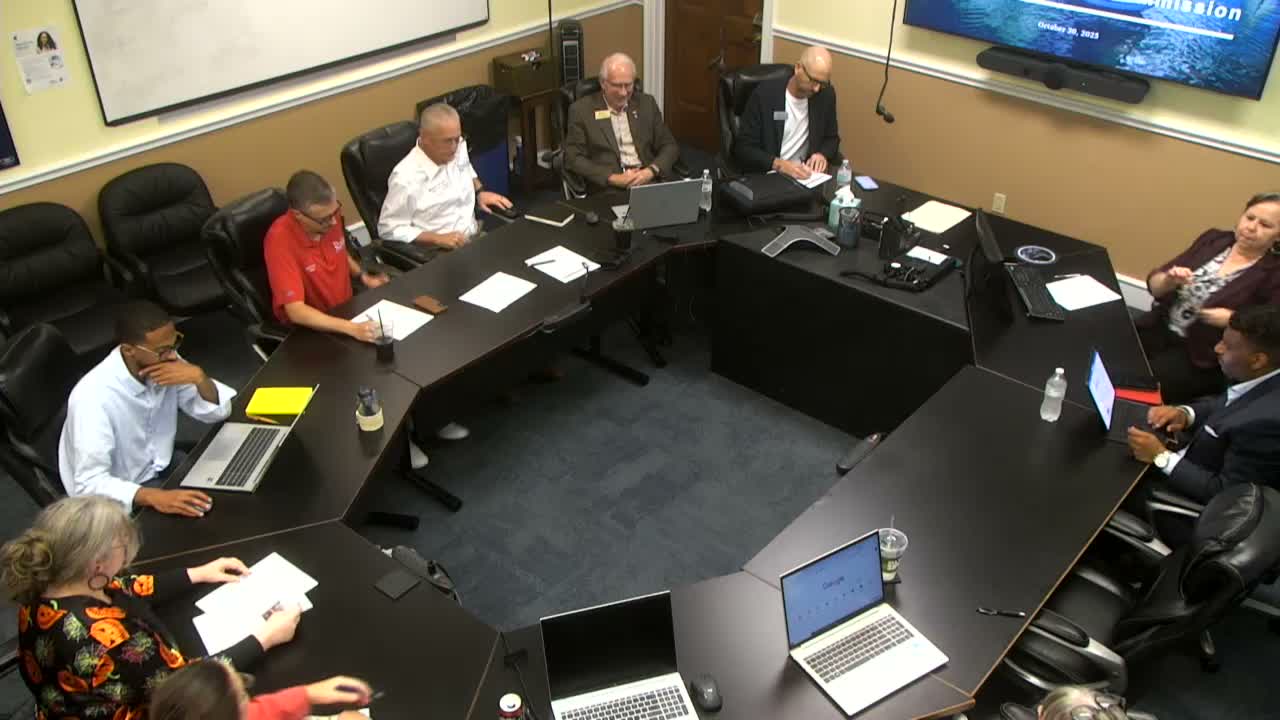
At a Rowlett City Council work session Oct. 20, Arts and Humanities Commission chair Katie Crenshaw presented the commission’s annual update — reviewing grants and contests, a new SHINE inclusion program, an AI disclosure rule for contests, and a target to finalize a public-art policy for fiscal 2027.
Katie Crenshaw, chair of the Rowlett Arts and Humanities Commission, told the Rowlett City Council at a work session Oct. 20 that the commission plans to continue cultural grants and community programs while finalizing a citywide public-art policy aimed for the fiscal 2027 budget cycle.
The chair said the commission’s cultural-grant program is intended to support activities that "specifically support Rowlett and Rowlett citizens" and that applicants must demonstrate how funds will promote the city. Crenshaw said the commission will continue two awards and is refining criteria so money is spent on artistic merit, community value and feasible projects rather than routine supplies.
Crenshaw reviewed several recurring programs funded or supported by the commission, including the Rowlett Sings showcase, a writing contest that drew 137 entries last year, a photography contest and a community calendar produced by a local vendor. She said the Rowlett Artist Exchange (RAX) has expanded and that some events, such as Trombone Thanksgiving, have grown enough to require higher budget planning, including music copyright costs.
The commission also described a new inclusion initiative, SHINE (Supporting communities, Integration, Neurodiversity, and Expression), to create arts events and opportunities specifically for people with special needs. "We have a very large special needs community in the area that can often feel underrepresented," Crenshaw said, describing SHINE as a way to provide targeted events and integrate ornament and holiday programming into accessible offerings.
On public art, Crenshaw said there was no new permanent public art in fiscal 2025 and that the commission is taking proposals and "feelers" about where to place future public art, particularly with downtown planning underway. Councilmembers asked how public art is financed; a city staff member said capital dollars are placed in a public-art fund. A councilmember noted the council has typically allocated about $50,000 annually to that fund and asked for an accounting; the staff reply was verbally reported as "It's about 127," with units not specified in the discussion.
Crenshaw said the commission is preparing a written public-art policy to clarify selection, placement and maintenance rules, and she set a target of completing the policy in time for the fiscal 2027 budget. A councilmember urged the commission to "escalate that timeline" so the policy can guide downtown revitalization decisions.
The commission also addressed contest integrity in the era of generative AI. Responding to a council question, Crenshaw said the commission has not yet seen clear AI-created submissions and will add a rule to contest applications requiring entrants to attest they did not use AI to create their entries. She acknowledged enforcement will rely largely on honor and volunteers and said the commission will ask entrants to explain evidently AI-generated work if it flags as suspicious.
The council had no further questions, moved to the consent agenda for the Oct. 21 meeting and adjourned the work session at about 6:30 p.m. The commission asked to expedite the public-art policy so it can inform budget and downtown planning.